 English
 français
 Deutsch
 español
 italiano
 português













19/12/2025
Rondeau M379 - 1979
Rondeau M379
A remarkable feature of endurance racing, and in particular the 24 Hours of Le Mans, is the presence of private teams founded by drivers who have become manufacturers. These teams manage to give the major car manufacturers a hard time. Jean Rondeau was the only person who managed to win both as a driver and as a manufacturer.
Born and raised in Le Mans, Rondeau developed a passion for motor racing and began competing in touring and sports cars at a very young age. He made his debut ‘at home’ in 1972 with Chevron, withdrawing after a few laps. During the following years, he continued racing with private teams, notably driving Porsches and Mazdas. In 1976, he produced a prototype with which he competed in two editions of the 24 Hours of Le Mans. The car, named after his sponsor, Inaltéra, won the GTP class on both occasions ( first with Pescarolo and Beltoise at the wheel, then with Rondeau and Ragnotti), achieving an excellent fourth place overall in the second year. And yet, at the end of the season, the team was discontinued.
The design studies remained the property of Rondeau, who used them to build a new car now bearing his name: the Rondeau M378. He retained the basic tubular trellis structure with aluminium reinforcements, the braking system and the Ford-Cosworth V8 DFV engine, which Rondeau preferred to the locally produced V6 PRV due to its superior performance. In addition, the car was fitted with a new aerodynamic body designed and built specifically for Le Mans by a group of engineers known as Bureau d'Études Ovale. The car finished well behind the Alpines and the Porsche 936 and 935, yet it secured ninth place overall and took first place in the GTP Class.
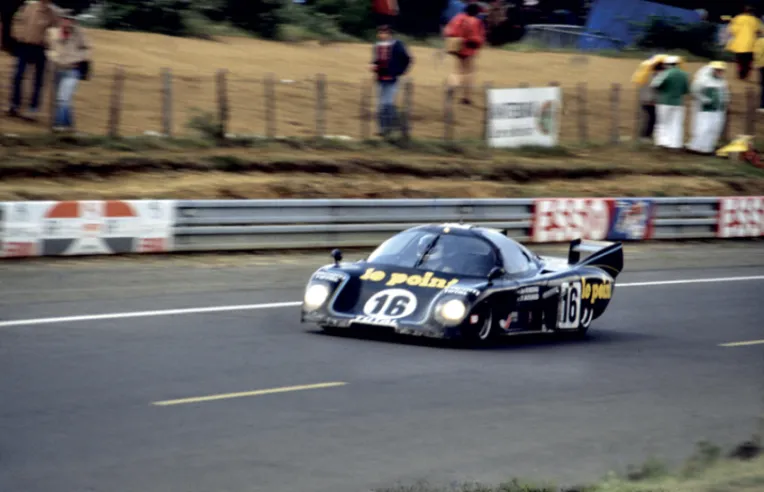
The M379B, in the hands of Rondeau and Jaussaud, was the winner of the 1980 Le Mans 24 Hours. It was a more powerful evolution of the basic version, with refined aerodynamics.© IXO Collections SAS - Tous droits réservés.
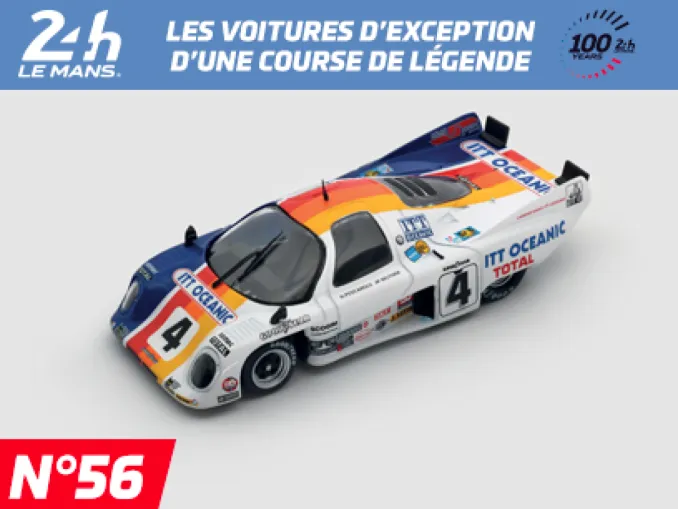
Then in 1979, Rondeau prepared the M379, a slight evolution of the M378 with very few changes to the structure and mechanics, but with a few aerodynamic refinements. Three models were produced: the first, which was none other than an improved version of the M378 from the previous year, retaining its GTP homologation. Rondeau himself and Jacky Haran drove this car, but it failed to finish the race. The two new cars, both entered in the over 2-litre Sport Class, performed better: the N°5 car, with Bernard Darniche and Jean Ragnotti at the wheel, won its class and finished fifth overall behind four Porsches (935 and 934), while the N°4 car, with Henri Pescarolo and Jean-Pierre Beltoise at the wheel, finished tenth.
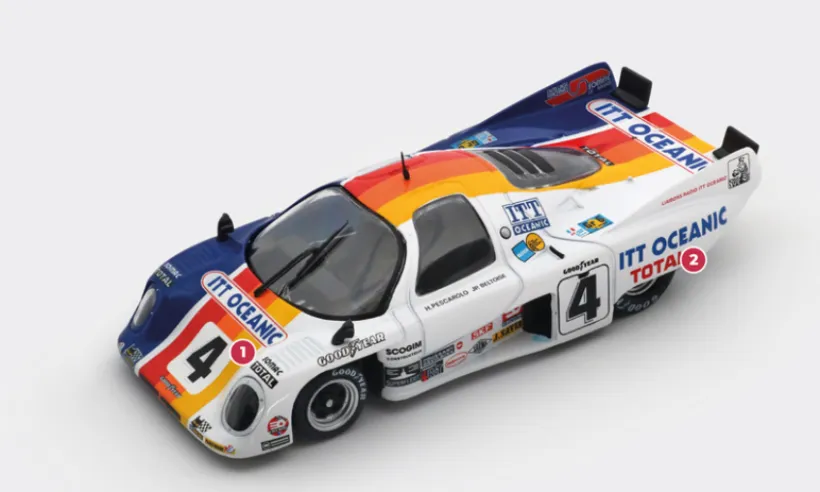
1. ITT Oceanic was the first of the new sponsors that enabled Rondeau to return to the track in 1979 with an upgraded car. Unlike Inaltéra, the company would not impose its name on either the team or the car.
2. The streamlined rear wheels were a characteristic feature of the M378 and M379 models.© IXO Collections SAS - Tous droits réservés.
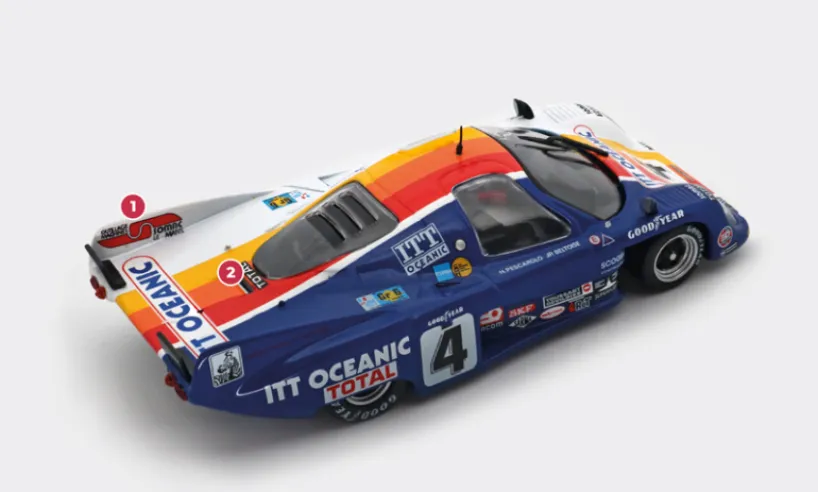
1. The bodywork differs little from that of the M378: like the latter, it is without a spoiler but has two large rear fins. External stabiliser were later added to the M379B.
2. The V8 Ford-Cosworth 3.0 engine is anchored to the chassis and has a semi-load-bearing function. Some of the M379C models from 1981 were fitted with a 3.3-litre version.© IXO Collections SAS - Tous droits réservés.
Then in 1980, after a further development of three new cars, the M379B, there was an historic one-two finish: the winning car was the one in the hands of Rondeau and Jean-Pierre Jaussaud, who managed to maintain their lead over the faster Porsche 908 driven by Jacky Ickx and Reinhold Joest, followed by the Rondeau driven by Philippe and Jean-Michel Martin and Gordon Spice. A third M379B, driven by Pescarolo and Ragnotti, who had secured pole position, was forced to withdraw. In 1981, the M379C occupied two of the lower podium places, 14 laps behind the untouchable Porsche 936/81 with Jacky Ickx and Derek Bell at the wheel.
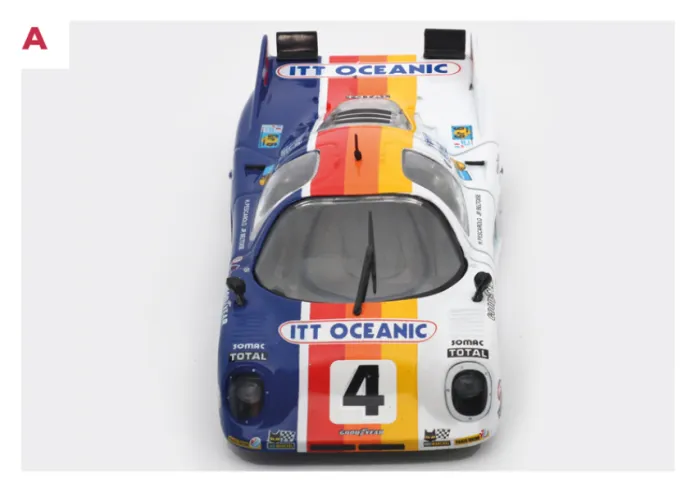
A. Compared to the M378, the Rondeau M379 lost its two NACA air intakes in the middle of its front section, replaced by two open slots in the lower edge.© IXO Collections SAS - Tous droits réservés.
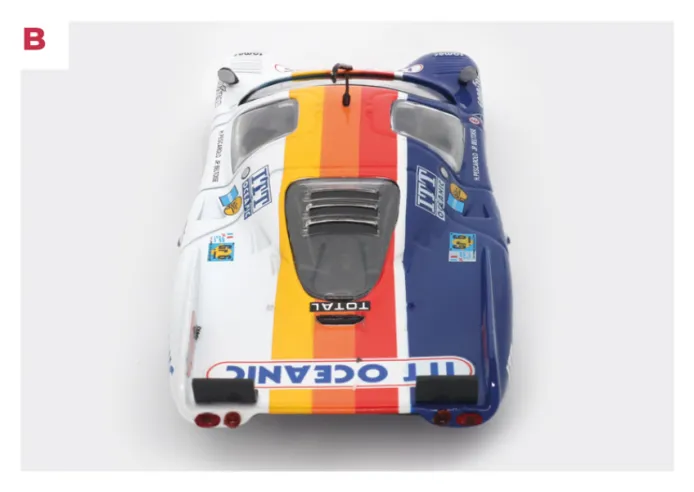
B. The rear section featured two pairs of lights and two deflectors, which were replaced on the ‘B’ version of the car by fins fitted to the daggerboards.© IXO Collections SAS - Tous droits réservés.
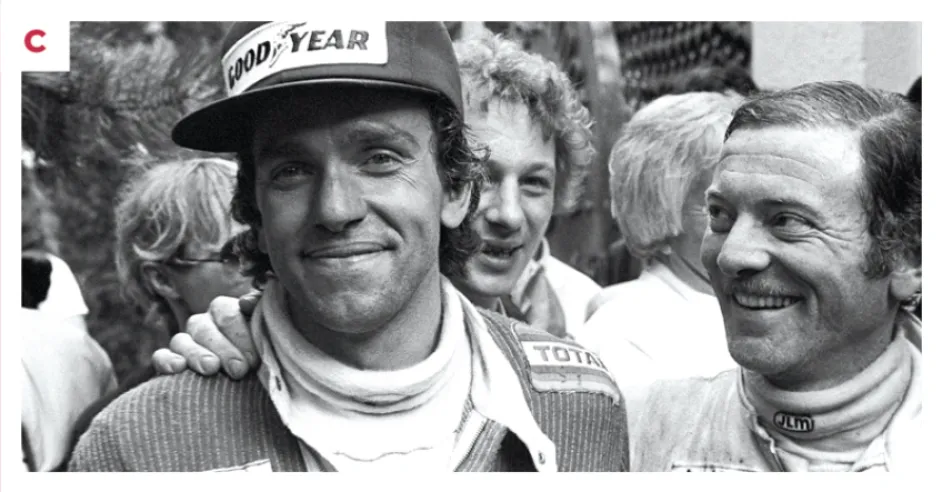
C. Jean Rondeau (left) and Jean-Pierre Jaussaud after their victory at Le Mans in 1980. They returned to the Sarthe marathon in 1981, but had to retire following an accident.© IXO Collections SAS - Tous droits réservés.
Recent articles