 English
 français
 Deutsch
 español
 italiano
 português













19/04/2026
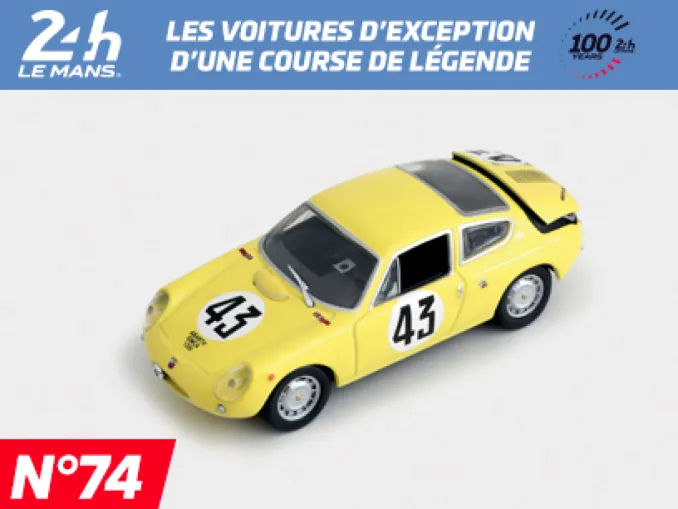
Abarth Simca 1300 - 1962
Abarth Simca 1300
In 1962, the FIA decided to promote the Grand Touring segment by creating a world championship (or international championship) for manufacturers, as well as organising a championship for cars in the Sport segment, in which fewer races counted towards the title.
The ACO, organiser of the 24 Hours of Le Mans event and part of the calendar for the two new championships, decided to introduce special rules and, under the name “experimental cars”, allowed sports models and prototypes that were not related to production types but could serve as a basis for future GTs.
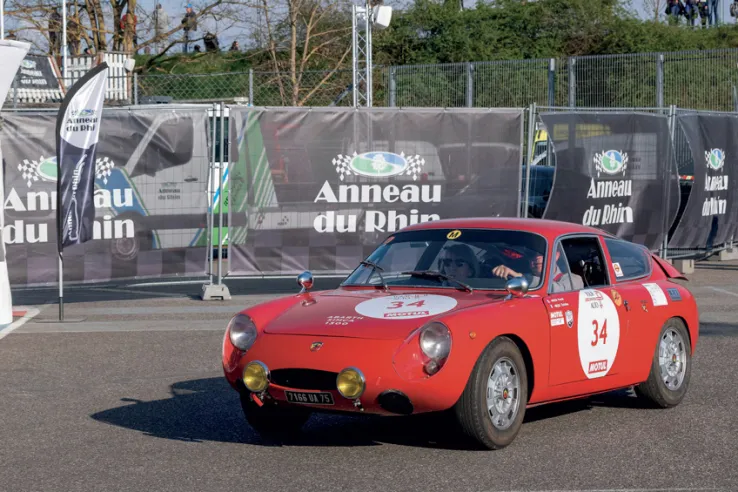
This Abarth Simca 1300 took part in a historic car event at the Anneau du Rhin circuit in Alsace.© IXO Collections SAS - Tous droits réservés.
The ACO, organiser of the 24 Hours of Le Mans and listed on the calendar of both new championships, decided to adopt special rules and welcomed sports models and prototypes that were not related to production types and could serve as a basis for future GTs under the heading of “experimental cars”. This encouraged the emergence of cars built on the basis of production models or parts, but specially developed for racing. In the 1 to 1.3 litre category, French brand Simca, a subsidiary of Fiat since the 1930s, entered the competition with a sports car derived from its small Simca 1000 rear-engined sedan. To do so, it turned to Italian tuner Carlo Abarth, who, based on his experience tuning small Fiats, developed a highly competitive, compact and lively sports car. It was based on the chassis and suspension of the 1000 and was powered by a 1300 engine, which was derived from the 1000's block and delivering almost 125 hp. The car was named the Abarth Simca 1300, but was also known as the 1300 Bialbero, a reference to its twin overhead camshafts and the Fiat Abarth models.
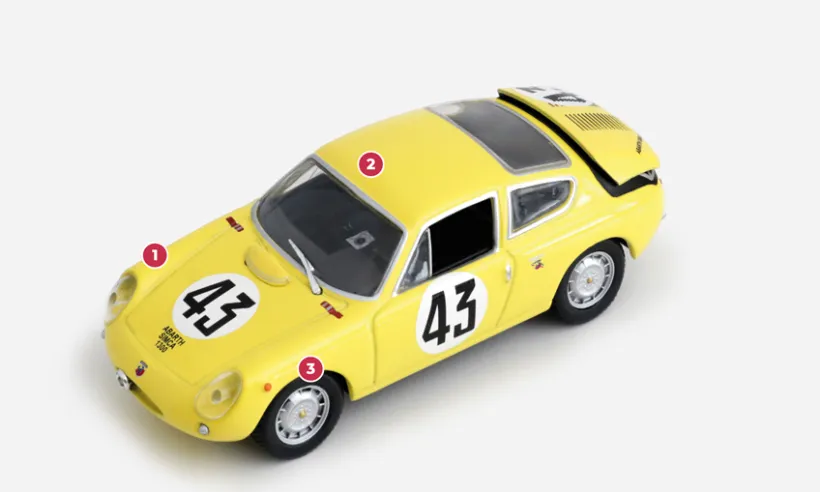
1. The style of the 1300 was directly inspired by that of the Fiat-Abarth 750/1000 Bialbero, introduced a little earlier with the same ‘all-rear’ architecture.
2. Compact and lightweight, the Abarth-Simca was more than 100 kg lighter than the production model from which it was derived.
3. The suspension uses the same components as the 1000 saloon, itself derived from the Fiat 600, i.e. with a transverse leaf spring at the front functioning as both an elasticity and a link element.
© IXO Collections SAS - Tous droits réservés.
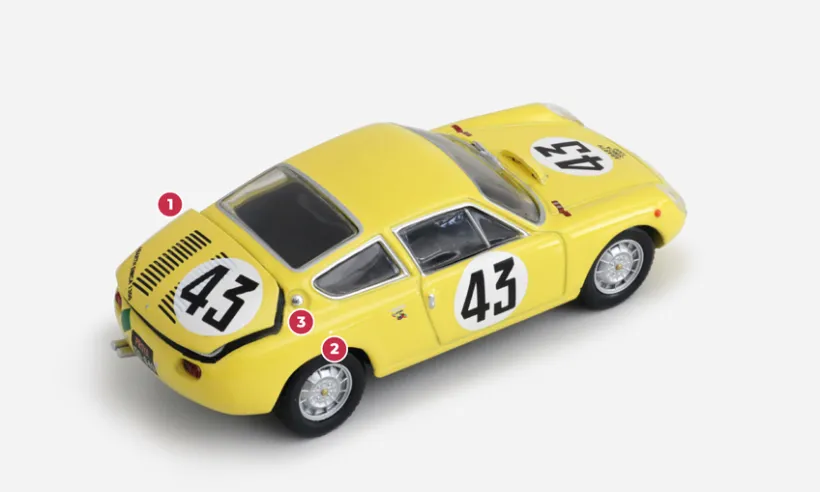
1. A characteristic feature of Abarth coupés, the large rear bonnet can be left ajar to improve ventilation of the engine compartment.
2. Four-wheel disc brakes are one of the most significant modifications made to the chassis of the standard Simca 1000.
3. The fuel tank is positioned behind the seats rather than in the front boot as on production cars.© IXO Collections SAS - Tous droits réservés.
The first models, featuring the blue colours of Abarth & C., made their debut at Le Mans during test runs in April 1962 with Belgian driver Mauro Bianchi, whose two cars finished eighth and tenth, and Swiss driver Tommy Spychiger, who finished ninth. The entry list for the 24 Hours of Le Mans in June included six Abarth Simca 1300s, five of which belonged to the official team. However, only three of them actually started the race, namely numbers 41, 42 and 62. Due to engine or gearbox problems, all three cars had to retire between the fourth and seventh hour. The other car, in the yellow colours of the Belgian national team, was driven by Claude Dubois and Georges Harris. They completed 268 laps and finished fourteenth out of the 18 cars that made it to the finish line (about a third of the participants). The Abarth Simca 1300 was the winner in its cylinder class, an expected result given that the Abarth Simca 1300 was the only model registered for the prototypes in this category. Less expected was the shared first place in the energy index classification, based on engine power, with a Lotus Elite from the official Lotus team racing the same cylinder class in the GT class.
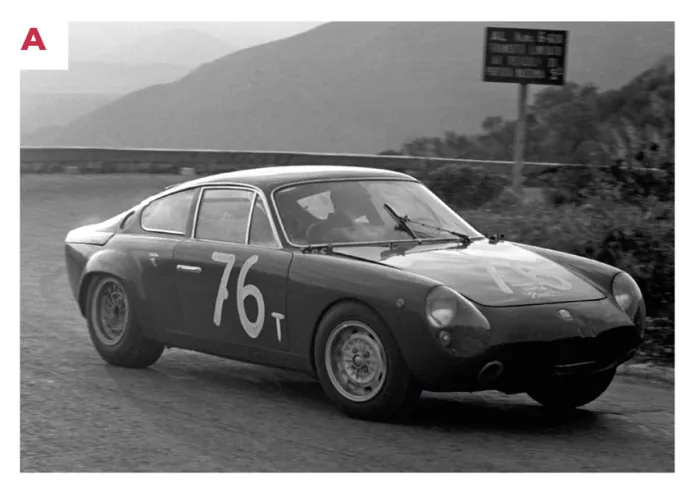
A. The Abarth Simca 1300 was the predecessor to the more powerful 1600 and 2000 models. This is the 2000 driven by German Hans Herrmann and Italian Franco Patria at the 1964 Targa Florio, a race that ended prematurely.© IXO Collections SAS - Tous droits réservés.
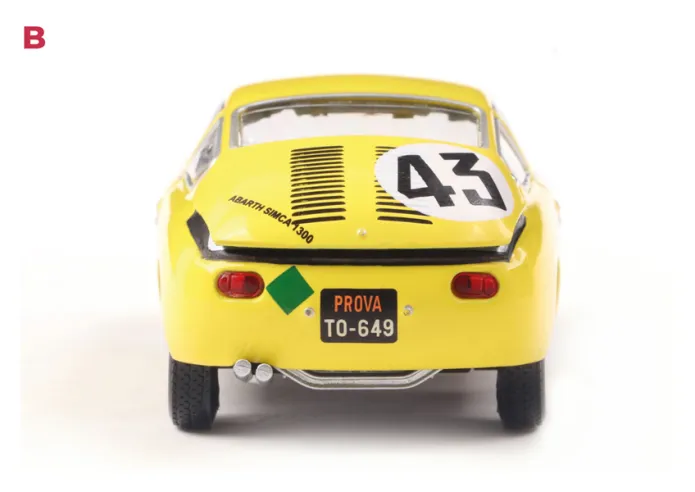
B. The engine is based on the 944 cc ‘Poissy’ block from the 1000, upgraded to 1,288 cc and featuring dry sump lubrication, two Weber carburettors and a 2 ACT distribution system.© IXO Collections SAS - Tous droits réservés.
The 24 Hours of Le Mans was the most glorious chapter in the car's history. Three more entries followed in subsequent years, but the car never made it to the starting line. The car's overall record is much better: between 1962 and 1969, it achieved no fewer than thirty outright victories (including the 1963 and 1965 Inter-Europa Cup at Monza and the 1964 500 kilometres of the Nürburgring) and some fifty class victories out of more than 150 races.
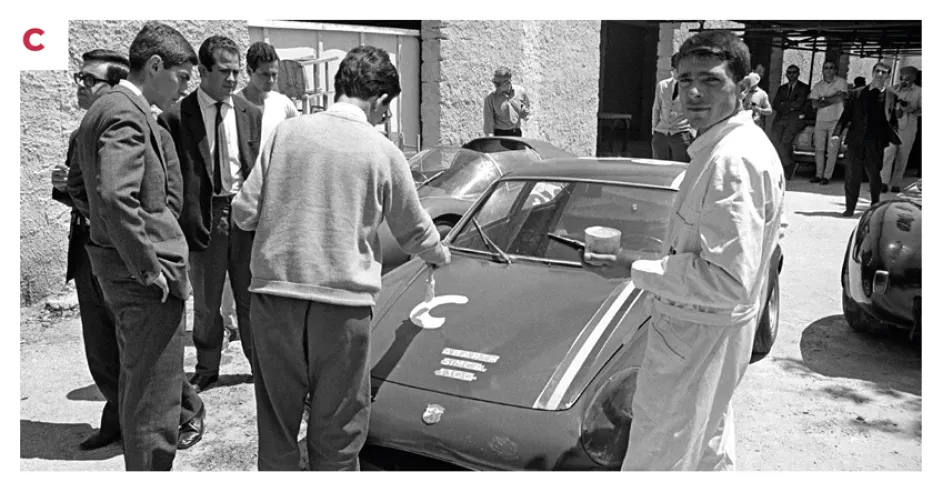
C. One of the three Abarth Simca 1300s entered in the 1966 Targa Florio being given its race number. The best one finished fortieth.
© IXO Collections SAS - Tous droits réservés.
Recent articles