 English
 français
 Deutsch
 español
 italiano
 português













10/02/2026
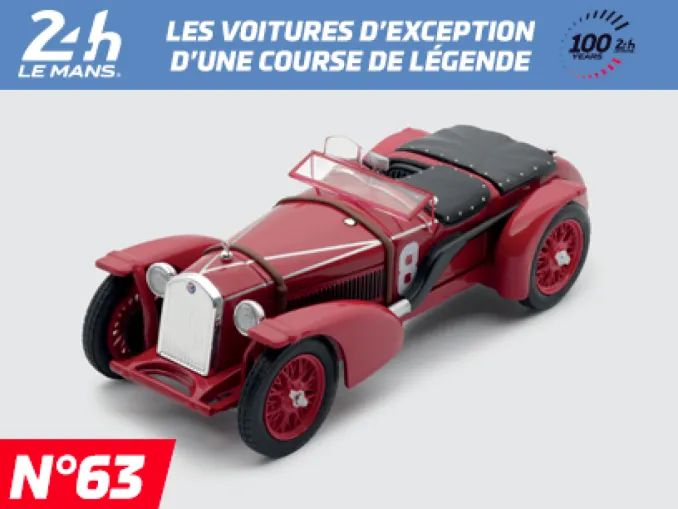
Alfa Romeo 8C 2300 MM - 1932
ALFA ROMEO 8C 2300 MM
Thanks to the 8C, Alfa Romeo achieved recognition in 1931 by dominating Grand Prix speed races and endurance events.
The car won the 24 Hours of Le Mans four years in a row, the first time with the LM version, specially developed for Le Mans, while the other editions were won with the more agile MM version.
Established in 1910 after the collapse of the Italian Automobile Company Darracq, it took Alfa Romeo some time before it became known as a manufacturer of powerful sports cars. It was not until the end of the decade that Portello cars, the first 6Cs, appeared at the 24 Hours of Le Mans, an event held for the first time in 1923 and whose importance grew over the years. Yet Alfa Romeo took over from Bentley, after the British brand withdrew from competition, dominating the event for four years.
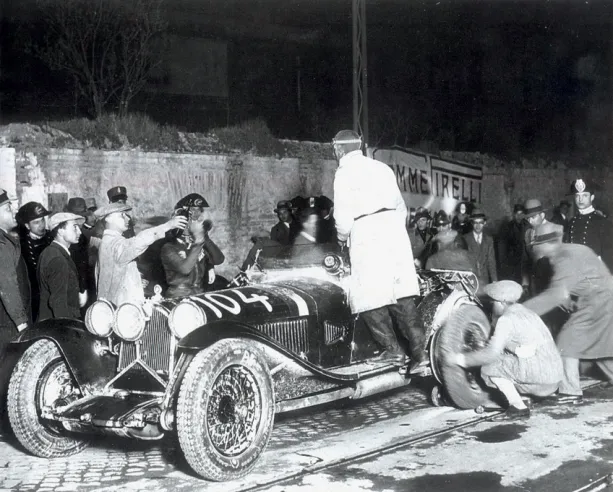
The 8C 2300 of Nuvolari and Guidotti during a wheel change during the 1931 Mille Miglia, which they finished ninth. It is a Spider Zagato: the Mille Miglia bodywork only appeared later.© IXO Collections SAS - Tous droits réservés.
It was the 8C, a car introduced at the end of 1930 and designed for competition, which achieved this feat. The 8C incorporated many features from the 6C, but benefited from a brand new 2.3-litre 8-cylinder engine powered by a Roots supercharger.
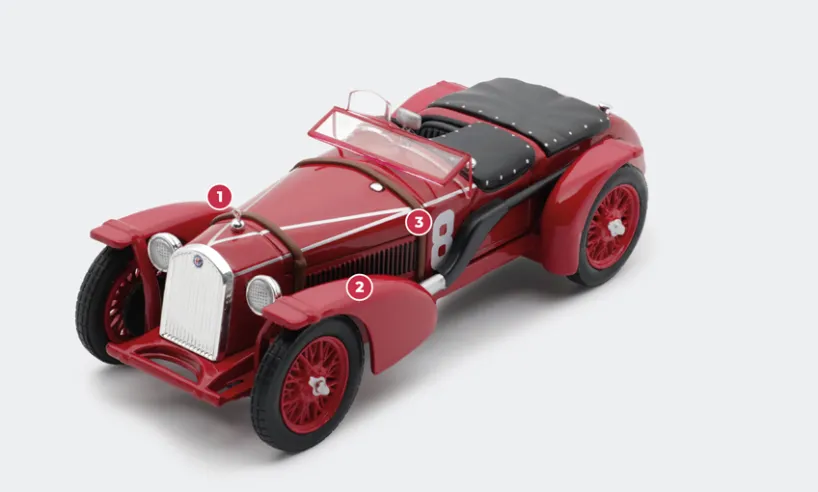
1. The radiator grille, positioned close to the engine, sits well back of the front grille, which on this version is positioned quite far forward.
2. The MM bodywork has streamlined front wings, while the LM has the simple wing design used on the Monza.
3. The 8-cylinder engine consists of two 4-cylinder blocks. The timing is controlled centrally by a series of gears that drive the two ACTs of each block.© IXO Collections SAS - Tous droits réservés.
The new car began scoring victories almost immediately. Despite tire problems preventing Tazio Nuvolari and Giovanni Battista Guidotti from finishing better than 9th (with no fewer than six Alfa 6Cs finishing 2nd to 8th) during its debut at the Mille Miglia in 1931, Tazio Nuvolari secured the brand's first victory in the 8C at the following Targa Florio , followed by a second victory at the Monza Grand Prix driving a version with a shorter wheelbase (from 2.75 to 2.65 metres) and a more streamlined body, immediately renamed the ‘Monza’.
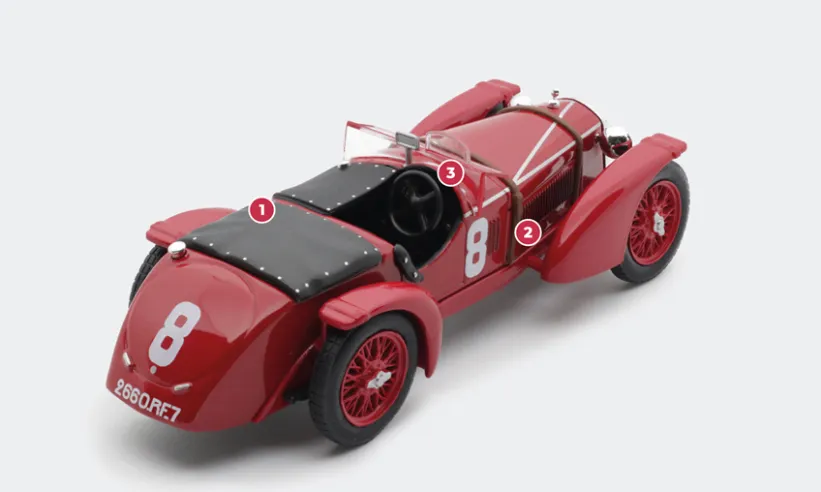
1. Even though race drivers sat alone in the car, regulations at the time required cars with engines larger than 1,100 cc to have four seats, which was common to both the MM and LM models, even though the front passenger seat and rear seats would remain covered.
2. The compressor mounted on the right side of the engine near the intake is mechanically driven from the crankshaft when the accelerator is fully depressed.
3. To reduce air resistance, the windshield remains folded down and a small windscreen protects the driver.© IXO Collections SAS - Tous droits réservés.
Alfa Romeo prepared a variant of the 8C with a longer wheelbase (3.10 m) and 4-seater bodywork for the 24 Hours of Le Mans, of which it entered three cars. Two of the official cars failed to finish (with one not even starting due to engine problems), but the third, entrusted to the private team of Englishmen Earl Howe and Henry Birkin, took the win, beating the Mercedes and Bugattis, both of which had dropped out.
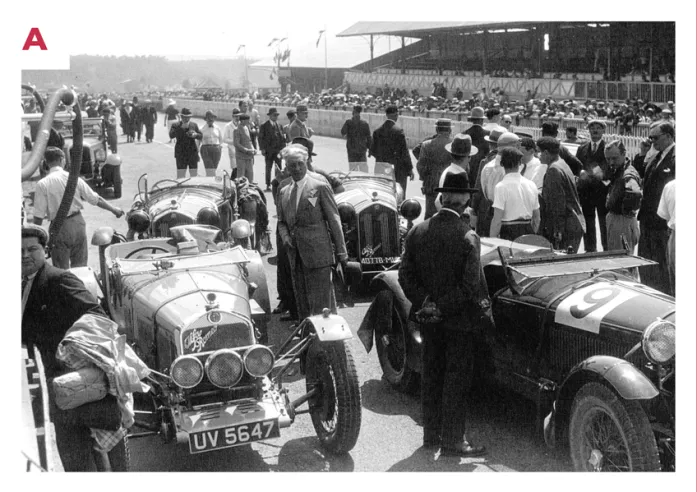
A. Four Alfa Romeos getting ready to start the Le Mans 24 Hours in 1932. Apart from the first one on the left, they're all 8Cs, including No. 9 which was driven by previous winners Howe and Birkin, but No. 8, the future winner, isn't there.© IXO Collections SAS - Tous droits réservés.
The short version of the Le Mans raced at Spa, won the Irish Grand Prix and came second in the Tourist Trophy with ‘Baconin’ Borzacchini. Oddly enough, it did not win any other races at Le Mans, even though the following year, of the six Alfa Romeo 8Cs (joined by a 6C) at the start, four were LMs. The start of the race was dominated by two teams: Franco Cortese/Giovanni Battista Guidotti and Ferdinando Minoia/Carlo Canavesi, followed by former winners Howe and Birkin. However, all the other Alfa Romeos in the leading group followed the Mercedes SSK and Bugatti 55 without any major problems, even when bad luck and accidents followed in quick succession, with only a dozen cars reaching the finish line.
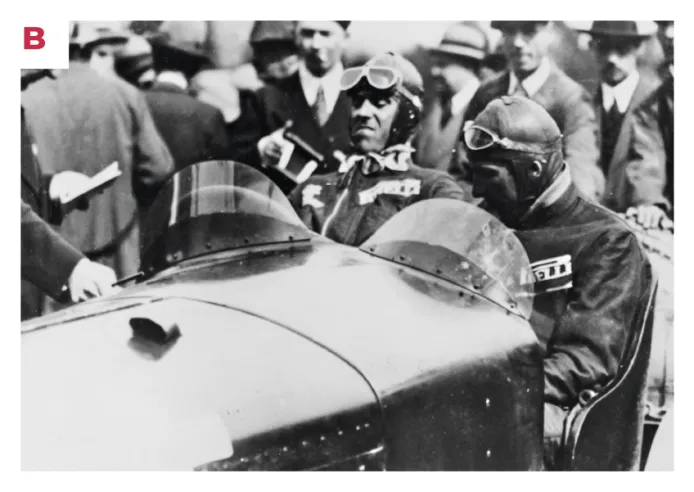
B. Tazio Nuvolari (left) in the driver's seat of the first series 8C 2300 in which he would compete (and win) the 1931 Targa Florio.© IXO Collections SAS - Tous droits réservés.
The victory went to one of the two 8C Mille Miglia (MM) cars driven by Frenchman Raymond Sommer and Luigi Chinetti. They won due to the numerous pit stops for repairs that slowed down Cortese and Guidotti, who finished second, two laps behind.
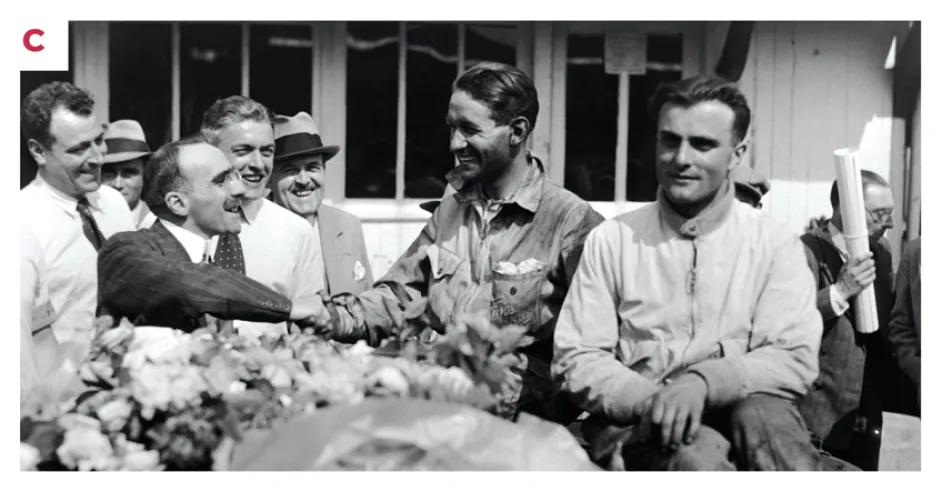
C. In the foreground, Raymond Sommer and Luigi Chinetti (right). The two drivers celebrate their victory at the finish line of the 1932 24 Hours of Le Mans.© IXO Collections SAS - Tous droits réservés.
Recent articles