 English
 français
 Deutsch
 español
 italiano
 português













10/02/2026
Inaltera LM77 - 1977
Inaltera LM77
Jean Rondeau's lengthy journey to overall victory at Le Mans in 1980, with a car bearing his name, began five years earlier with a vehicle that reflected his determination to win, and which distinguished itself in two editions of the Le Mans race as the best of the GTPs.
For Jean Rondeau, Le Mans has always been close to his heart. He was born in the city renowned for hosting the world's most famous endurance race, a race he dreamed of winning since childhood. In 1972, following a series of driving experiences, he realised his dream of racing on his home circuit as co-driver alongside Brian Robinson in a Chevron B21 powered by a Ford Cosworth engine. Unfortunately, after less than 80 laps, he and his team were forced to abandon the race. Rondeau then drove for other private teams and in various cars until 1976, the year in which he built his own car. Determined to win, Rondeau opted for the most efficient engine available at the time, the Ford Cosworth DFV V8, preferring it to the French-made PRV V6, a decision that deprived him of national financial support.
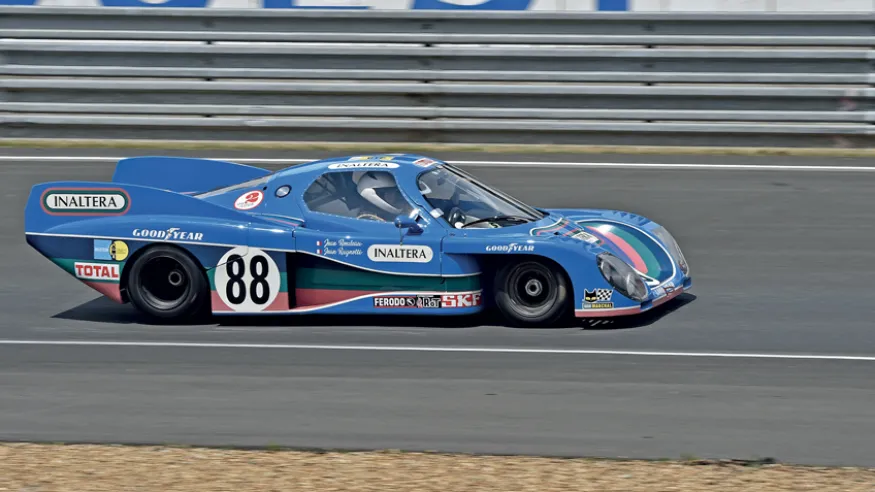
The LM77 of Rondeau-Ragnotti during a historic event in 2016. Sold off after the team was liquidated, the three cars were reunited and restored.© IXO Collections SAS - Tous droits réservés.
Confronted with this problem, he decided to sign an agreement with the wallpaper manufacturer Inaltera, on the condition that the team and the car be named after the brand. Consequently, the car was simply named Inaltera GTP, after the category in which it competed (despite the fact that some cars were registered in Sport Group 6), while it was also referred to as the Inaltera LM.
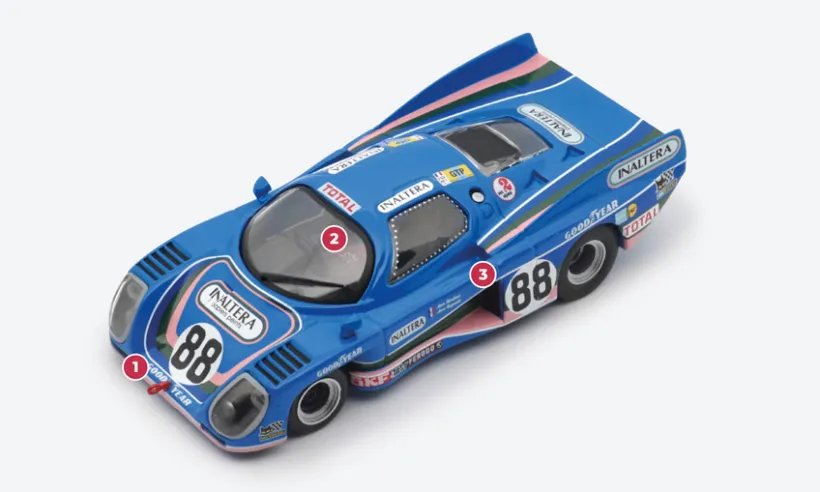
1. The simple, smooth lines of the Inaltera LM77 remained unchanged with the Rondeau cars built from 1978 onwards.
2. The LM77 is built on a frame of tubular steel complemented by aluminium panels.
3. The resin and fibreglass bodywork features large NACA air intakes.© IXO Collections SAS - Tous droits réservés.
Designed by the Bureau de Style Ovale, the car was characterised by its simplicity and streamlined bodywork, excelling in the 1976 and 1977 editions of the 24 Hours of Le Mans, winning in its category each time. During the first year, the car that achieved this result, finishing eighth overall, was raced by Henri Pescarolo and Jean-Pierre Beltoise; while the second car was driven by Jean Rondeau, Jean-Pierre Jaussaud and Belgian driver Christine Beckers, ending up in 21st place.
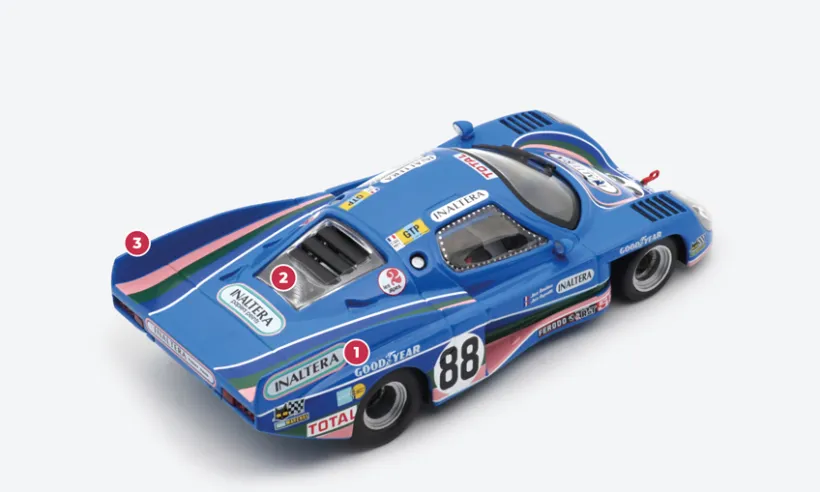
1. The rear brakes are attached to the differential in order to reduce unsprung masses.
2. In its first version used on the Inaltera, the Ford Cosworth DFV 3.0 V8 engine delivered just over 400 hp, but subsequent versions used on the Rondeau were upgraded to 450 hp.
3. The large spoilers integrated into the rear design have a stabilising effect without adding weight to the car's silhouette or mass.© IXO Collections SAS - Tous droits réservés.
1978 saw the team entering one LM77 revised for GTP and another two for Group 6. On this occasion, it was Rondeau who achieved the best result, driving the GTP alongside Jean Ragnotti: he finished fourth with a steady performance and thanks to the reliability of the car and engine, outlasting many of his rivals who suffered various breakdowns and malfunctions. Despite a faulty cylinder in his Porsche 936/77, Jürgen Barth completed his final two laps leading the race, the Inaltera driven by Rondeau narrowly failed to make the podium, finishing less than a lap behind the Porsche 935 driven by Claude Ballot-Léna and Peter Gregg, which came third behind the Mirage GR8 with Schuppan and Jarier at the wheel. The other car, driven by Christine Beckers and Lella Lombardi, finished eleventh, while the third car, with Beltoise and American Al Holbert, finished 13th.
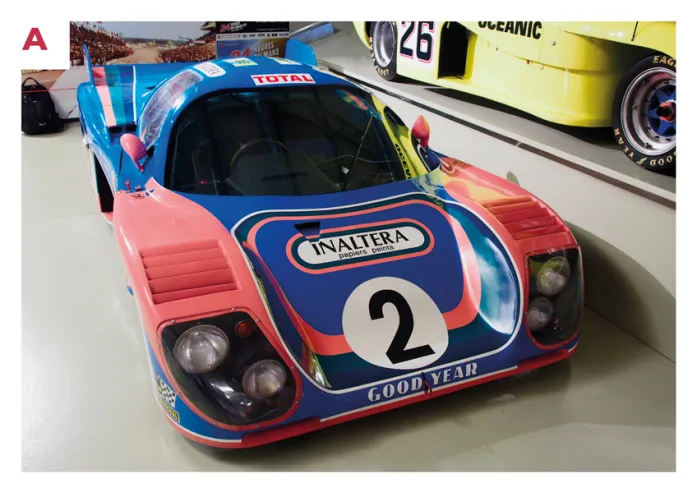
A. The Inaltera LM77 that finished 11th in the 1977 24 Hours of Le Mans with Lombardi/Beckers (who also won the Ladies' Cup) can be found in the collections of the 24 Hours of Le Mans Museum.© IXO Collections SAS - Tous droits réservés.
Despite these promising results, a change in ownership at Inaltera ended funding arrangements and forced Jean Rondeau to break up the team. In 1978, the French driver made a comeback with a new team, this time bearing his name, and two years later he achieved a historic victory, becoming the first and only driver-constructor to win the 24 Hours of Le Mans.
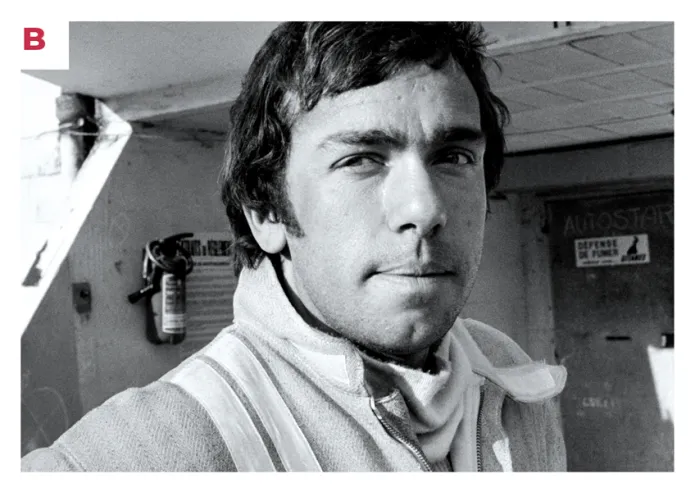
B. After his victory at Le Mans in 1980, Jean Rondeau continued racing for a few more years before being killed in a road accident in 1985.© IXO Collections SAS - Tous droits réservés.
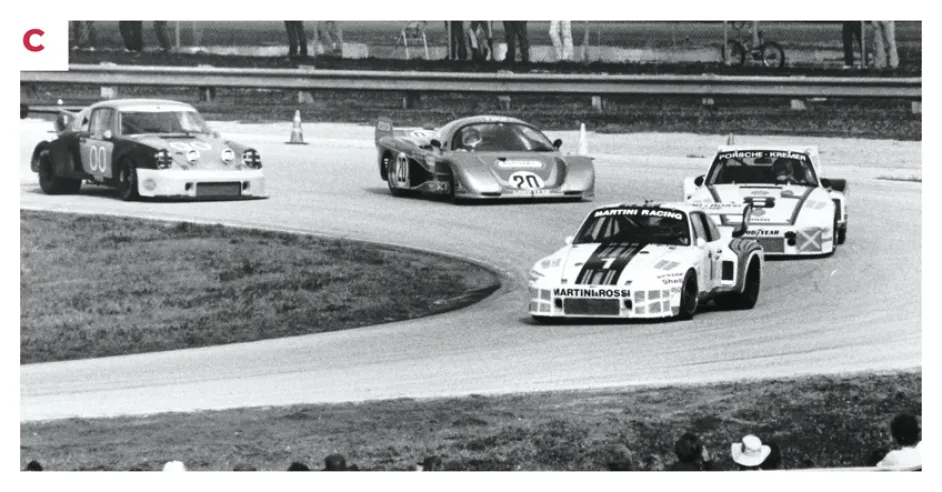
C. Two Inalteras competed in the 1977 24 Hours of Daytona: car number 20, pictured here chasing two Porsche 935s, finished 28th, with Rondeau and Beltoise at the wheel.© IXO Collections SAS - Tous droits réservés.
Recent articles