 English
 français
 Deutsch
 español
 italiano
 português













02/04/2026
Porsche 907 1968
Porsche 907
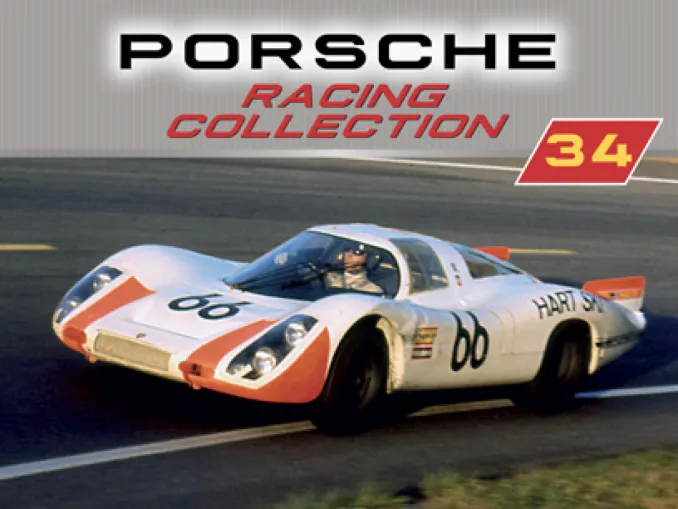
Seven months after its triple victory at Daytona, the ‘long’ version of the 907 attempted to repeat the feat at Le Mans, only to be beaten by the Ford GT40.
Porsche's ‘long tail’ (LH) sports cars were developed with the aim of winning on fast circuits such as Le Mans. Paradoxically, however, none of them managed to claim victory in the Sarthe marathon. The 907 LH, first introduced in 1967 but still competitive, narrowly missed out the following year. Despite its brief career of just over a season, the car can boast of having completely dominated one edition of the 24 Hours of Daytona and having nearly achieved a similar feat at Le Mans, where it finished second – a result that its successor, the 917 LH, was unable to improve upon a few years later.
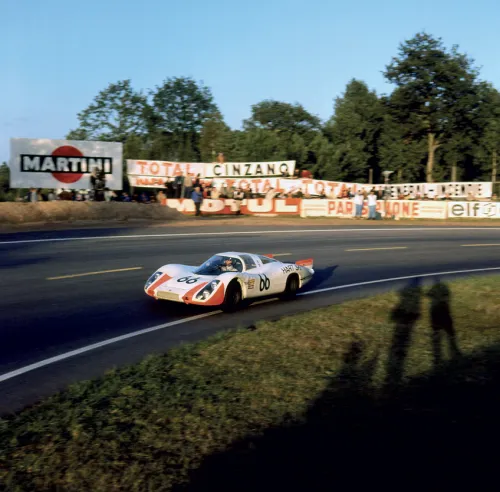
© IXO Collections SAS - Tous droits réservés.
FINISHING FIFTH IN 1967 WITH HERRMANN AND SIFFERT, ITS ENGINE WAS CHANGED AND IT CAME CLOSE TO VICTORY.
The 907 LH or Langheck (‘long tail’ in German) made its debut in 1967 at the 24 Hours of Le Mans circuit during the preliminary tests in April. Its first models were entrusted to experienced German drivers such as Gerhard Mitter, who that year won the second of his three European Hill Climb Championship titles with the 910/8 Spyder. Yet the driver's skill alone was not enough. The car failed to shine, mainly due to stability issues, managing only to clock the twentieth fastest time. But two months later, at the 24 Hours, the situation improved. Its 2-litre six-cylinder engine meant that the German coupé couldn't compete with the prototypes in the higher category, but the duo of Jo Siffert and Hans Herrmann managed to push the car into fifth place overall (earning it victory in the under-2-litre sports category) just behind the Ford GT40s and Ferrari 330 P4s powered by larger 7-litre and 4-litre V8 and V12 engines. Furthermore, the German car came first in the Performance Index and second in the Energy Efficiency Index, two trophies awarded for efficiency based on parameters such as engine size, weight and fuel consumption.
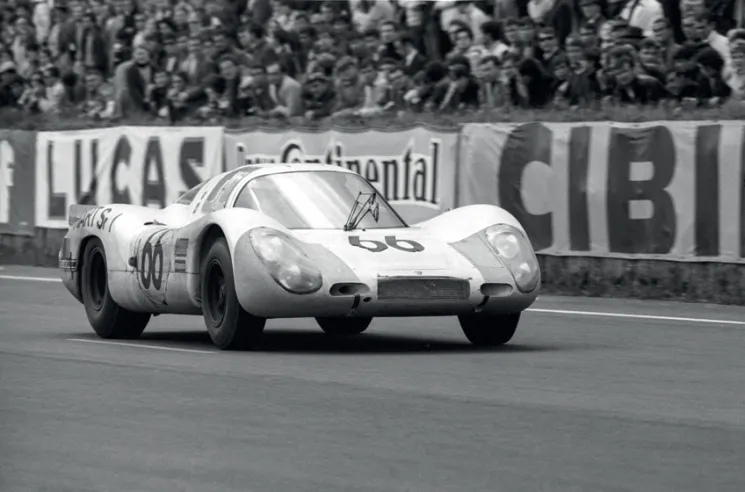
With the 1968 Le Mans 24 Hours race postponed until September, the new prototypes were able to take advantage of the summer to fine-tune their performance. © IXO Collections SAS - Tous droits réservés.
[THE OFFICIAL TEAM FAVOURED THE 908, ALTHOUGH THEY ENDED UP REGRETTING IT]
Following Le Mans, Porsche acknowledged the need to upgrade the car and moved it up a category by installing the new 2.2-litre eight-cylinder engine (Type 771). This change proved so successful that in its very first race, the 6 Hours of Brands Hatch, the car qualified twelfth on the grid and finished fourth with Hans Herrmann and Jochen Neerpasch.
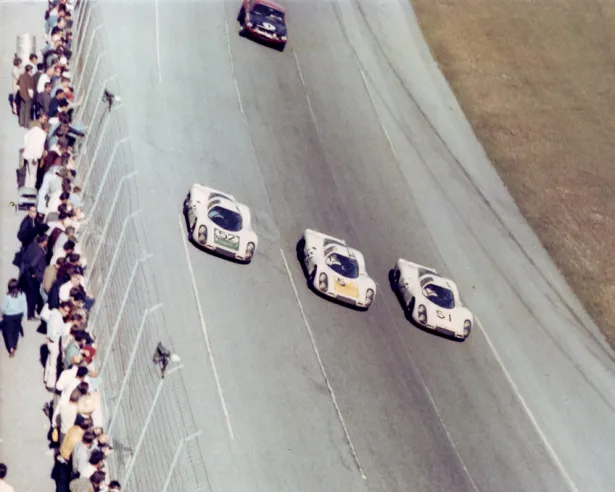
A spectacular parade of the three Porsche 907 LHs from the official Porsche team at the 24 Hours of Daytona in February 1968. The ‘private’ car driven by Steinemann and Spoerry had to pull out of the race due to an accident. © IXO Collections SAS - Tous droits réservés.
FASTER DURING RACING THAN THE ‘3 LITRE’
For 1968, Porsche also developed a ‘short tail’ (KH) version of the 907, known as the 907 K or 907, intended for more technical tracks with a greater number of corners. However, the first race of the season, the 24 Hours of Daytona, was won by the LH, taking the top three podium places. Meanwhile, Porsche had developed the new 908, resembling the 907 but equipped with a 3-litre eight-cylinder engine, that the official team, Porsche Engineering, raced for the first time in the 1,000 km of Monza. At the same event, the Stuttgart-based company was to use a 907 LH for the last time, entrusted to Rolf Stommelen and Jochen Neerpasch, who finished second behind the Ford GT40 of Hawkins and Hobbs. The 907 LH made its last appearance during the 24 Hours of Le Mans which took place in September instead of the usual spring date due social unrest. Three cars were entrusted to private teams since Porsche Engineering had definitively opted for the 908, in a long-tail version specifically designed for this circuit. The result of the race was similar to that at Monza: victory went to the British J.W. team's Ford GT40 Mk I with a 5-litre V8 engine, earning Ford its third victory of four consecutive wins. Behind the winning Ford finished the 907 LH of the Tartaruga team, with Rico Steinemann and Dieter Spoerry, a lap ahead of the first of the official 908s (the three fastest in qualifying) with Stommelen and Neerpasch.
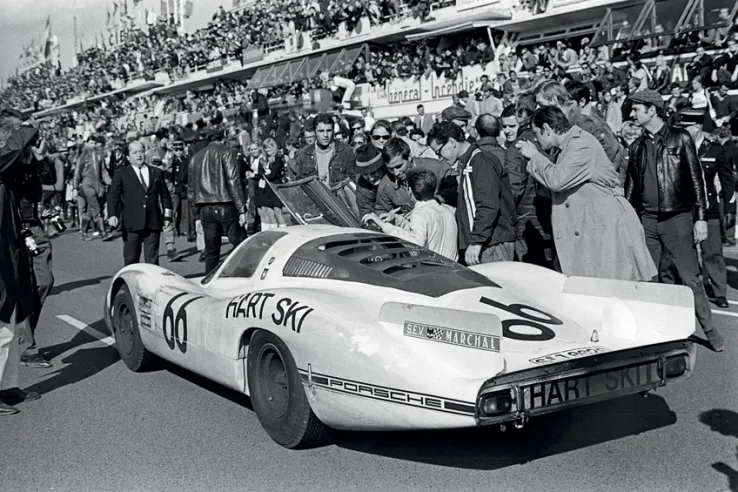
The car from the Tartaruga team was the only 907 to finish the 1968 Le Mans 24 Hours, a race in which only 18 of the 54 cars that started managed to complete the race. © IXO Collections SAS - Tous droits réservés.
DIETER SPOERRY ET RICO STEINEMANN
Second place at Le Mans with the 907 LH car is considered the best achievement of this driver duo, who raced together on several occasions. Both drivers excelled in hill climb races, being the only type of motor racing events permitted in Switzerland since the ban introduced in 1955 following the terrible accident at Le Mans. The pair then drove for Scuderia Filipinetti before joining the Tartaruga team formed by Rico Steinemann, who was primarily a sports journalist. Both embarked on other ventures and, together with other drivers including Jo Siffert, broke several speed records covering various distances and durations at the Monza circuit while driving a standard 911 R in 1967. In 1978, Steinemann joined the team driving the Mercedes-Benz C111-III prototype to set a 12-hour average speed record of 316 km/h on the Nardo high-speed test track.
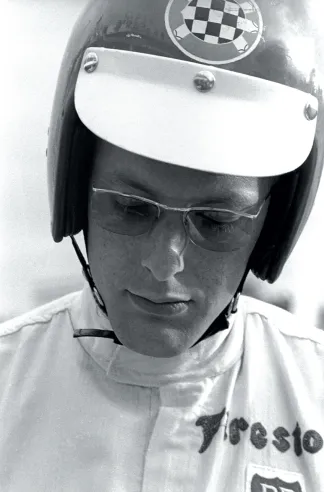
A close-up of Gianwirco, better known as ‘Rico’, Steinemann. Before becoming a racing driver, and founding the Tartaruga racing team, he spent many years covering motor sports as a journalist. In 1963, he was one of a group of people who launched the Powerslide magazine. © IXO Collections SAS - Tous droits réservés.
Technical sheet
Recent articles