 English
 français
 Deutsch
 español
 italiano
 português













18/04/2026
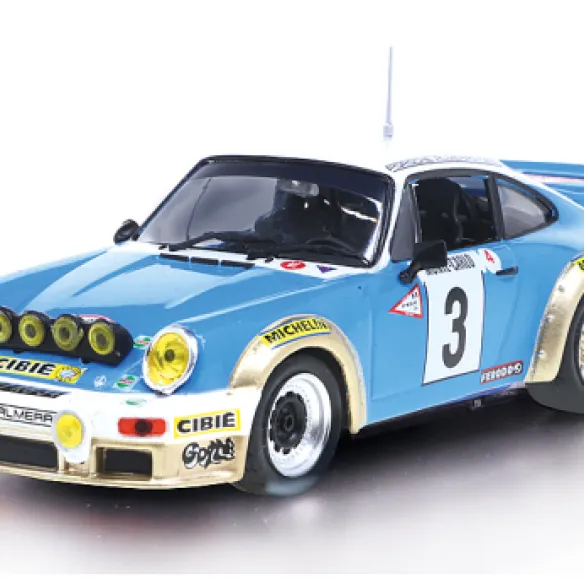
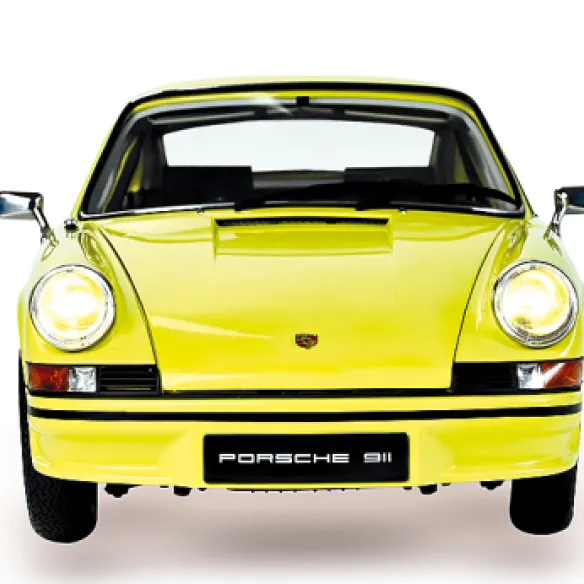
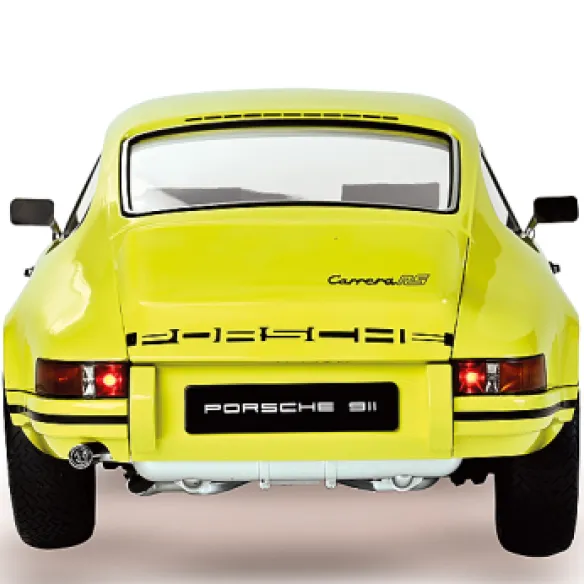
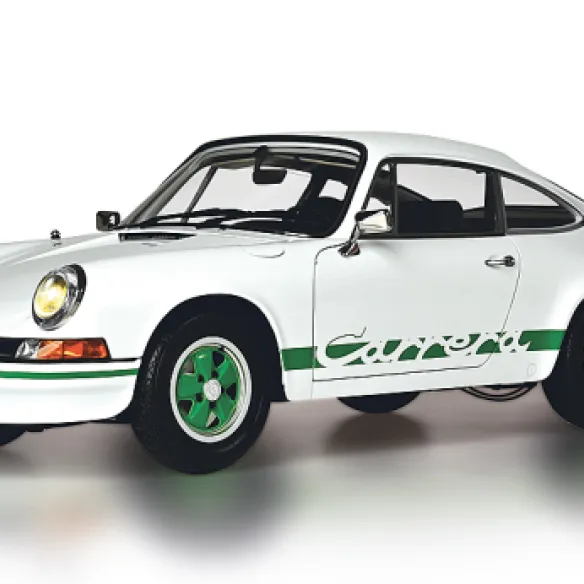
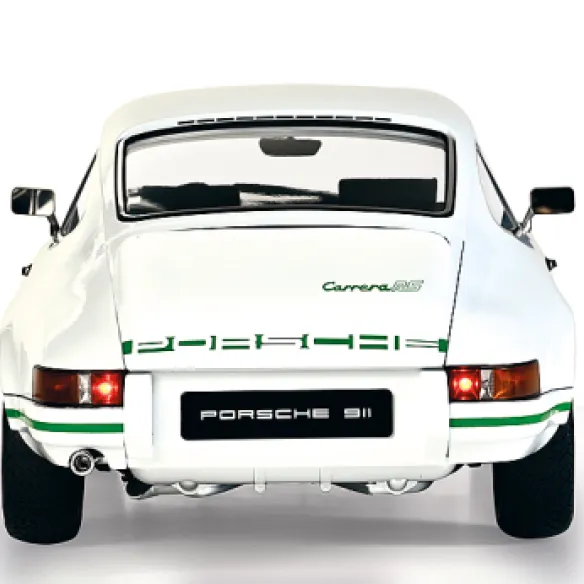
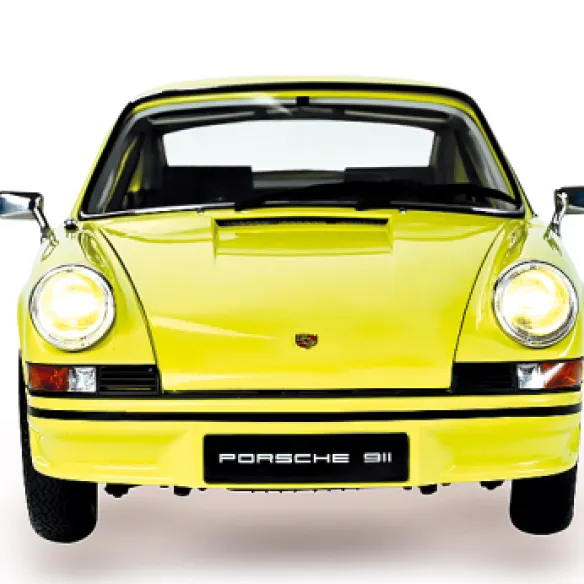
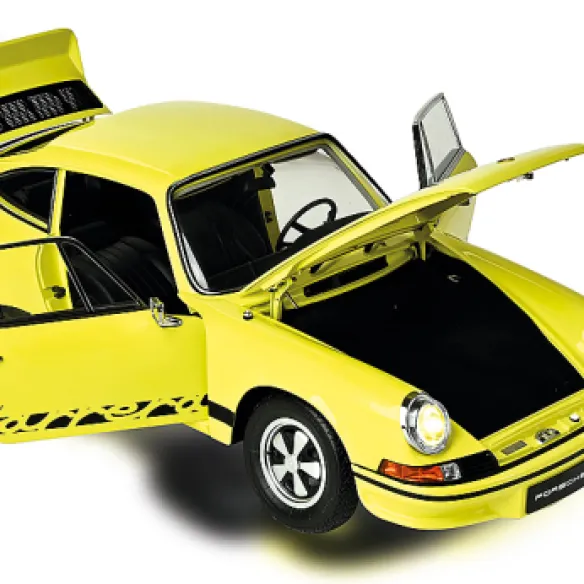
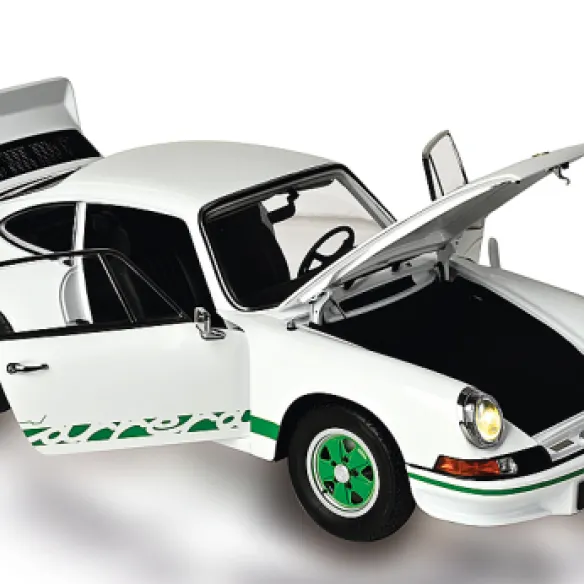
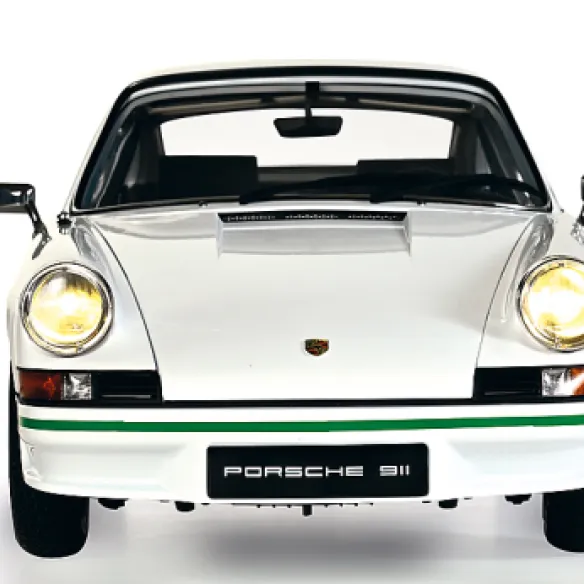
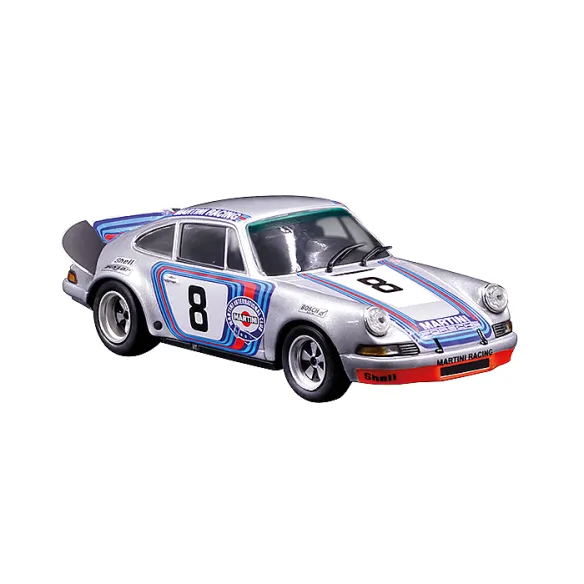
Porsche 911 carrera RSR - 1973
Porsche 911 carrera RSR
Dropping the 917, Porsche developed a ‘supercharged’ 911 rs, which spread fear throughout the FIA and IMSA championships for years.
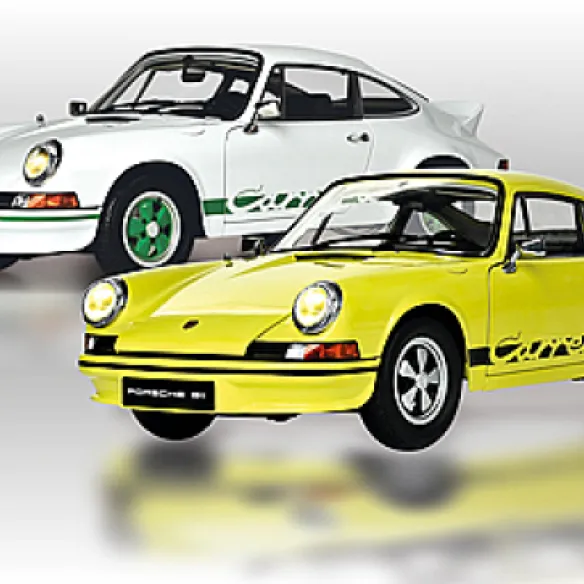
Following the unexpected setback which ended the dominance of the 917 in Sports Car racing and forced the ever-reliable 908 to compete with the Prototypes, Porsche turned its attention back to production-based models and decided to develop a new competition version of the 911 called the 911 Carrera RSR. This car, presented at the end of the year in anticipation of the 1973 season, was based on the 2.7-litre Carrera RS, but featured an engine and body designed in accordance with Group 4 regulations. As a result, it was homologated in the Sports Car category up to 3 litres and in the IMSA GTO class, immediately beginning to win across both fronts.
© IXO Collections SAS - Tous droits réservés.
TWO SEASONS AS AN “OFFICIAL”, WITH TEN ON THE CIRCUITS AROUND THE WORLD
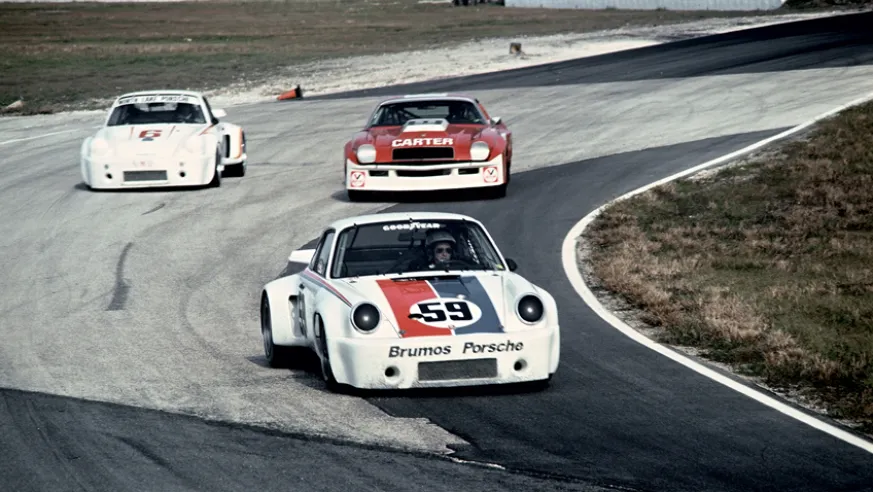
It was Porsche's intention to offer the RSR to private teams, but a few pre-production models were used by the brand in early 1973. Two of the first cars competed in the 24 Hours of Daytona, a race counting towards the World Sportscar Championship, which that year was called the World Manufacturers' Championship that Porsche had won from 1969 to 1971 with the 908 and 917. The two cars were entrusted to partner teams: the Penske team, with the highly effective Mark Donohue and George Follmer at the wheel (who had already won the Can-Am with the 917/10; Donohue would dominate that same season with the powerful 917/30), and the Brumos team. The former, classified twelfth during qualifying, were forced to withdraw, while the RSR Brumos No. 59 with Peter Gregg and Hurley Haywood (both drivers of the 917/10) which started in eighth position, achieved a surprising overall victory, finishing well ahead of GT cars fitted with more powerful engines, such as the Ferrari 365 GTB/4 ‘Daytona’ and the Chevrolet Corvette. End of March, at Vallelunga, the official team entered two cars wearing Martini Racing colours, taking seventh and eighth places. That same weekend, Haywood and Gregg won with car no. 59 at the 12 Hours of Sebring, a race that, that year, was no longer part of the World Sportscar Championship calendar but was included in the IMSA GT Championship organised by the American federation. Dave Helmick, who was also the third driver, owned the team. Both other RSRs entered, that of the Toad Hall team and that of Far West Racing, finished second and fourth.
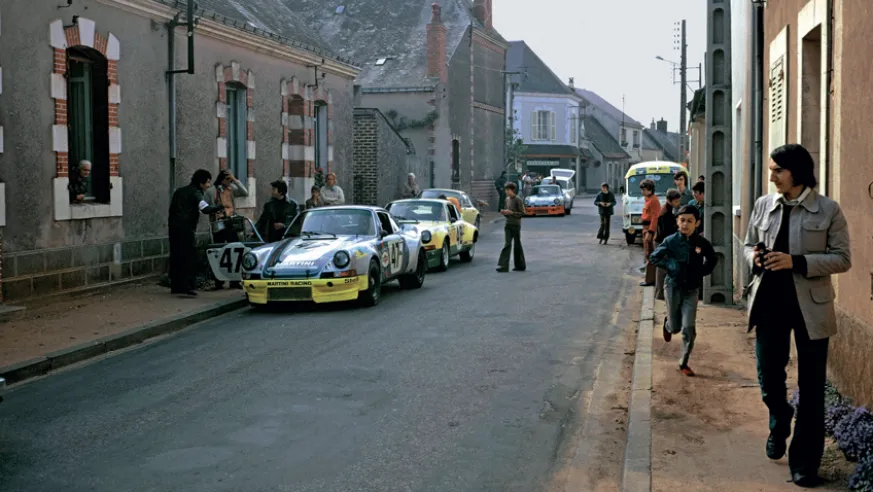
On the streets of Le Mans, some 911 Carrera RSRs on their way to the start of the 1973 24 Hours. In the foreground, is the official car being driven by Reinhold Joest and Claude Haldi, who would later retire from the race.© IXO Collections SAS - Tous droits réservés.
WEARING THE MARTINI COLOURS, IT WON THE 1973 TARGA FLORIO
Subsequently, the 911 Carrera RSRs achieved a string of victories and great results in both competitions, as well as in the Interseries and other minor races. The “official” Martini cars were victorious in the April 4 Hours of Le Mans (the second car finished fourth) and the Targa Florio with Herbert Müller and Gijs van Lennep, while, in the IMSA GT, Peter Gregg’s (who would become champion at the end of the year) Brumos car won at Road Atlanta and the Daytona 250 in November. Further successes were achieved by other teams such as Penske with Mark Donohue (winner of Race 1 at Riverside) and Bob Harmon Racing, with Milt Minter triumphing in the Trans-Am at Lime Rock.
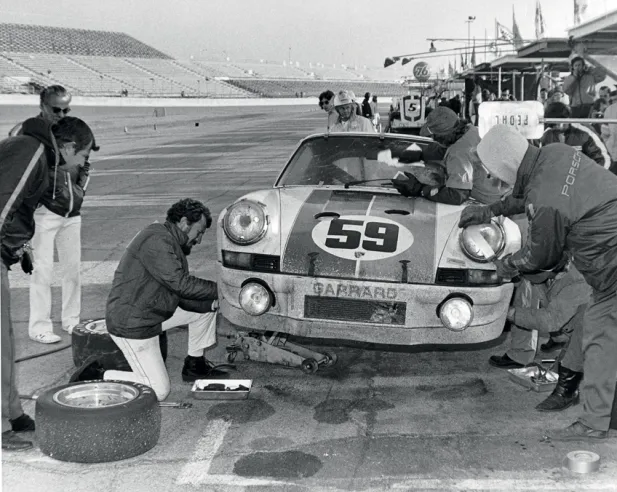
The Brumos team's 911 Carrera RSR with its mechanics before victory in the 1973 Daytona 24 Hours.© IXO Collections SAS - Tous droits réservés.
PREAMBLE TO TURBOS
Porsche also fielded the RSR in 1974, whilst continuing to develop the car with a 3-litre engine and a larger spoiler. But in the meantime, the brand had also begun work on a 2.1-litre supercharged engine that competed in Group 5. This RSR Turbo provided an opportunity to experiment with the road-going 911 Turbo, namely the 930 and its famous derivatives, the 934 and 935. Private teams continued to use the RSR with 2.8-litre and 3-litre engines for several more years.
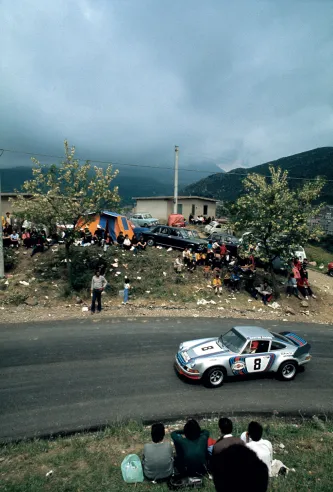
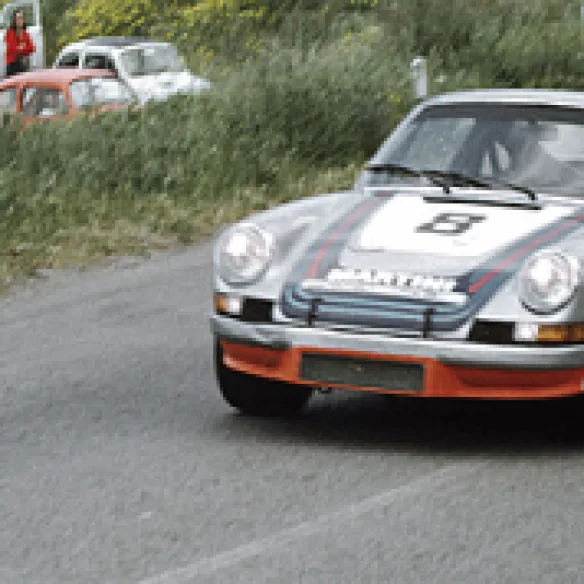
Pictured here is the 911 Carrera RSR from Martini Racing, driven by Herbert Müller and Gijs van Lennep, on its way to victory in the 1973 Targa Florio.© IXO Collections SAS - Tous droits réservés.
PETER GREGG ET HURLEY HAYWOOD
1973 was Peter Gregg's golden year: he scored overall victories at Daytona and Sebring (and a third place in his class at Le Mans); at the end of the year, he won the IMSA GT GTO Class Championship, a title he retained for the next two years, prior to two further successes in 1978 and 1979 in the new GTX class. At Daytona, his tally of victories rose to four, adding to his first-season win with further successes in 1975, 1976 and 1978. At Le Mans, Gregg recorded two third-place finishes overall (1977 and 1978) at the wheel a Porsche 935 and 936. This first place finish also coincided with victory in Group 5. Hurley Haywood shared many successes with Gregg, including victory in the GTU class, the junior class of the IMSA GT championship in 1971, and two victories at Daytona (a race in which he would compete up until 2012) in 1973 and 1975, as well as successes in 1977, 1979 and 1991, once again in a Porsche. Among his other achievements were three victories at the 24 Hours of Le Mans (winning in 1977 and 1983 in a 936 and 956, and in 1994 in a Dauer 962).
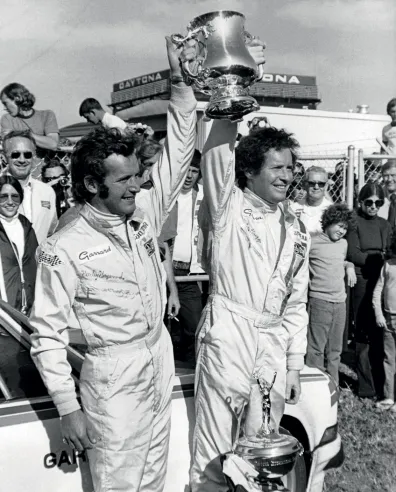
Hurley Haywood (left) and Peter Gregg (right) lifting the trophy won at the 1973 Daytona 24 Hours. This was their first victory in this event.© IXO Collections SAS - Tous droits réservés.
Technical sheet
Recent articles