 English
 français
 Deutsch
 español
 italiano
 português













18/04/2026
Porsche 917K - 1970
Porsche 917K
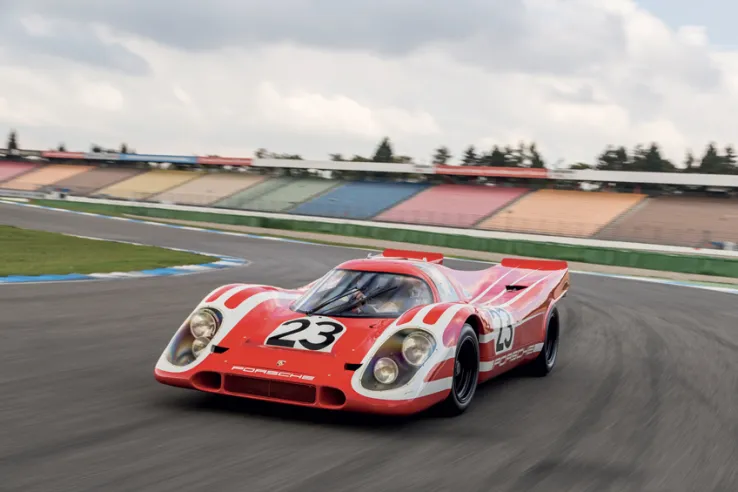
With its ‘short tail’ version, the 917 made up for its disappointing debut in 1969, with two years of dominance and its first overall victories at Le Mans.
Two years passed between Porsche's debut in the top class of the World Endurance Championship series and its first victories. The brand, who had long dominated the 1.5 and 2-litre racing classes, only began to make its mark in the higher classes in 1968 with the 908, after the FIA limited the engine capacity of Group 6 prototypes to 3 litres. Along with these, sports cars with engines up to 5 litres and a minimum production run of 50 units were also admitted, a figure reduced to 25 in 1969 to encourage manufacturers to take up the challenge. Porsche then built the 917, which was far from perfect at first. However, this changed with the development of the ‘K’ version.
© IXO Collections SAS - Tous droits réservés.
THE CAR REMAINED WITHOUT COMPETITION FOR TWO YEARS
The first 917K (from the German kurz heck, meaning ‘short tail’) made its debut at the end of a rather disappointing season in 1969 as a result of a few growing pains. Aerodynamics issues prevented the new car from performing to its full potential, except at the 1000 km of Zeltweg, where it secured its only victory prior to its overhaul. Fitted with a redesigned, raised and truncated rear end, which improved its stability, the car immediately won the 9 Hours of Kyalami, demonstrating the effectiveness of the solutions adopted. After a few additional enhancements, the 917K returned to the starting grid for the 1970 season and dominated the races, winning the 24 Hours of Daytona and the 1000 km races at Brands Hatch, Monza and Spa, while only allowing its rivals, the Ferrari 512 S, to win the 12 Hours of Sebring. For the Targa Florio and the 1000 km of Nürburgring, team management opted to field the more agile 908, a choice that proved successful, giving Porsche a decisive advantage in the world title race, known at the time as the ‘International Championship for Manufacturers’ (for Constructors), a title the brand had already won in 1969 with the 908.
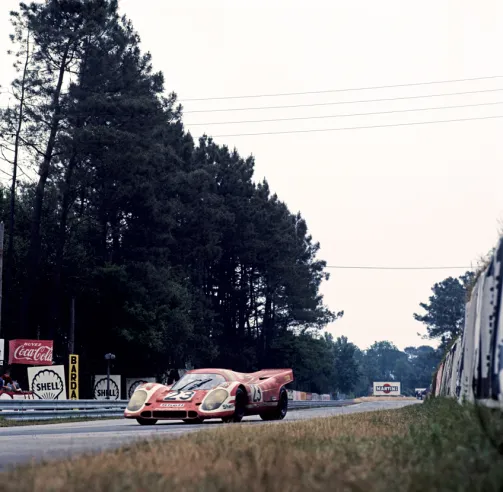
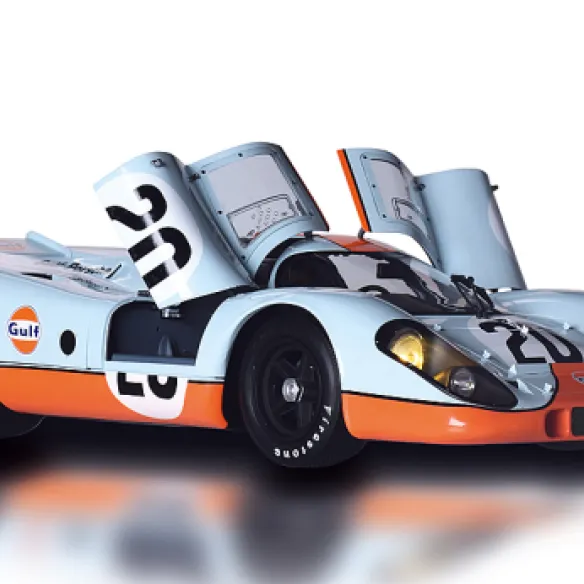
In 1971, during the 24 Hours of Daytona, the Porsche 917K No. 2 with Pedro Rodriguez and Jackie Olivier, future winners, battled with their direct rival, the Ferrari 512, this being the 512 M from Luigi Chinetti's NART team.© IXO Collections SAS - Tous droits réservés.
FIRST MAJOR VICTORY AT LE MANS
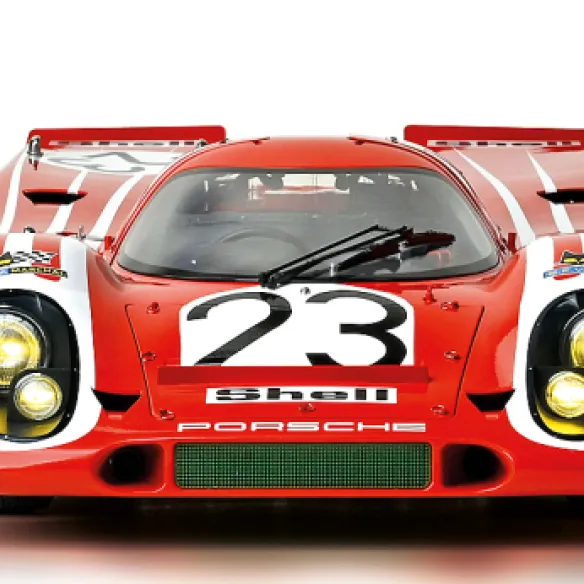
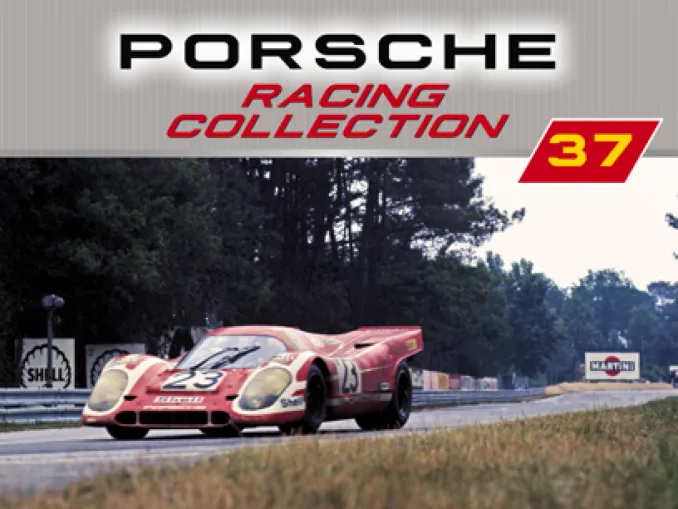
At the 24 Hours of Le Mans in June, Porsche was determined to finally claim its first overall victory. For this purpose, it entered ten 917s, including two models of the ‘L’ (long tail) variant, specifically designed in order to take advantage of the long straight on the Circuit de la Sarthe, enabling high speeds to be reached with a streamlined car. Succes was indeed achieved, however it was the 917 K of the Porsche-Salzburg satellite team with Hans Herrmann and Richard Attwood that took the win, while the best 917 L of the official Porsche-Martini team finished second ahead of a 908. Following Le Mans, the 917Ks won two more races, at Watkins Glen and Zeltweg, and Porsche concluded the season with nearly twice as many points as Ferrari.
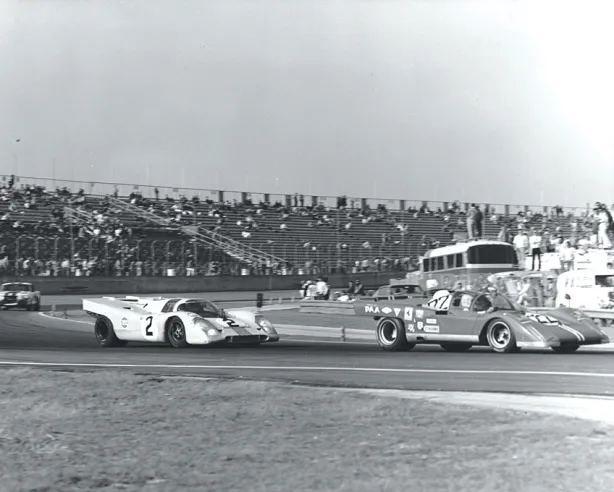
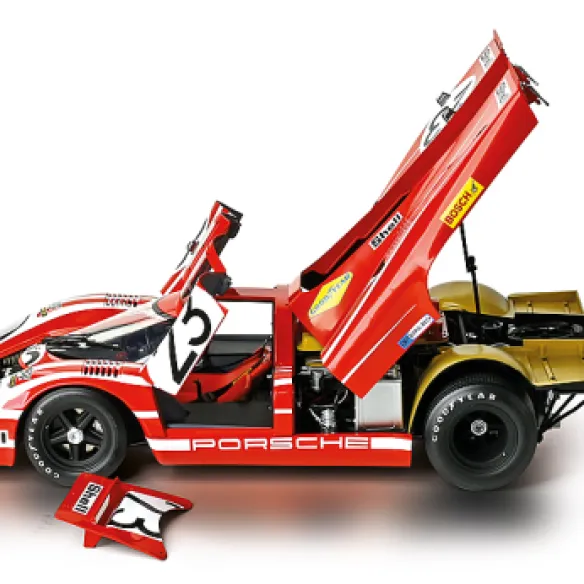
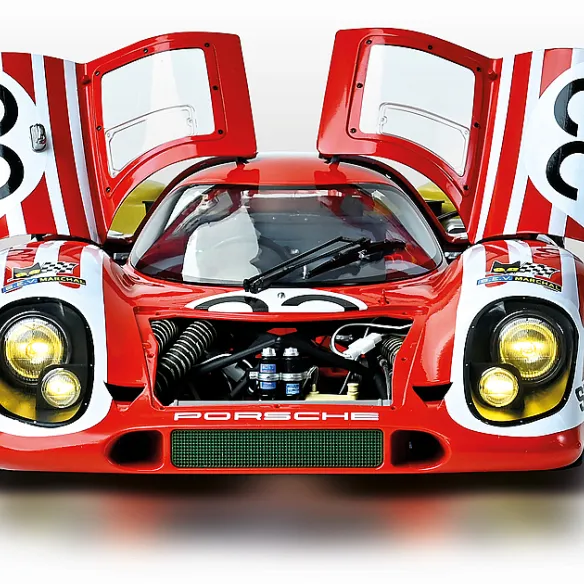
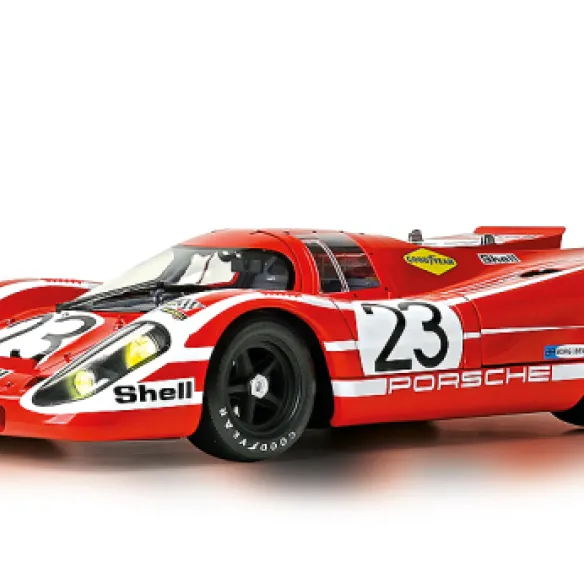
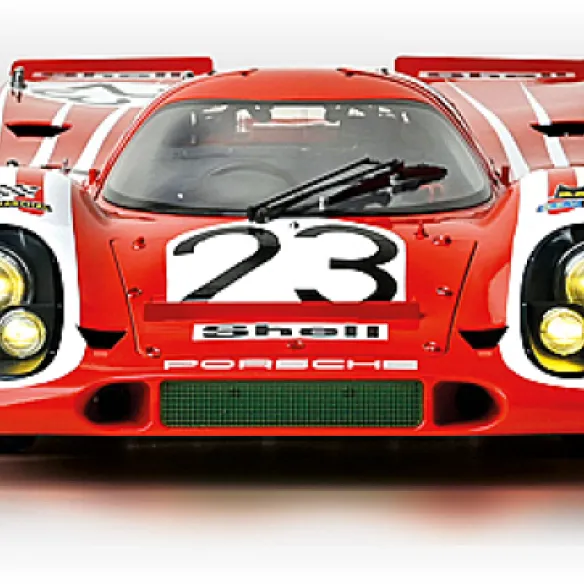
The Porsche 917K that won the Le Mans 24 Hours in 1970 for the Salzburg team carried the white and red colours of the Austrian flag for the first and only time.© IXO Collections SAS - Tous droits réservés.
[THE 1972 REGULATION EXCLUDES THE 917K]
The same scenario repeated itself in 1971. During that season, the 917K faced a new rival, the Alfa Romeo 33/3. It managed to keep it at bay by winning five of the eight races leading up to the 24 Hours of Le Mans, plus the 1000 km of Nürburgring, with the usual 908 taking the honours. Against this backdrop, Porsche arrived at Le Mans comfortably in the lead of the world championship and confirmed its supremacy by winning with the ‘official’ 917K with Helmut Marko and Gijs van Lennep, followed by Richard Atwood and Herbert Müller, racing for John Wyer’s British private racing team at the wheel of 4.9-litre cars. The following victory at Zeltweg secured the world title, the third in a row for Stuttgart. In 1972, believing that this supremacy was discouraging other manufacturers, the FIA decided to ban sports cars with engines up to 5 litres, thereby prematurely ending the career of the 917. Nevertheless, the 917 continued to race and win in other series such as Can-Am with its derivatives, the 917/10 and 917/30.
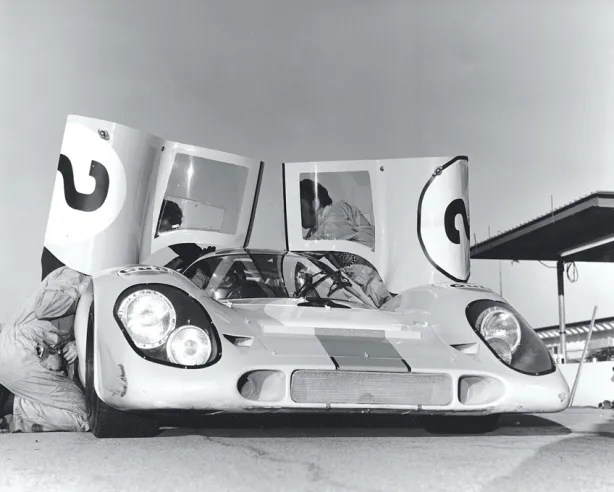
Close-up of 917K No. 2, with which Pedro Rodriguez, Leo Kinnunen and Brian Redman won the Daytona 24 Hours in 1970.© IXO Collections SAS - Tous droits réservés.
RICHARD ATTWOOD ET HANS HERRMANN
Hans Herrmann was closely linked to Porsche: born in Stuttgart in 1928, he competed in several editions of the Sport, Grand Touring and finally Sport-Prototype championships, mainly driving Porsche models. His victory at Le Mans in 1970 was his only outright success in his career (apart from class wins in 1958, 1962, 1967 and 1969), in what was his last appearance in the French classic. The list of Herrmann's achievements also includes two victories in the 12 Hours of Sebring (1960 and 1968) and one in the Targa Florio in 1960. He also competed in a dozen Formula 1 races between 1953 and 1969, though he never secured a victory. For Richard Attwood, his 1970 victory at Le Mans and a second-place finish with Herbert Müller in 1971 were his best results from nine appearances at the Sarthe marathon.
The British driver was also a one-time winner of the 1000 km of Zeltweg and three-time winner of the 9 Hours of Kyalami. In addition, he competed in five F1 championships between 1964 and 1969, recording his best result with a second place finish in the 1968 Monaco Grand Prix. From 1966 to 1968, he competed in the Tasmania Series in Australia and New Zealand, winning the 1966 Levin Grand Prix.
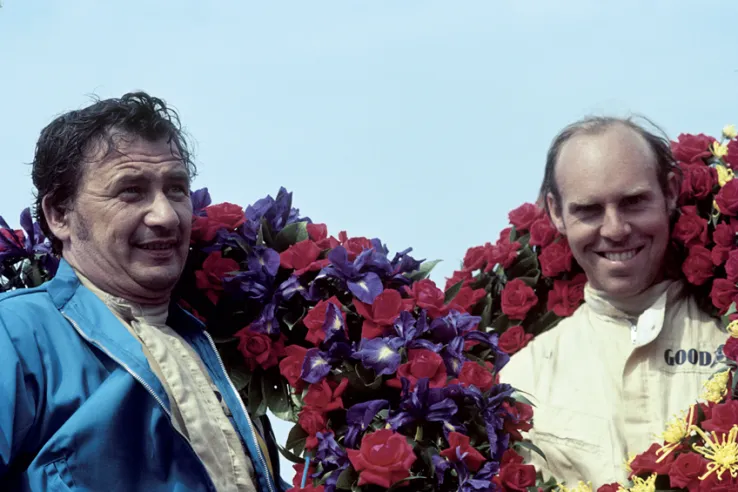
Hans Herrmann (left) and Richard Atwood, winners of Le Mans 24 Hours in 1970, Porsche's first overall victory at Le Mans. The German driver, born in 1928, already had four class victories in the French classic to his name. © IXO Collections SAS - Tous droits réservés.
Technical sheet
Recent articles