 English
 français
 Deutsch
 español
 italiano
 português























10/02/2026
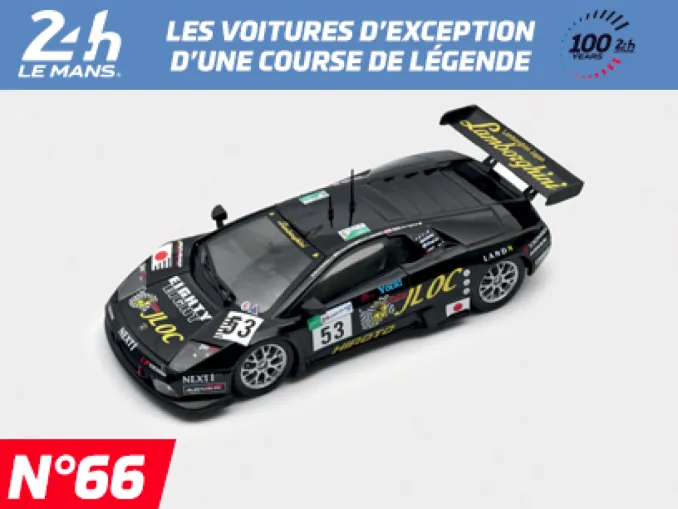
Lamborghini Murciélago R-GT – 2007
Lamborghini Murciélago R-GT
After Audi acquired Lamborghini in 1998, the Bologna-based company entered into the highest class of competition with a car derived from Sant'Agata's latest supercar, the Murciélago. However this venture proved unsuccessful as the team failed to qualify after four appearances at Le Mans.
Presented at the 2003 Frankfurt Motor Show, the Murciélago R-GT was the first car developed by Lamborghini intended for motorsport, following a few earlier attempts made at the request of customers rather than out of genuine interest, since the company's founder, Ferruccio Lamborghini, questioned the value of racing for promotional purposes. However, on this occasion, a package of services including assistance from the brand was offered to private competitors. The car was prepared by the German firm Reiter Engineering, in partnership with Audi Sport.
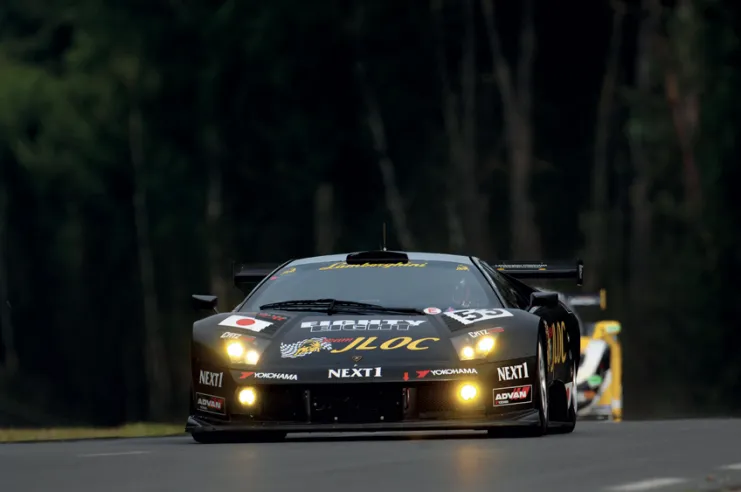
During the 2007 Le Mans 24 Hours, the JLOC team entered two Murciélago R-GTs. The first car suffered a breakdown during practice, while the second had to retire after only one lap due to transmission problems.© IXO Collections SAS - Tous droits réservés.
Homologated in the GT1 category, the Murciélago R-GT differed from the road model primarily through the removal of its all-wheel drive, an option that required a significant and costly technical overhaul in order to restore the necessary balance. Less than ten units were built to compete in various races in the European, Asian and American Le Mans Series. The car suffered a long series of setbacks in the beginning and only showed its true potential during the 500 km of Valencia in 2004, where it finished third, and then during the 1000 km of Monza in 2005, where it had to withdraw less than an hour before the finish due to a fire, despite having built up a solid lead.
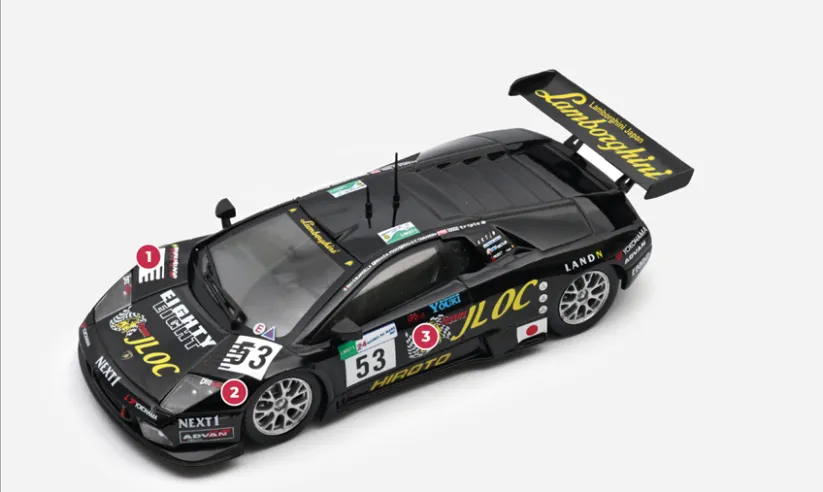
1. The style of the Murciélago R-GT is almost identical to that of the street supercar, except for the highly visible ‘moustaches’ installed on the front wings.
2. In technical terms, the main change introduced on the R-GT is the removal of the four-wheel drive system, which requires a major overhaul of the front axle.
3. The basic structure remains a tubular lattice, covered with a body made entirely of carbon fibre which, together with the simplification of the mechanics and equipment, contributes to a reduction in weight from nearly 1,700 kg ‘in series’ to 1,100 kg.© IXO Collections SAS - Tous droits réservés.
A number of modifications made the Murciélago R-GT more competitive in 2006, and it achieved some successes, such as a sixth place in the Brno 500 km for the B-Racing RS Line Team with Kox/Walchhofer/Bouchut. Until 2009, the year of its last season, the R-GT achieved few victories. Its most glorious result was achieved during the 2 Hours of Zhuhai in China, the first event of the 2007 FIA GT Championship, where one of the two cars of the All-Inkl.com Racing Team, with Christophe Bouchut and Stefan Mücke at the wheel, finished first. In 2009, Peter Kox and Roman Rusinov won convincingly in the GT1 category on behalf of the Russian IPB Spartak Racing Team during the 1000 km of Catalonia, the first event of the European Le Mans Series, in which this team only participated in the first two race events. In the same year, the Japanese team JLOC achieved an honourable place in a Murciélago R-GT during the double race in the only round of the Asian Le Mans Series championship. The race, held in Okayama, saw drivers Atsushi Yogou and Hiroyuki Iiri finish ninth in the final standings, after finishing tenth overall and first in their category in race no. 1 and ninth in race no. 2.
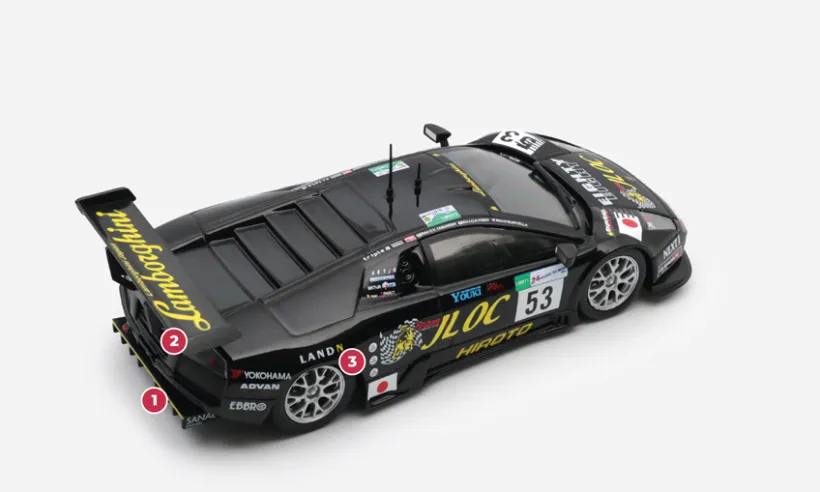
1. A large extractor has been added to the rear to increase the grip of the drive wheels.
2. The mobile spoiler on the road car has been removed on the R-GT and replaced with a large, fixed wing.
3. Despite the removal of four-wheel drive, the mechanical layout remains the same as the standard model, with the gearbox located in the passenger compartment rather than behind the engine, a solution that is more practical in the event of modifications and repairs.© IXO Collections SAS - Tous droits réservés.
As for Le Mans, Lamborghini's GT1 took part in a series of races between 2006 and 2009, always with the JLOC and Spartak teams, without achieving any noteworthy results. After that, the parent company focused its efforts mainly on derivatives of the Gallardo and then later the Huracán in the GT2 and GT3 categories.
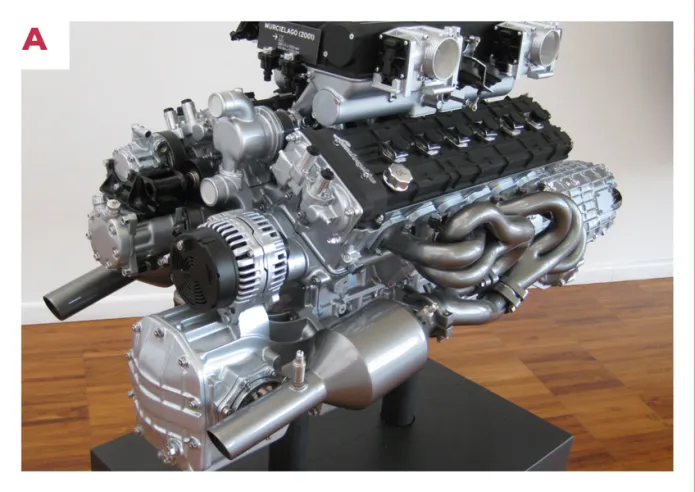
A. Limited by regulations, the racing engine's displacement is reduced from 6.2 litres on the series production version (here) to 6 litres by reducing the bore by 3 mm.© IXO Collections SAS - Tous droits réservés.
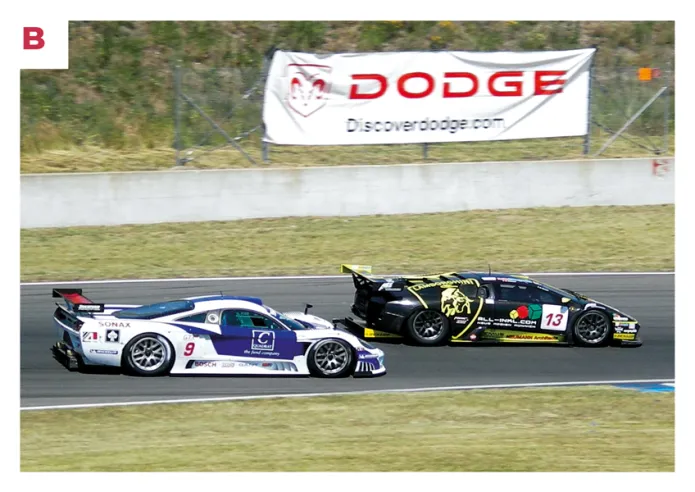
B. The Murciélago R-GT of the B-Racing team competes here against the Saleen S7-R of the Zakspeed team at Silverstone during the 2006 Tourist Trophy.© IXO Collections SAS - Tous droits réservés.
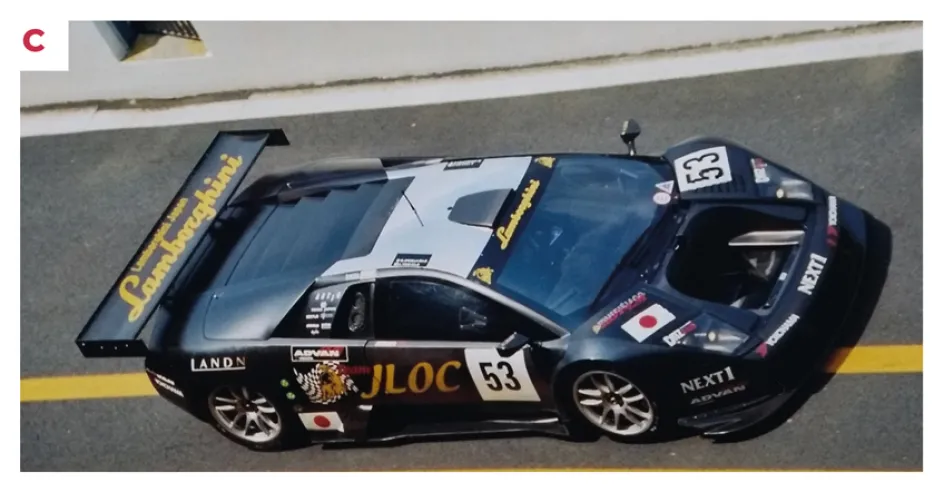
C. The R-GT, driven by Marco Apicella for the JLOC team, lost its front bonnet during the free practice sessions for the 2007 Le Mans 24 Hours.
© IXO Collections SAS - Tous droits réservés.
Recent articles