 English
 français
 Deutsch
 español
 italiano
 português














04/05/2023
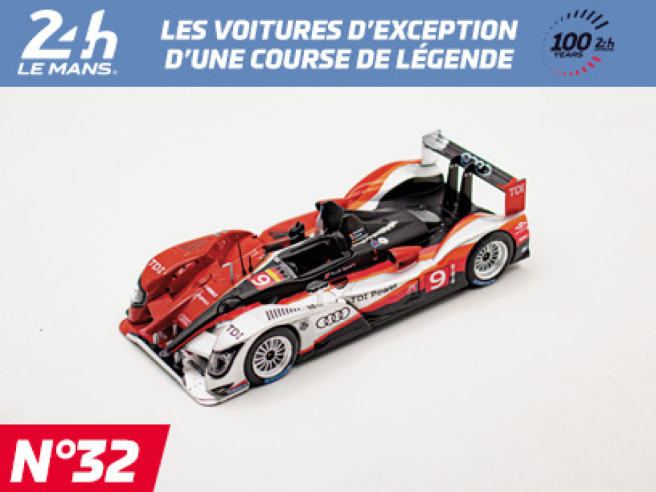
Audi R15 TDI plus - 2010
Audi R15 TDI plus
Author : Cette collection est une adaptation de 24H Le Mans ® Le auto delle corsa più leggendaria al mondo Éditeur : Centauria Editore s.r.l.
Read moreFollowing technical issues caused by the complex aerodynamics of the R15 TDI, which led to Audi's first defeat at Le Mans after five consecutive victories, the German manufacturer revised and simplified the car's bodywork in 2010. This resulted in the Audi R15 TDI plus, the car that would bring them back to victory.
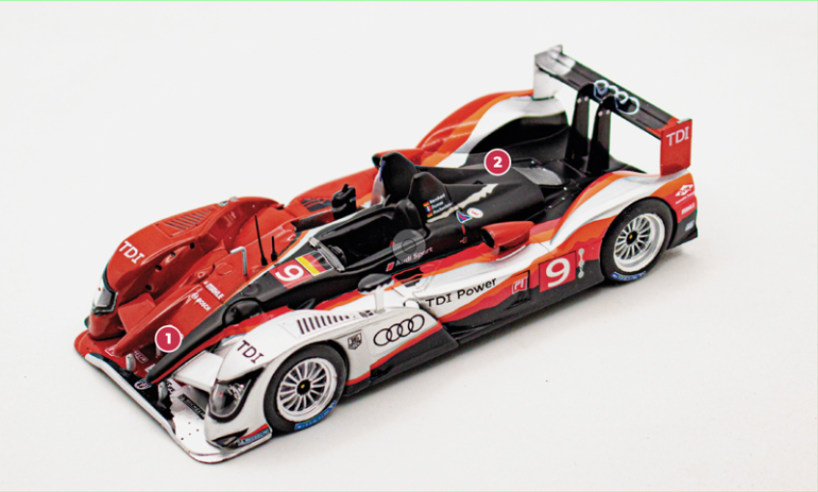
1. The controversial front wing and air duct that runs across the car of the 2009 R15 have been replaced by a simplified fixed geometry, with the profiles between the nose and the wings serving to streamline the front suspension arms.
2. The engine is essentially the same as last year's, but with more restrictive flanges imposed by the regulations. Nevertheless, Audi managed to limit the loss of power from 650 to nearly 600 hp.
© IXO Collections SAS - Tous droits réservés.
With Peugeot's victory in 2009, Audi's potential string of eleven consecutive wins at Le Mans came to an end. It was the only edition of the 24 Hours that the German brand failed to win between 2004 and 2014. This string of victories could have been even longer had it not withdrawn from the 2003 edition, which was won by Bentley after three consecutive victories by Audi. The choice was a strategic one by the Volkswagen Group, owner of both brands, to withdraw the official Audi team and handing over its best drivers to the British team. The latter, facing its French rivals, suffered a defeat that seemed difficult to swallow when, shortly after the race, the ACO, which had rejected Peugeot's complaints about some aerodynamic solutions adopted on the R15 TDI, changed its regulations, forcing Audi to review its controversial designs.
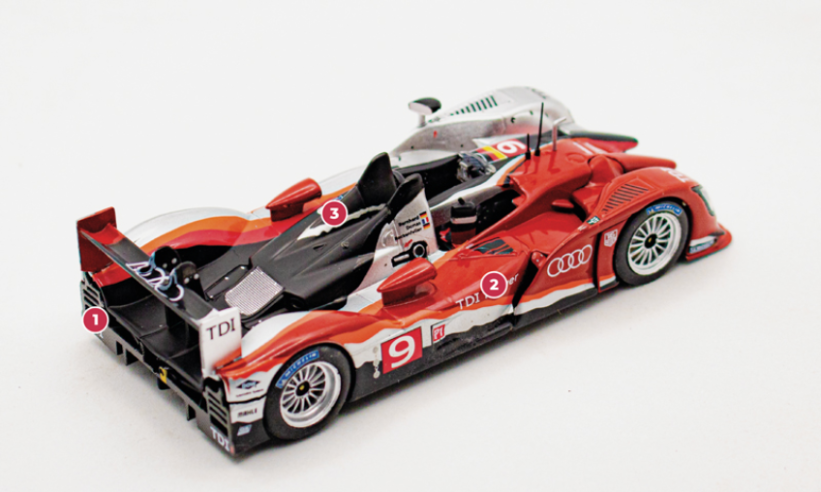
1. The 2010 regulations imposed on manufacturers to fully cover the area behind the rear wheels. Audi took advantage of this to raise its perforated section, thereby increasing the efficiency of the spoiler.
2. The new aerodynamics diverted airflow over the top of the bodywork and along the sides of the car through large openings on either side of the passenger compartment.
3. As a result of the changes to the profile, the designers were also forced to reposition the radiators.
© IXO Collections SAS - Tous droits réservés.
But the redesign was not entirely successful because Audi, due to financial problems, had failed to develop the 2009 car and, after encouraging success at the 12 Hours of Sebring and third place at Le Mans, was unable to do so during what was not a particularly brilliant year. The change in regulations forced the German brand to revise the R15 TDI by producing the ‘plus’ version, which, despite its name, actually had far fewer sophisticated solutions and a simpler design compared to the 2009 car, thereby increasing its competitiveness on the track. The new Audi made its debut in April, winning at Le Castellet with Allan McNish and Rinaldo ‘Dindo’ Capello, the same drivers who, a month later, partnered with Tom Kristensen to finish third in the 1000 km of Spa. For the following 24 Hours of Le Mans, the Joest team (Audi's official team) entered three cars (including one under the Audi Sport North America banner) which, although fast, were not among the favourites. During qualifying, Peugeot confirmed its supremacy, placing its 908 HDi FAP cars (three from the official team sponsored by Total and one from the junior Oreca team) in the first four places, leaving Audi with the next three.
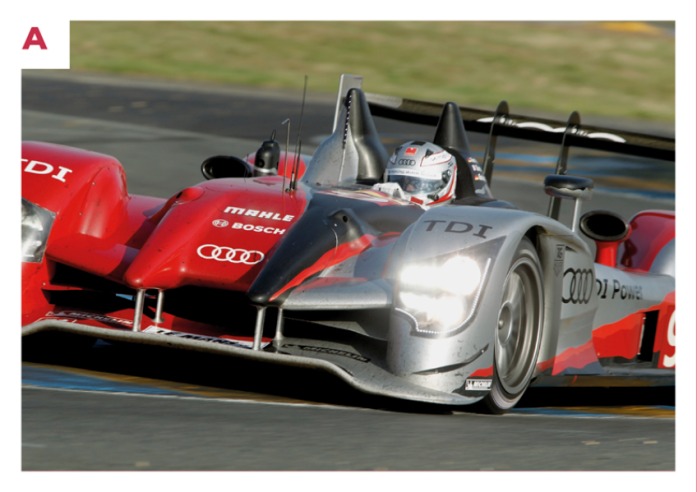
A. Although less complicated than that of the previous year, the design of the front of the R15 Plus, with its split nose, became more distinctive.
© IXO Collections SAS - Tous droits réservés.
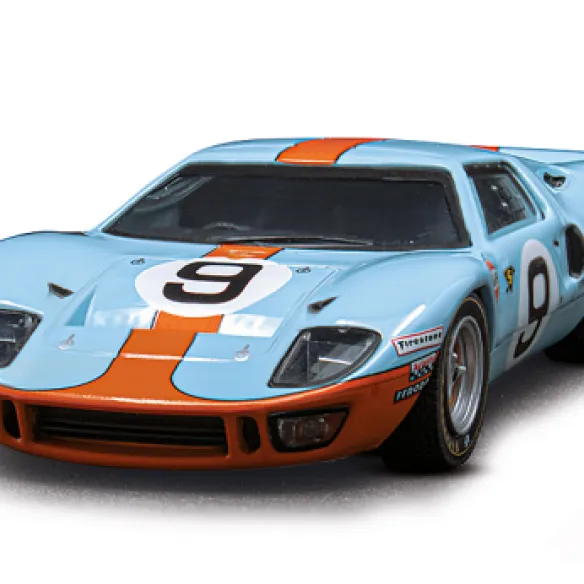
During the race, fate turned against the French manufacturer, which lost all four of its cars due to suspension and engine failures, allowing Audi to take the lead. Victory went to car no. 9, driven by Germans Mike Rockenfeller , Timo Bernhard and Frenchman Romain Dumas, who each scored three wins (two for Rockenfeller) on the Sarthe circuit. Next came the No. 8 car with André Lotterer, Marcel Fässler and Benoît Tréluyer, and in third place the No. 7 car with Kristensen, McNish and Capello. For 2011, changes to the regulations and new engine capacity restrictions prompted Audi to develop a brand new car, the R18 TDI. However, two R15 TDI Plus cars continued to compete in the 12 Hours of Sebring, where they finished fourth and fifth.
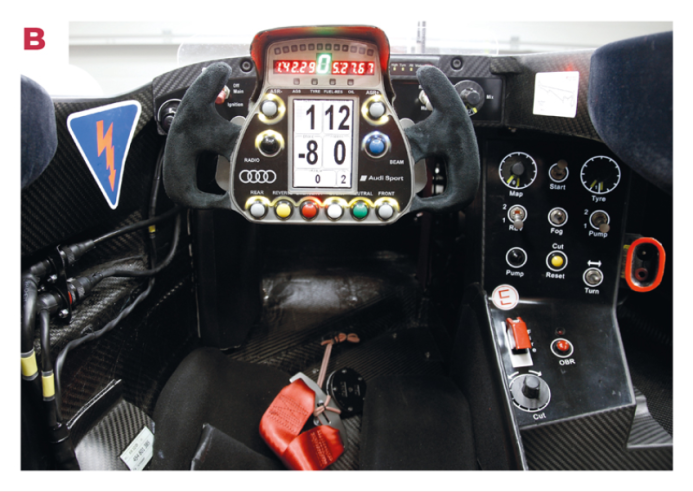
B. The cockpit with the steering wheel, which houses the analogue controls and digital instruments. It is entirely made of carbon fibre.
© IXO Collections SAS - Tous droits réservés.
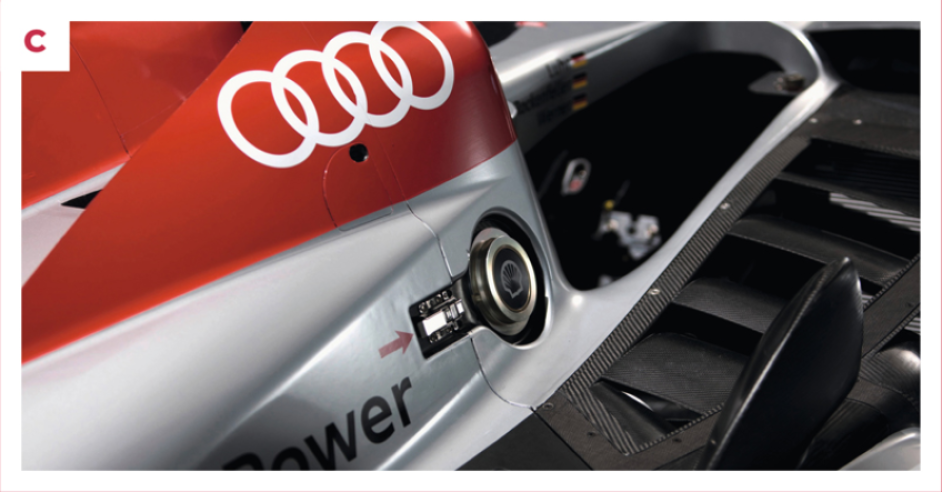
C. Numerous ‘finns’ on the sides of the cockpit allow hot air from the engine cooling systems to escape.
© IXO Collections SAS - Tous droits réservés.
Recent articles