 English
 français
 Deutsch
 español
 italiano
 português














02/02/2026
1973 PORSCHE 917/30
1973 PORSCHE 917/30
THE FINAL EVOLUTION OF THE 917, THE LONG-WHEELBASE SPORTS CAR DOMINATED PORSCHE'S LAST SEASON IN CAN-AM AND EARNED MARK DONOHUE A PLACE IN HISTORY.
The brilliant success of the Porsche 917/10 in the 1972 Canadian American Challenge Cup (Can-Am) series could not satisfy Porsche's appetite for victory. Launched in 1972, the twin-turbocharged mid-engine car with over 1,000 hp still suffered from stability issues that only drivers such as Mark Donohue and George Follmer were able to master. In order to maintain its dominance in 1973, Porsche developed the 917/30, an even more advanced car in terms of mechanics, chassis and bodywork, not yet knowing that it would be the last to represent the brand in the North American championship.
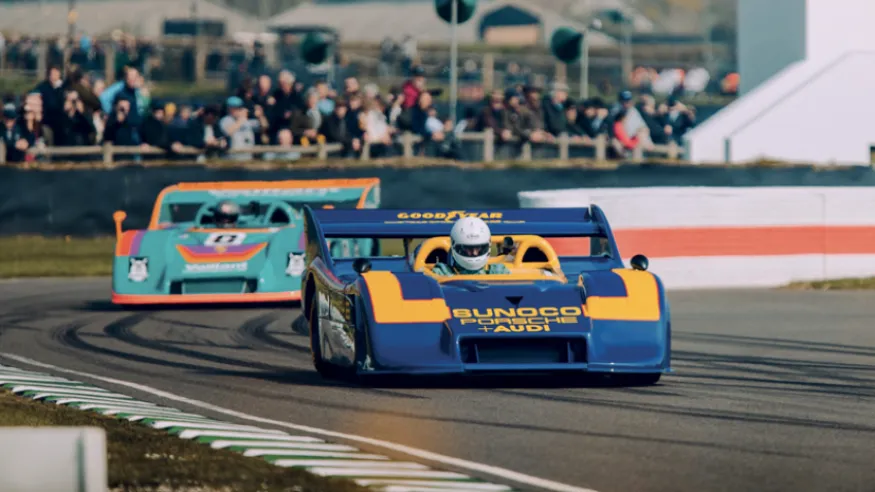
© IXO Collections SAS - Tous droits réservés.
CHANGE TO THE RULES LEADING UP TO THE FINAL CHAMPIONSHIP
The Porsche 917/30 entered the 1973 season with a single car entrusted to the Penske team, Porsche's official partner, driven by star driver Mark Donohue. Reigning champion George Follmer, who had won the previous year thanks to Donohue's misfortune, joined the private Rinzler Motorsport team, strongly protesting Porsche's refusal to entrust the new car to other teams. Even so, Rinzler had the satisfaction of beating the 917/30 in the first two rounds of the new championship at Mosport and Road Atlanta, where Charlie Kemp and George Follmer won respectively in the ‘old’ but still competitive 917/10.
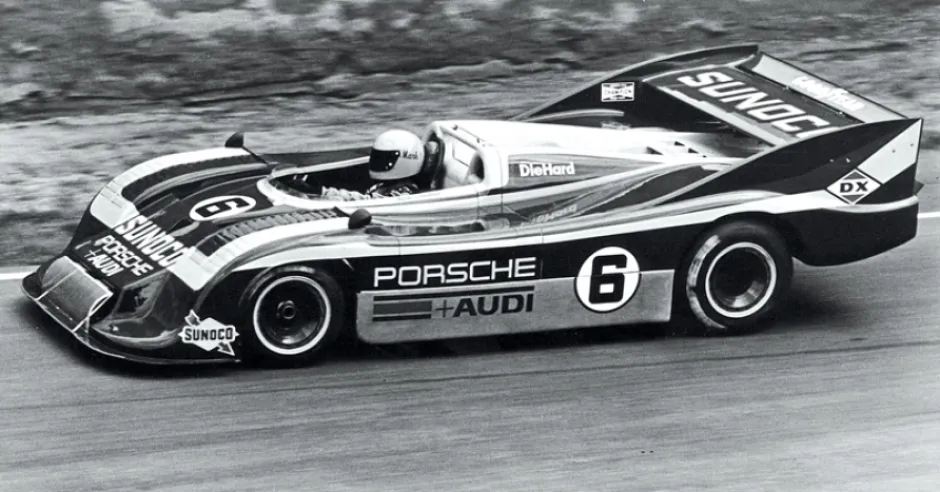
The 917/30 accelerates from 0 to 100 km/h in less than 4 seconds. According to some sources, with the engine tuned to maximum power, this time is less than 2 seconds.
© IXO Collections SAS - Tous droits réservés.
WHEN SHE STARTS WINNING, SHE DOESN'T STOP
Donohue recovered in the third race at Watkins Glen and won all the remaining races of the season at Mid-Ohio, Road America, Edmonton, Laguna Seca and Riverside, scoring 139 points, twice as many as Follmer (62), who, apart from his victory in the second heat, finished twice in second place and achieved nothing really significant.
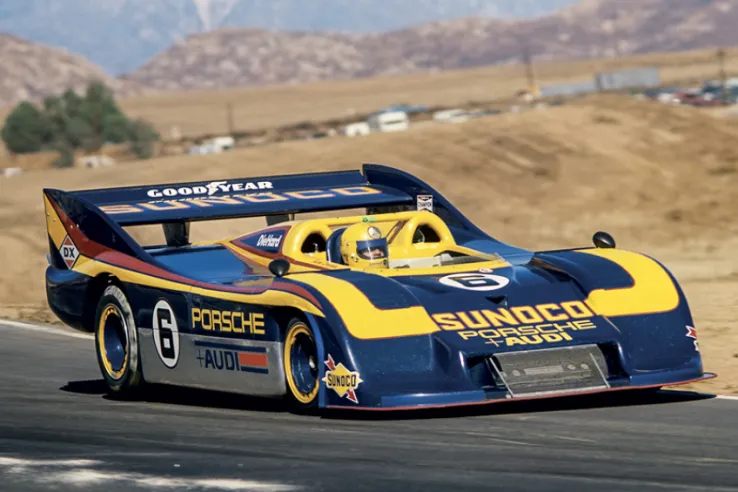
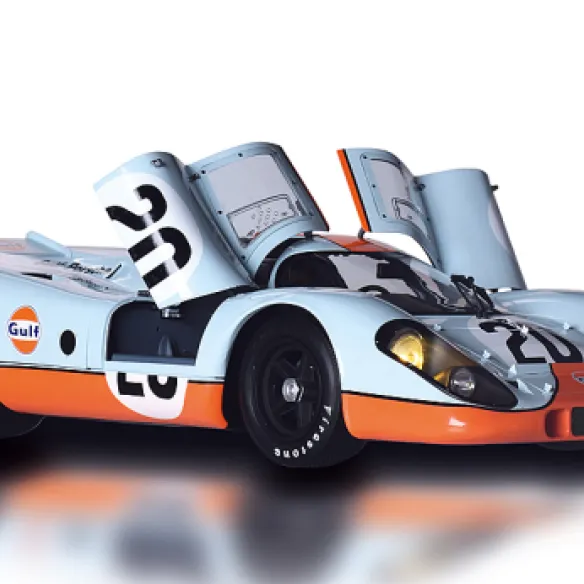
In addition to Sunoco, to whom we owe the blue and yellow livery, the Penske team is sponsored by the company that distributes Porsche and Audi cars in North America, which explains the presence of both brands on the 917/30.© IXO Collections SAS - Tous droits réservés.
[IN THE 1973 CAN-AM, SHE WON EVERY RACE EXCEPT THE FIRST TWO]
This string of victories prompted the SCCA (the association that organises the championship) to introduce a rule change for 1974, which would put an end to Porsche's dominance. It imposed a limit on fuel consumption, reduced to 1 US gallon per 3 miles (nearly 80 l/100 km), which prevented the powerful but fuel-hungry (up to 1 l/km!) twin-turbo engine of the 917/30 from performing at its full potential.
At the only race in which the car competed, held at Mid-Ohio, driver Brian Redman, having dominated much of the race, had to settle for second place as the risk of running out of fuel forced him to slow down during the final sprint. By then, however, it was clear that the series was in irreversible decline, and the championship was cancelled shortly after the next race at Road America. The 917/30 not only caused the Can-Am to lose popularity, but the model continued to shine in the Interserie Championship, the European equivalent of the Can-Am, in which this car was permitted to compete. Between 1973 and 1975, the 917/30 achieved several victories and other good rankings with drivers such as Vic Elford, Herbert Müller and Leo Kinnunen.
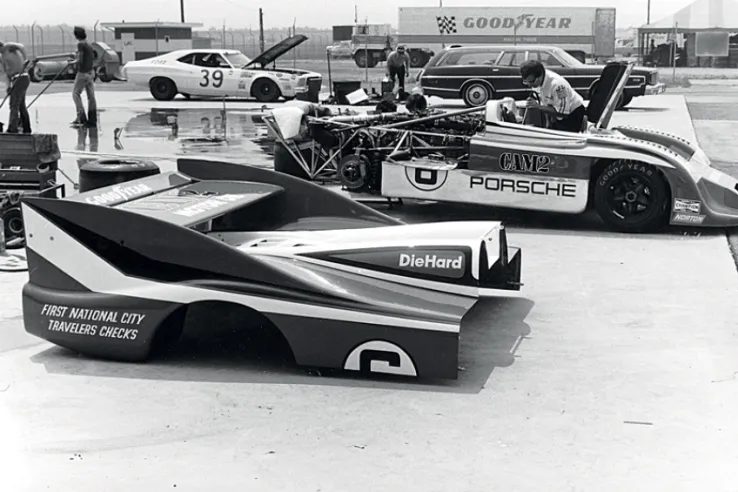
The bodywork of the 917/30 uses fibreglass and polyester resin similar to that of the 917/10, but a higher proportion of plastics helps to keep the weight down despite the significant increase in size.© IXO Collections SAS - Tous droits réservés.
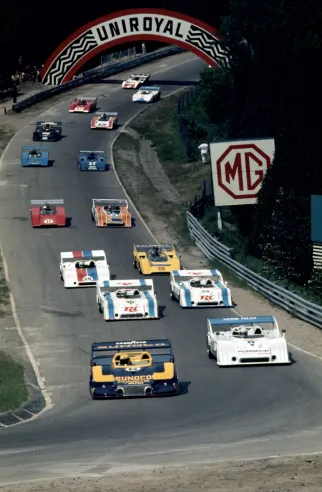
Mark Donohue leads the first race of the 1973 Can-Am season at Mosport International Raceway in Canada with his 917/30, followed by the 917/10 driven by Jody Scheckter. The race was ultimately won by Charlie Kemp, seen here further back, at the wheel of the 917/10 No. 23.© IXO Collections SAS - Tous droits réservés.
MARK DONOHUE
The career of this engineer and driver began in the early 1960s and developed across several disciplines, from the Trans-Am Championship to the Indianapolis 500 and Nascar. Thanks to his good relationship with the Penske team, he was able to drive for them in F1, where the American team began competing with McLaren cars in 1971 and entered their own cars from 1974 onwards. Donohue achieved his best result right from the start at the 1971 Canadian Grand Prix, where he finished third. In parallel, he was involved in the development of the 917/10 with Porsche, whose official representative in Can-Am was Penske. As the lead driver in 1972, he was beaten by his rival, friend and teammate George Follmer, who initially had to replace him after an accident kept him off the track for several races and whom he was unable to beat after returning to competition. Mark Donohue made history with his victorious 1973 season and the Sunoco-sponsored 917/30, which he helped develop and was the sole driver of.
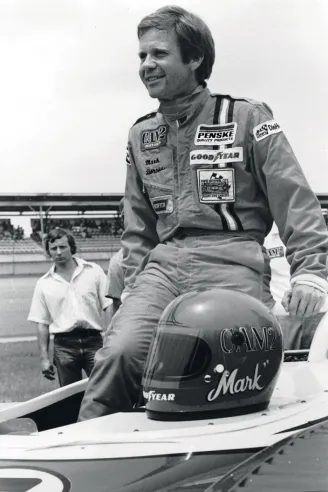
Mark Donohue is seen here attending the Talladega exhibition in 1975, where he broke the circuit's absolute speed record. Nearly a month later, he died in a tragic accident during practice for the Austrian Formula 1 Grand Prix.© IXO Collections SAS - Tous droits réservés.
Technical sheet
Recent articles