 English
 français
 Deutsch
 español
 italiano
 português















19/04/2026
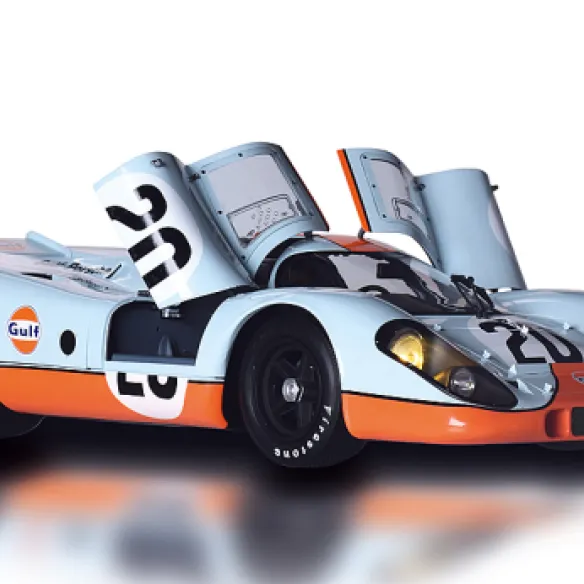
Porsche 908/2 LH FLUNDER - 1970
Porsche 908/2 LH FLUNDER
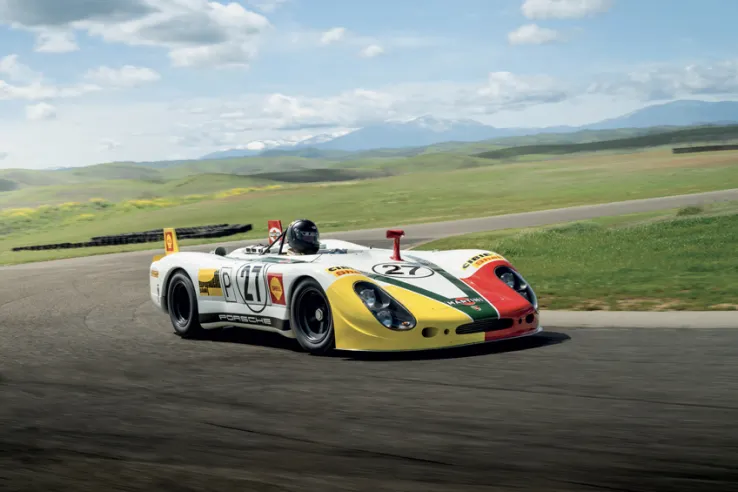
Thanks to its “flat” bodywork, the 908/2 stood out from the other 3-litre prototypes, but in 1970 the model only managed to finish third at Le Mans.
A first attempt is rarely a success, even for a manufacturer like Porsche, which had proven its expertise in the late 1960s in competitions in which it participated with its cars. In 1969, the 917, which competed in the under-5-litre Sport category, suffered from teething problems. This was not the case with the 908, which was entered in Group 6 as a prototype in the under 3-litre category. This model was able to strike the right balance with the 908/2, which was converted into a spyder and benefited from the new, more flexible rules regarding minimum weight, dimensions and equipment. The model reached its full potential with the new “smooth” bodywork, nicknamed Flunder (German for “tongue”), of which Porsche developed an “L version” with a longer rear end.
© IXO Collections SAS - Tous droits réservés.
SEEKING REVENGE ON THE GT40, IT FINISHED BEHIND THE 917
The long-tail version (lang heck in German, abbreviated to ‘L’ or ‘LH’) of Porsche models has been specifically designed for the long straights of the 24 Hours of Le Mans and a few other circuits where a streamlined, aerodynamic shape is preferable to strong downforce. The very first coupé version of the Porsche 908 featured an elongated rear end, and the LH variant took third place in the 1968 24 Hours of Le Mans with Rolf Stommelen and Jochen Neerpasch behind the Ford GT40 and Porsche 907. 1969 saw a 908 Coupé LH narrowly miss out on victory with Hans Herrmann (partnered by Gérard Larrousse) after a thrilling duel marked by repeated attempts to overtake Jacky Ickx, a duel that ended in favour of the latter and his GT40. These results overshadowed the debut of the 908/2 LH Flunder with Jo Siffert and Brian Redman, who managed to secure third place in qualifying but were forced to retire due to gearbox failure.
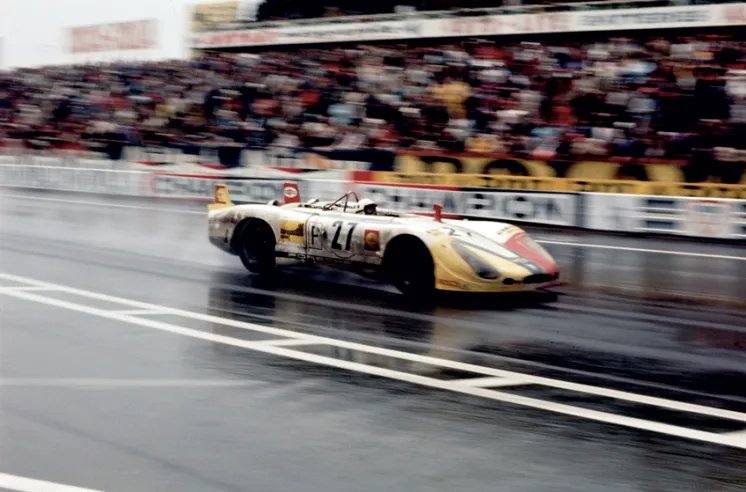
The long-tail 908/2 Flunder sped towards the finish line at the 1970 Le Mans 24 Hours, finishing third overall and first in the Prototypes category.© IXO Collections SAS - Tous droits réservés.
EVEN WITHOUT WINNING, THE CAR’S BEST PERFORMANCE WAS IN LE MANS
Prior to attempting yet another assault on the circuit of La Sarthe, two models of the ‘long’ version were entered between August and September 1969 in the 1,000 km race at Zeltweg (finishing fifth and sixth) and the 500 km race at Imola (ending up eleventh and thirteenth). Just a few months later, in April 1970, Gérard Larrousse and Rudi Lins came fourteenth in the 1,000 km race at Monza.
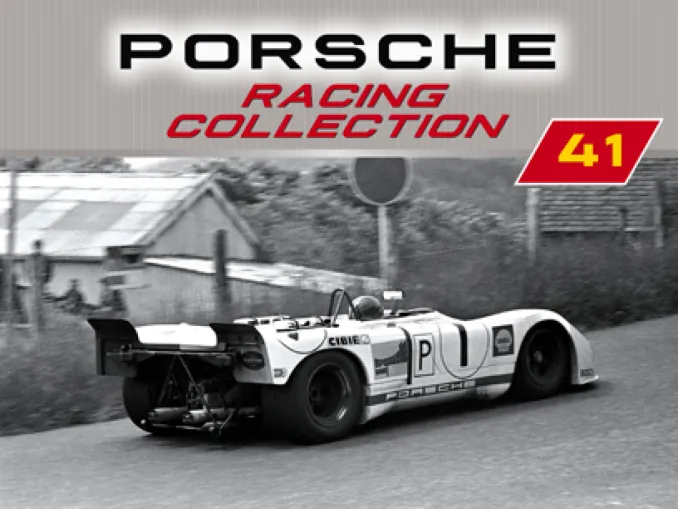
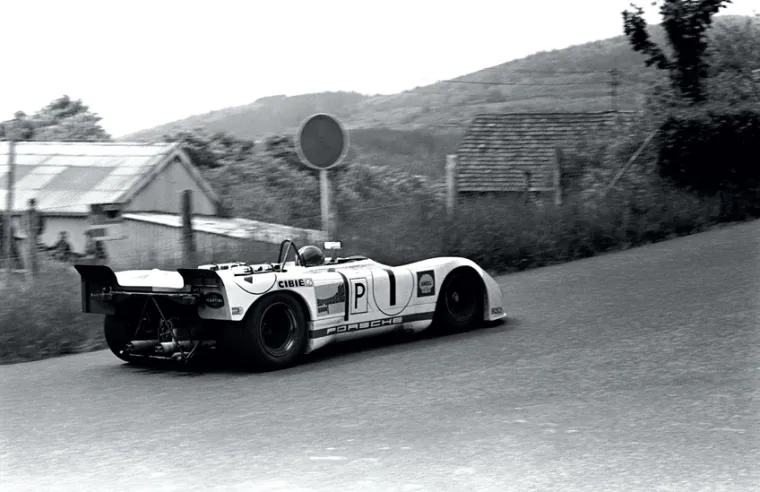
The short version of the 908/2 Flunder competed until the mid-1970s, achieving many good results but few victories. Here, Helmut Marko and Gérard Larrousse finish fifth in the 1970 Nürburgring 1000 km race.© IXO Collections SAS - Tous droits réservés.
[NOW RELIABLE, BUT NOT QUITE FAST ENOUGH]
Next came Le Mans, where the Porsche-Martini team entered only two cars, a 917 and a 908/2 Flunder, both ‘longtail’ models which did not really impress during qualifying. With Gérard Larrousse/Willi Kauhsen and Rudi Lins/Helmut Marko at the wheel respectively, they finished 12th and 22nd. The 1970 edition of the 24 Hours of Le Mans would be remembered for being one of the most challenging ever. The first eleven cars, which started the race, were all forced to retire, and at the end of the race, 35 of the 51 cars that started had dropped out.
Of the 16 that managed to finish, nine were so far behind that they were not even classified.
Both Porsche-Martini cars finished on the podium, although overall victory went to another 917 K, that of the semi-official Austrian Porsche Salzburg team, driven by Hans Herrmann and Richard Atwood. The 908/2 LH Flunder driven by Marko and Lins finished third (and first in Group 6) after completing 335 laps, three less than their teammates racing in the 917 LH. After this epic race, the last outing for the ‘long’ 908/2 coincided with the second round of the Interseries at the Hockenheim circuit, where Gérard Larrousse finished seventh overall. The result at Le Mans therefore remained the best of the short career of this special version of the 908/2.
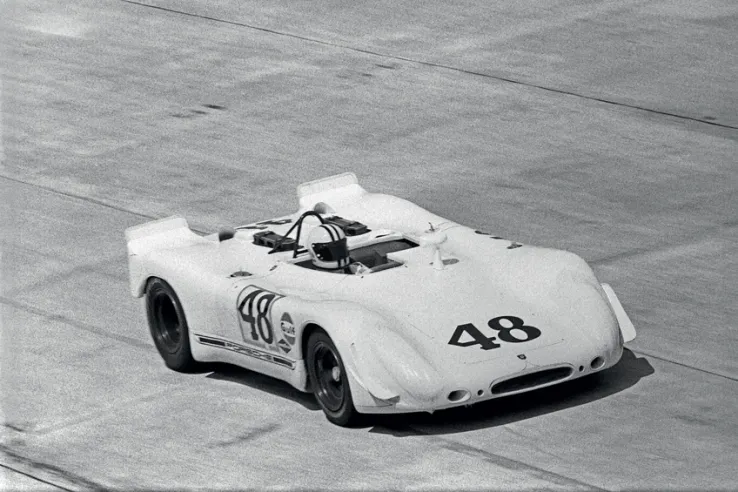
In 1970, actor and driver Steve McQueen finished second at the wheel of a short-tail 908/2 Flunder in the 12 Hours of Sebring.© IXO Collections SAS - Tous droits réservés.
HELMUT MARKO ET RUDI LINS
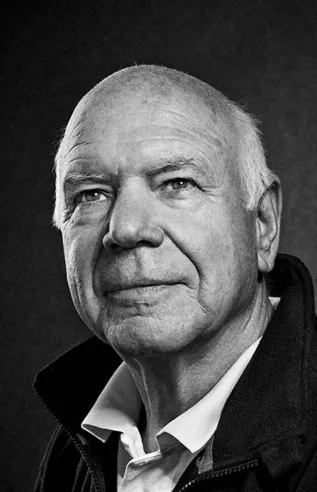
Austrian Helmut Marko had a brief but glorious career as a driver from 1967 to 1972, when an accident in F1 forced him to retire. During those six years, he made his mark at the 24 Hours of Le Mans, winning the 1971 edition with Gijs van Lennep in a 917 K and setting a distance recordthat would only be broken 40 years later. He also finished second in the 1972 Targa Florio with a lap record at the wheel of an Alfa Romeo T33. Rudolf ‘Rudi’ Lins, his compatriot and partner at the 24 Hours of Le Mans in 1970, started a little earlier, in 1965 and retired in June 1971 shortly after the 1,000 kilometres of Zeltweg, where he had finished third with Gérard Larrousse in 1970, one of his best results along with the 9 Hours of Kyalami with Marko.
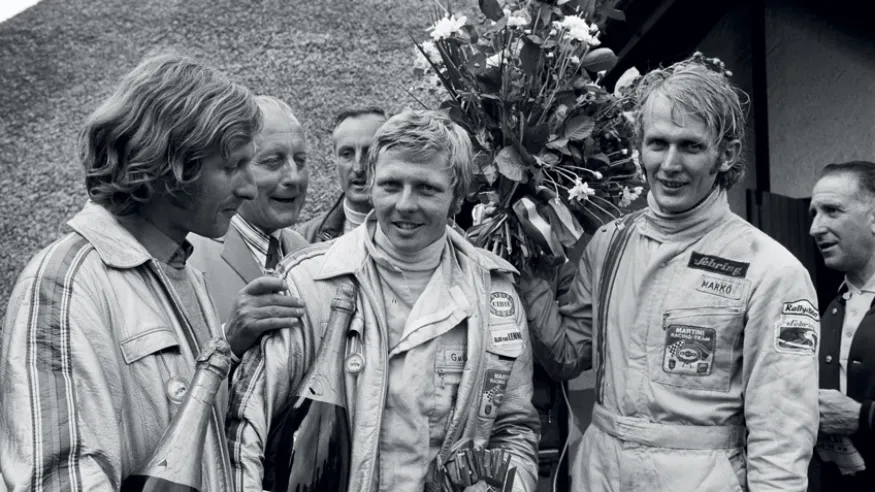
Top: Helmut Marko (right) celebrating with his teammate Gijs van Lennep their victory at the 1971 24 Hours of Le Mans. Bottom: Rudi Lins in 2014.© IXO Collections SAS - Tous droits réservés.
© IXO Collections SAS - Tous droits réservés.
Technical sheet
Recent articles