 English
 français
 Deutsch
 español
 italiano
 português













17/02/2026
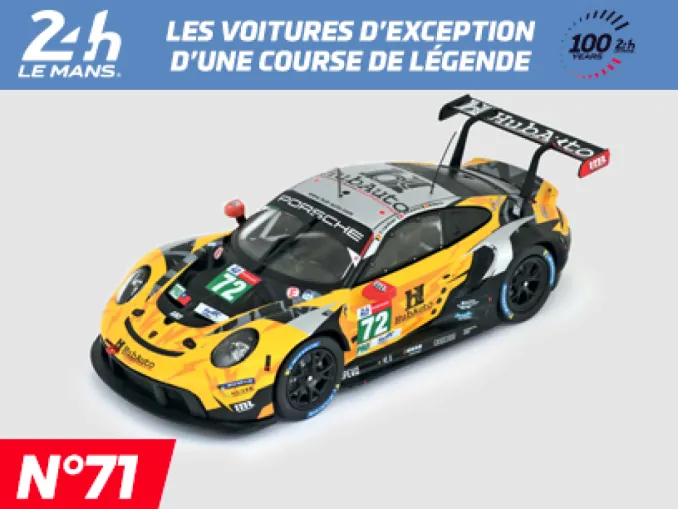
Porsche 911 RSR – 2021
Porsche 911 RSR
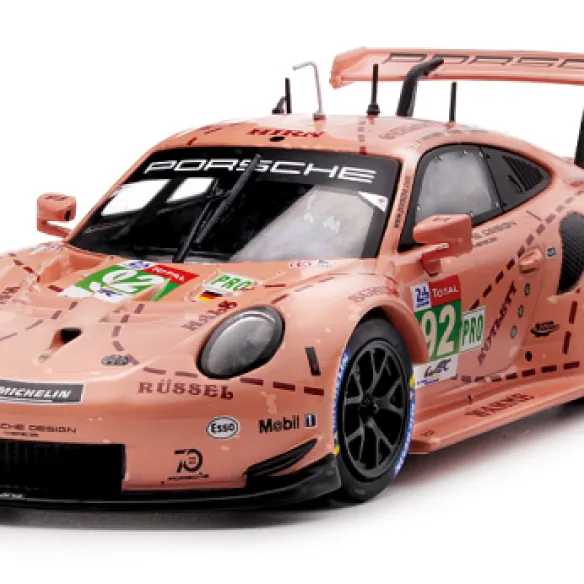
Introduced in 2017, this revolutionary mid-engine Porsche 911 RSR saw a major upgrade in 2019, improving it in many ways, even though tougher competition limited its victories in comparison to the previous model. Nevertheless, it still managed to deliver some satisfying results at Le Mans, particularly in 2021 when it was the fastest car in the Hyperpole.
But Porsche never rests on its laurels, and the 911 RSR is no exception. In 2017, when the new mid-engine version was launched and rapidly secured victories in Europe and America, particularly in the GTE Pro and Am categories (with different driver requirements) during the 2018-2019 WEC season, Porsche's Weissach motorsport department was already working on its next evolution. Although very similar in appearance, this new car was completely redesigned and optimised in terms of technology and aerodynamics, with the aim of making it faster, safer and more reliable.
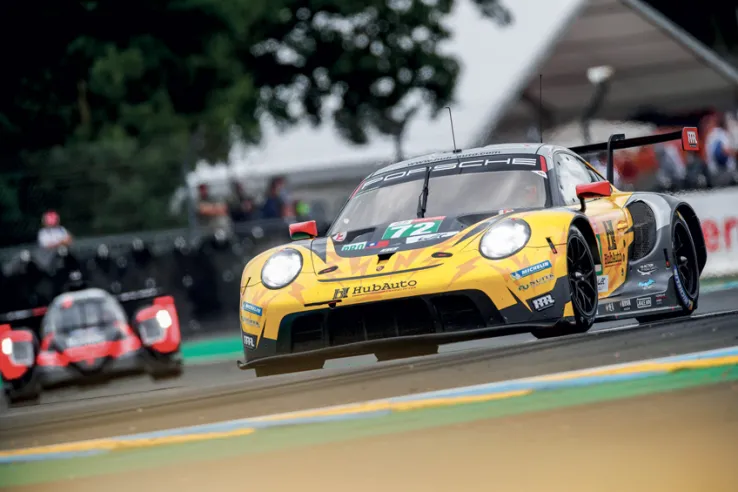
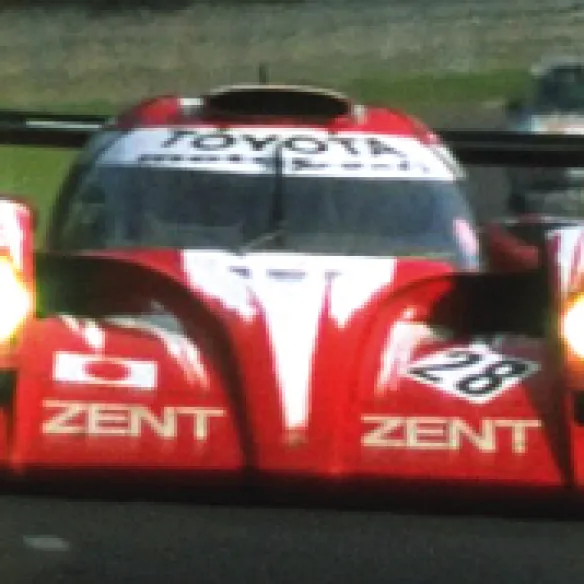
First among the GTE Pro cars in the Hyperpole at the 2021 24 Hours of Le Mans, the 911 RSR driven by Vanthoor, Martin and Parente was forced to withdraw after 227 laps.© IXO Collections SAS - Tous droits réservés.
But competition from the Aston Martin Vantage and Ferrari 488 Evo proved equally strong, preventing Porsche from repeating the previous season's success. In the end, the top drivers came in second in their respective classes in the LMGTE Pro and third in the Am, in which only team rankings matter. At Le Mans, the 911 RS-19 from the official Porsche GT team, driven by Gianmaria Bruni, Richard Lietz and Frédéric Makowiecki, took first place in LMGTE Pro at the end of the Hyperpole, where the eight cars (all categories combined) with the fastest qualifying times competed to determine the starting grid. However, Ferrari and Aston Martin dominated the race. The best Porsche performance was achieved by the No. 77 car from the Dempsey-Proton Racing team, which finished 25th overall and 2nd in the LMGTE Am Class.
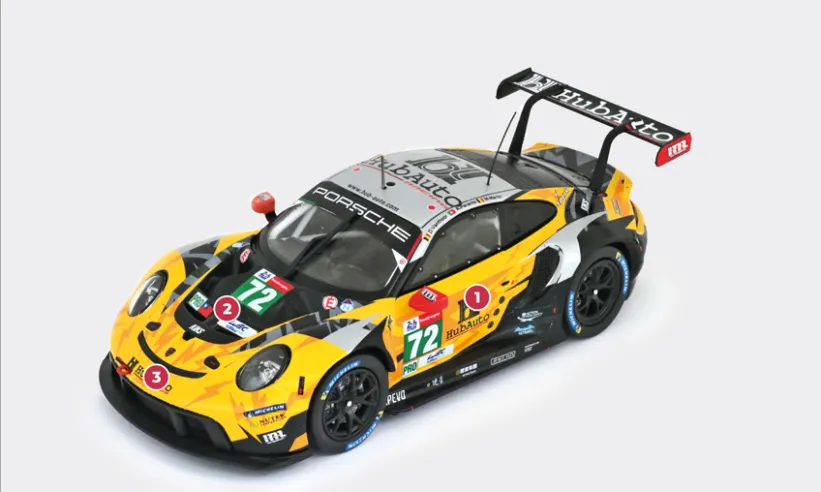
1. The safety features introduced on the 2017 RSR, such as the protective panel in the driver's door and the anti-collision system, have been updated and improved on the 2019 version.
2.The hood grilles on the 2017 model have been replaced by two air extractors below the windshield.
3.On the 2019 Porsche RSR evolution, the front air intake has been enlarged once again, extending below the headlights.© IXO Collections SAS - Tous droits réservés.
After the most critical period of the Covid pandemic, during which schedules were disrupted, the 2021 WEC calendar is back to its usual format, with six races spread out from May to November. For the 911 RSR-19s, history seemed to repeat itself: in LMGTE Pro, the official factory racing team finished a disappointing second in the final standings behind the Ferraris entered by AF Corse, while in the Am division, the best result once again went to Dempsey-Proton Racing, finishing third behind AF Corse and British team TF Sport. The team sponsored by American actor Patrick Dempsey achieved a remarkable result at the 24 Hours of Le Mans, where the Porsche 911 RSR-19s dominated the Hyperpole in both categories of the LMGTE class.
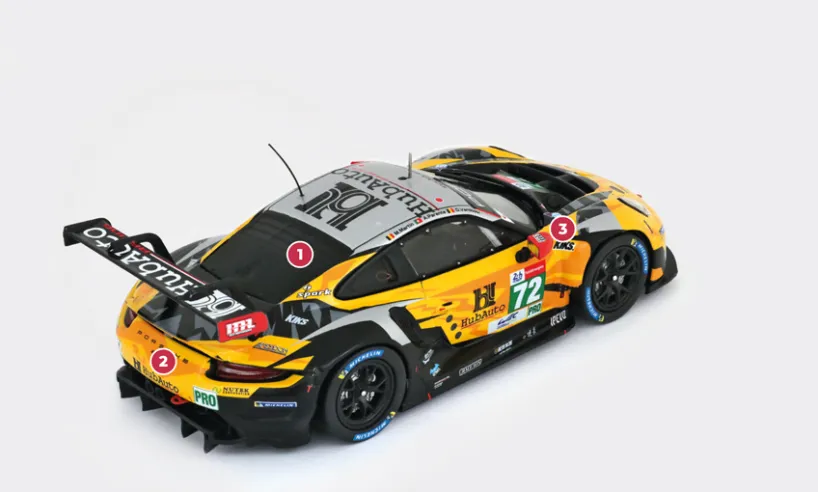
1. The engine, which is still a naturally aspirated 6-cylinder boxer, has been increased from 4 to 4.2 litres, the largest displacement capacity ever seen on a 911. Depending on the size of the flange, power can exceed 500 hp.
2. Initially, Porsche fitted the RSR-19's exhausts in front of the rear wheels to make room for the extractor. But some cars, such as the HubAuto team's, opted for the old solution of twin rear exhausts.
3. The mirrors, previously offset from the sides on the first 2017 Porsche RSR, returned to a more traditional shape and mounting.© IXO Collections SAS - Tous droits réservés.
In Pro, the best car was the no. 72 from Hub-Auto Racing, driven by Belgians Dries Vanthoor and Maxime Martin and Portuguese driver Alvaro Parent, setting a time of under 3 minutes 47 seconds in Hyperpole, a promising start to the race. However, the expectations of the Porsche team and fans were shattered by Ferrari: car no. 72 was forced to retire and the best RSR turned out to be the ‘official’ number 92 car driven by Christensen-Estre-Jani, finishing 22nd overall. In LMGTE Am, once again the best-placed car was the #77 (Matt Campbell, Jaxon Evans and Christian Ried) from Dempsey-Proton, which crossed the line to finish 31st overall.
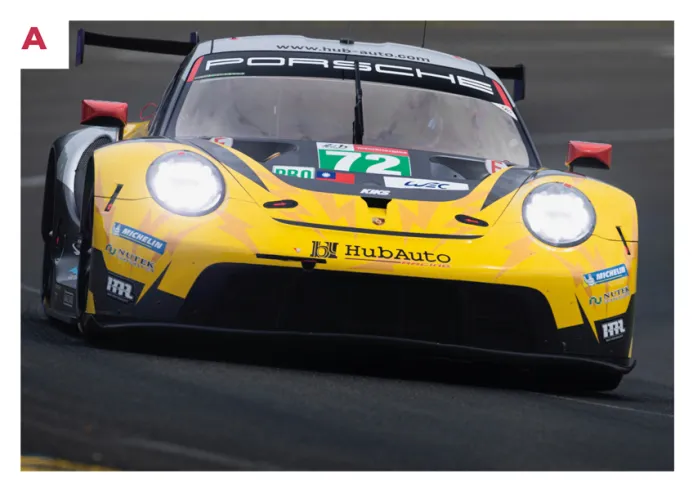
A. Thanks to improvements to the engine and transmission, the 911 RSR-19 utilises its power over a wider rev range with faster gear changes.© IXO Collections SAS - Tous droits réservés.
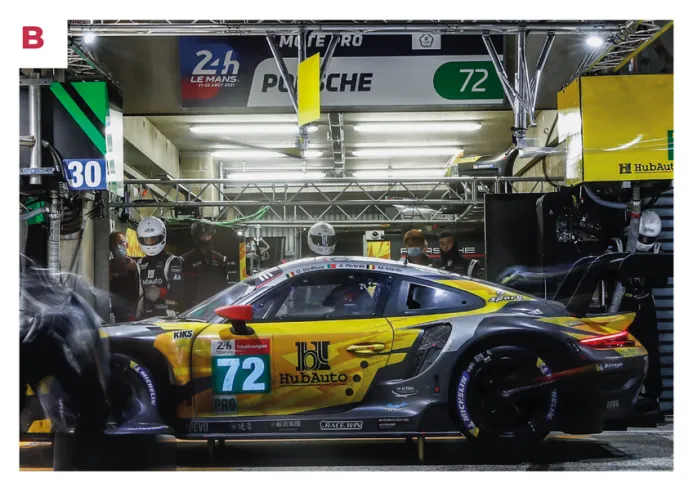
B. The carbon and composite body parts are designed so that they can be easily replaced. The headlights, brakes, clutch, seats and part of the suspension remain unchanged.© IXO Collections SAS - Tous droits réservés.
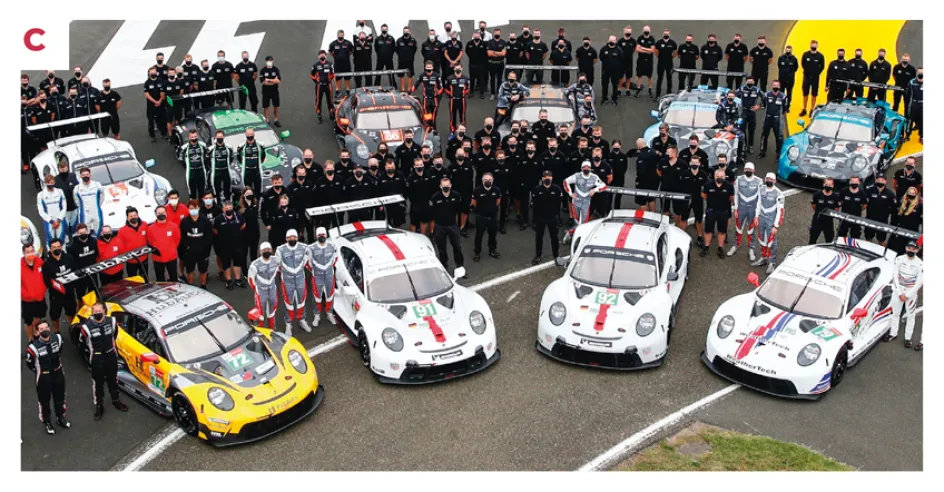
C. The Porsche armada at the 2021 24 Hours of Le Mans: 12 cars and 36 drivers are entered by eight different teams, both official and private. © IXO Collections SAS - Tous droits réservés.
Recent articles