 English
 français
 Deutsch
 español
 italiano
 português













19/04/2026
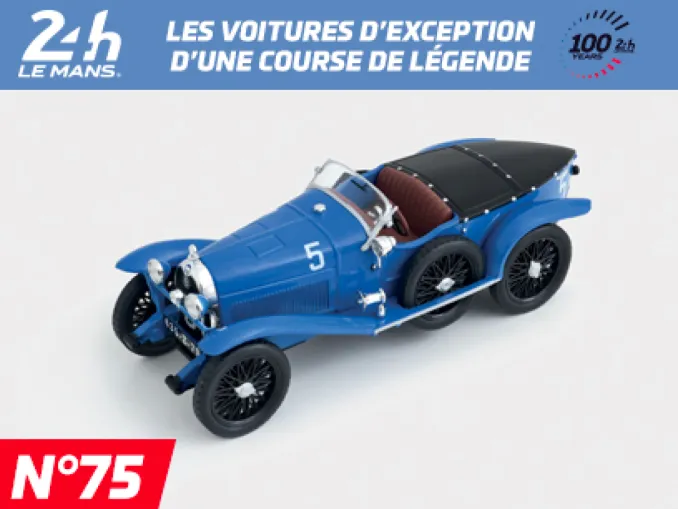
Lorraine-Dietrich B3-6 - 1925
Lorraine-Dietrich B3-6
The early years of the 24 Hours of Le Mans were characterised by a number of car brands that would later disappear, but whose influence on the pioneering phase of this great French classic should not be underestimated. Among them was Lorraine-Dietrich, a car brand that was active from 1896 to 1935 and managed to make a name for itself shortly after Chenard & Walcker and Bentley. Lorraine-Dietrich was the first car brand to win two consecutive editions.
However, Lorraine-Dietrich would have to wait until the third edition of the 24 Hours of Le Mans to achieve its first victory. Although its B3-6 model had been on the circuit since the first race in 1923, with Gérard de Courcelles and André Rossignol finishing eighth overall and first in the 3 to 5 litre category, while a second car, driven by Robert Bloch and Henri Stalter, finished nineteenth, alongside a Berliet.
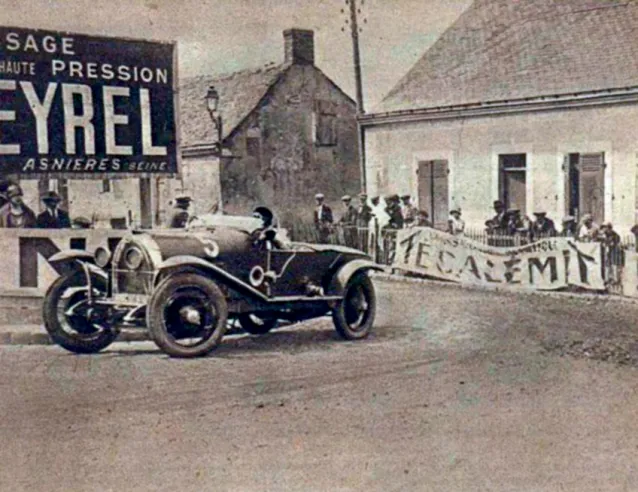
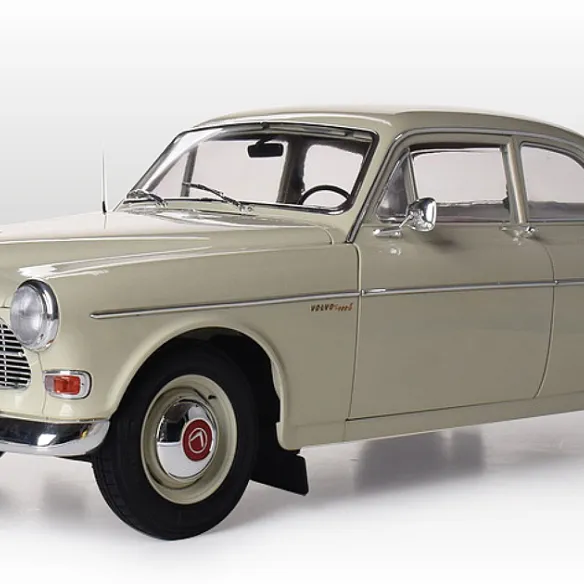
Gérard de Courcelles and André Rossignol's B3-6, which won in 1925, is one of ten cars entered in the category ‘over 3 litres’.© IXO Collections SAS - Tous droits réservés.
This B3-6 was a road car that complied with the regulations, as required by law, but in reality it was already the result of specific research. This car, also known as the B3-6 ‘Sport’, was designed as a short wheelbase version, derived from the B3-6 that was introduced in 1922 with two different lengths. However, for the racing world, the car was specially optimised with modifications to the engine (a '6-cylinder 3445 cm3, designed by engineer Marius Barbarou), the brakes and the bodywork, in order to be able to compete in endurance racing under the best conditions.
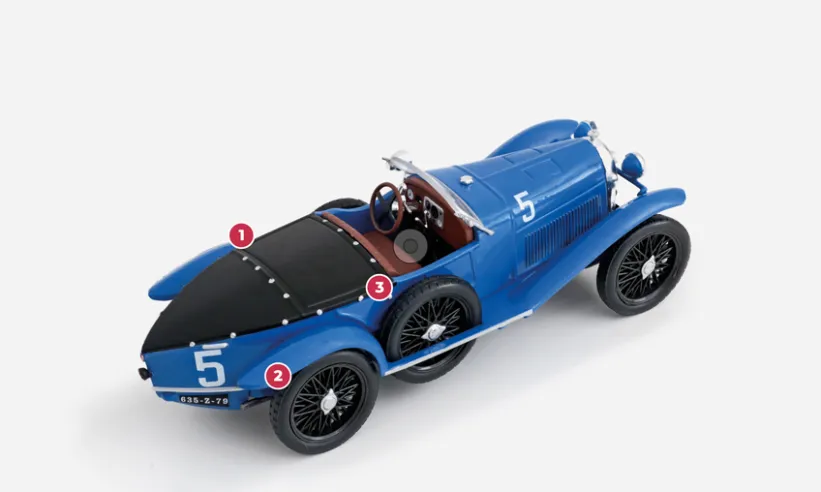
1. According to the regulations, all cars taking part in the first 24 Hours of Le Mans race had to be fully compliant with the road-going models listed in the catalogue. One of the requirements was that the standard wings had to be retained without any modifications.
2. The Lorraine-Dietrich brand first appeared in 1926 and was the automotive division of the Société Lorraine des Anciens Établissements de Dietrich et Cie, based in Lunéville, which had been founded 12 years earlier by Jean de Dietrich, a manufacturer of railway equipment.
3. The engine of the B3-6 competition version was prepared by the brand's racing department, fitting it with two carburettors and larger valves.© IXO Collections SAS - Tous droits réservés.
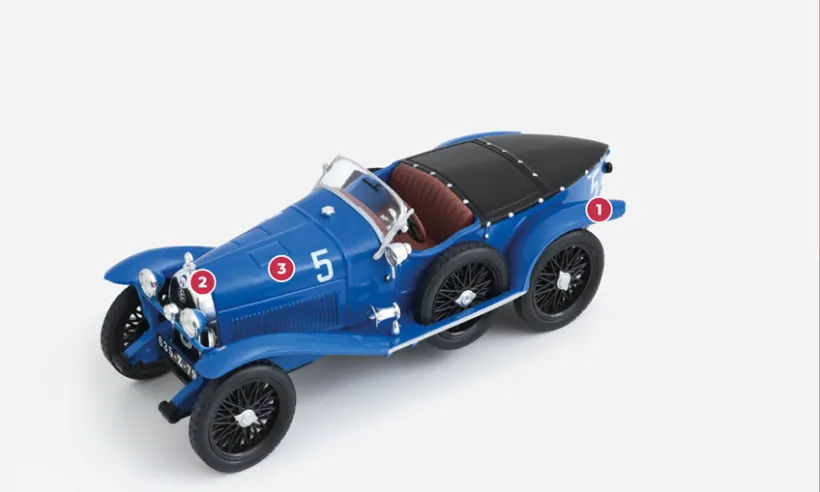
1. The interior configuration also corresponds to that of the production model, which has two rear seats that are covered with leather or fabric slipcovers.
2. Specific to the ‘Sport’ version, is the braking system supported by a vacuum brake booster patented by Dewandre Reprusseau, which acts on all four wheels, a novelty at the time.
3. The spare wheel, tools and other specific parts were mandatory pieces of equipment for the 24 Hours of Le Mans, as drivers were required to carry out any repairs themselves.© IXO Collections SAS - Tous droits réservés.
The results of these modifications were already evident in 1924, when the B3-6s of Édouard Brisson/Henri Stoffel and Rossignol/De Courcelles finished second and third respectively, just a few kilometres behind the winning 3-litre Bentley of John Duff/Frank Clement. The car driven by Bloch/Stalter had to retire after 21 hours and 112 laps, although its speed suggested that victory was within reach.
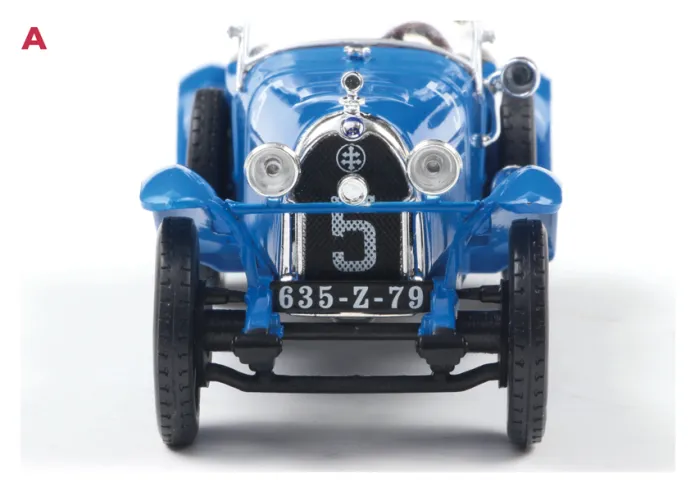
A. The Lorraine-Dietrich B3-6, also known as the ’15 HP’, takes its name from the fiscal horsepower rating of the production model, which was calculated based on engine capacity.© IXO Collections SAS - Tous droits réservés.
1925 was a particularly successful year. Better than the Sunbeam 3 Litre and the OM 665 Superba, the B3-6 Sport driven by Rossignol/De Courcelles took the victory by completing 129 laps, ten more than the distance required by the regulations, while third place went to another Lorraine -Dietrich, with Brisson and Stalter at the wheel, finishing just one lap behind the Sunbeam of Jean Chassagne/Sammy Davis. Robert Bloch, on the other hand, was once again forced to retire after an accident at the start of the race, which put the car he shared with Léon Saint-Paul out of action.
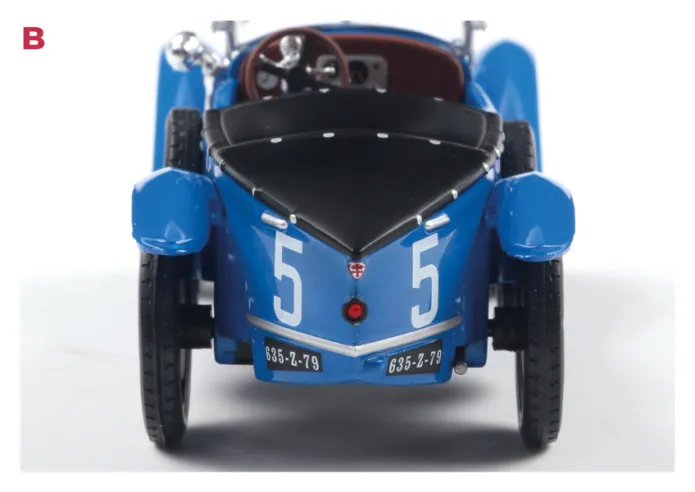
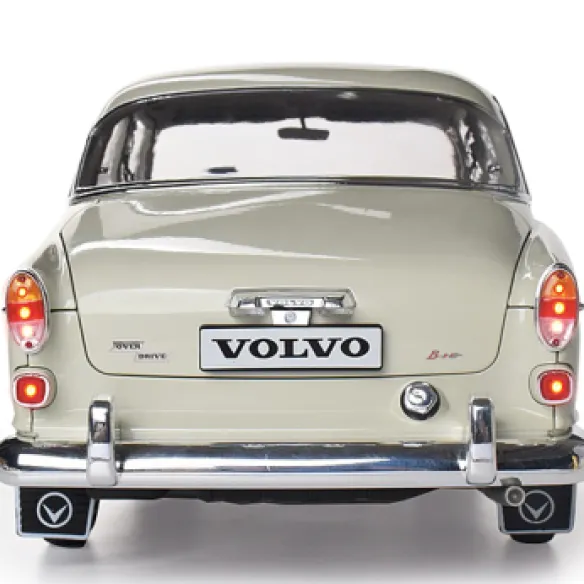
B. The rear end, known as a ’boat tail’, was a common feature on the chassis of sports cars of the era.© IXO Collections SAS - Tous droits réservés.
A year later, in 1926, Bloch got his personal revenge when Lorraine-Dietrich introduced an improved and more powerful version of the B3-6, called ‘Le Mans’. Bloch, this time paired with Rossignol, finally achieved the long-awaited victory ahead of the teams De Courcelles/Mongin and Brisson/Stalter, both also in a B3-6 Sport Le Mans, resulting in an all-French podium, with the very fast OMs once again defeated. This victory also marked the last participation of the ‘La Lorraine’ brand in the 24 Hours of Le Mans. From 1927 onwards, it was the ‘Bentley era’, with four consecutive victories, followed by the same number of victories for the Alfa Romeo 8C-2300.
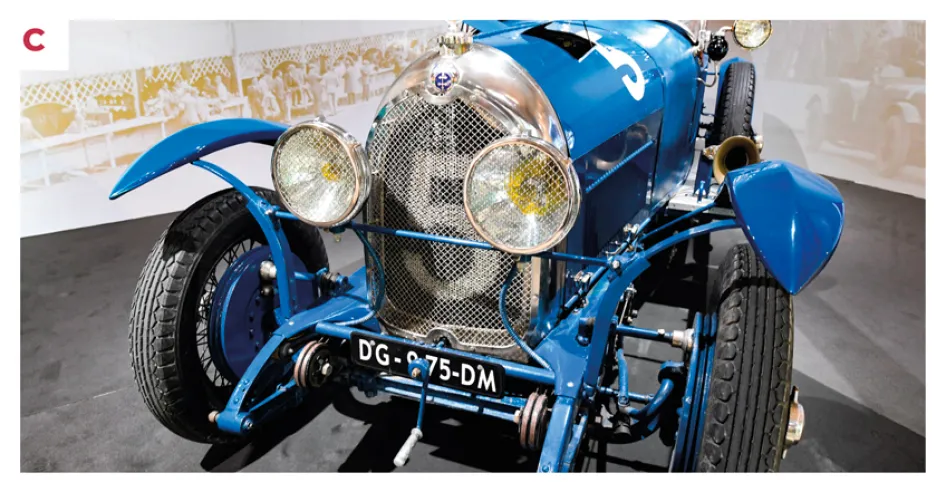
C. Even the basic version of the 15 HP engine featured some interesting solutions, such as aluminium pistons, vertical in-line overhead valves and grease-lubricated rocker arms.© IXO Collections SAS - Tous droits réservés.
Recent articles