 English
 français
 Deutsch
 español
 italiano
 português













03/08/2025
Porsche 909 Bergspyde-1968
Porsche 909 Bergspyde-1968
The lightest racing car of all time was created for the 1968 European hill-climb championship. It only contested two events
Porsche's ability to create competitive cars in all specialities reached an almost unbelievable level in the 1960s. For the 1967 European Hill Climb Championship, the German brand developed a variant of the 910/8 with a special sports body and a weight reduced to just over 400 kg, known as the Bergspyder (“mountain spider”). The car was very competitive, but Porsche's management felt that when a 12-cylinder Ferrari racer appeared on the horizon, they had to do better. For 1968, the 909 Bergspyder was launched, but only two races were recorded in its history.
© IXO Collections SAS - Tous droits réservés.
AN INNOVATIVE CAR WITH A SHORT CAREER
The Bergspyder 910/8 dominated the 1967 championship in the Sport category, homologated in Group 7 (‘two-seater’ open cars with a capacity of less than 2 litres) with experienced driver Gerhard Mitter, who won his second personal victory. The 909 Bergspyder was to replace it for the following season, but its development took months, during which the Porsche drivers continued to use the type 910. But the season was not a favourable one for Porsche, for it was marked by two accidents at the Rossfeld race in Germany: the first accident took Rolf Stommelen out of action for several weeks, while the Italian Ludovico Scarfiotti lost his life in the second.
[THE 909 DEBUTS AT GAISBERG IN AUSTRIA]]
Mitter remained the No. 1 driver in the Porsche team, and by the end of the season he was crowned champion of his class for the third time in succession. When, with two races to go, the 909 was finally ready, Mitter didn't hesitate to use it during practice, but for the race he preferred to drive the 910/8, which he felt was safer and easier to control. For both the Gaisberg Hill Climb and the following event at Mont Ventoux in France, Stommelen, who had recovered from his accident, took the wheel of the new 909 Bergspyder. The German driver finished third and second respectively in these two events, taking second place overall behind Mitter during the Provence race.
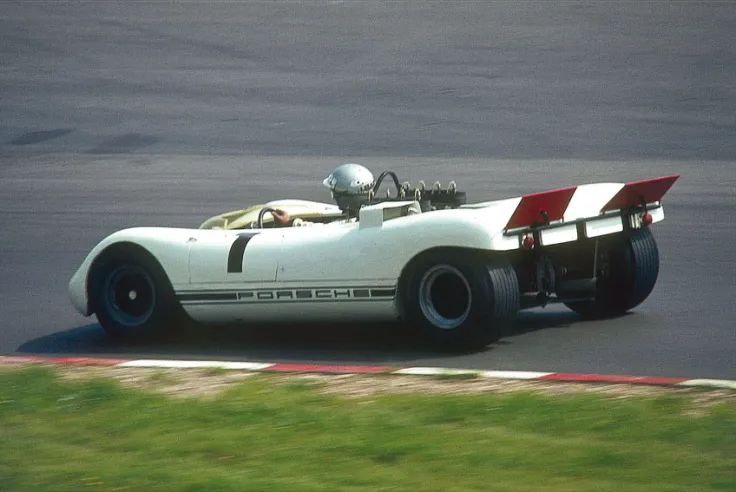
A Porsche 909 Bergspyder during an exhibition on the German Nürburgring circuit in 1981.© IXO Collections SAS - Tous droits réservés.
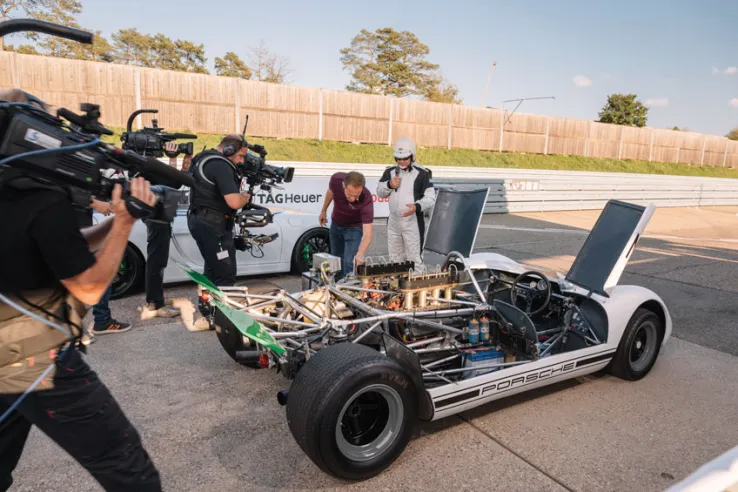
This 909 without a hood shows the extreme compactness of the mechanical part. The frame is made entirely of aluminum, without even a single steel screw or bolt.© IXO Collections SAS - Tous droits réservés.
ARRIVED LATE, LEFT EARLY
However, at the end of the season, Porsche decided not to take part in the following year's Hillclimb Championship, leaving the field to the Ferrari 212 E, which was now ready. With Peter Schetty, it won the 1969 championship, where its opposition was limited to a few privately-owned 907s and 910s. This was the end of the 909 Bergspyder's very brief career, and it became part of the Porsche Museum's precious collection of cars.
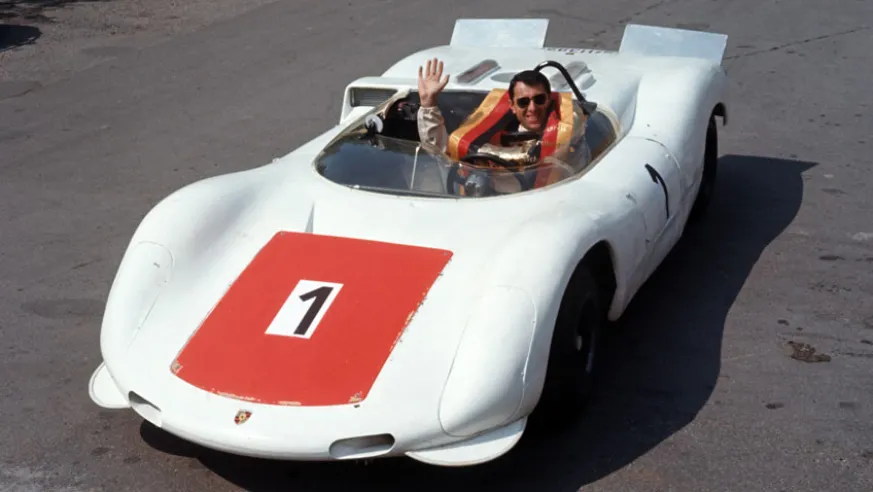
Gerhard Mitter in the 910/8 Bergspyder that brought him the 1968 Hill Climb title despite having driven the 909 in practice for the last two races. © IXO Collections SAS - Tous droits réservés.
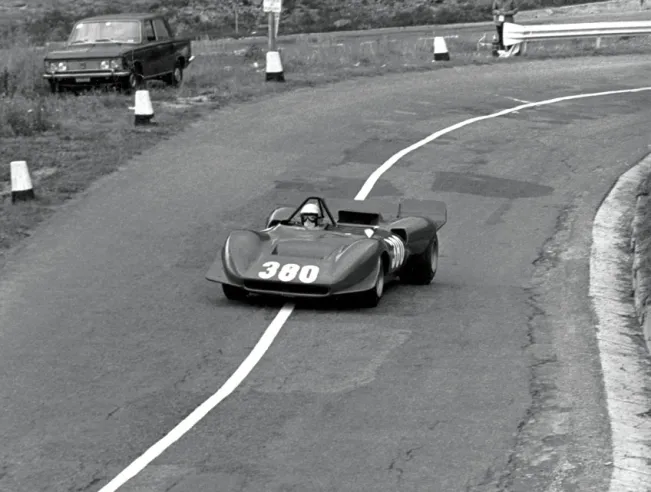
The Ferrari 212 E of Peter Schetty, 1969 European Hill Climb Champion, a feared rival of Porsche, which developed the 909 to counter it. But it would never meet the Bergspyder in racing because it debuted after the latter had already finished its career.© IXO Collections SAS - Tous droits réservés.
GERHARD MITTER AND ROLF STOMMELEN
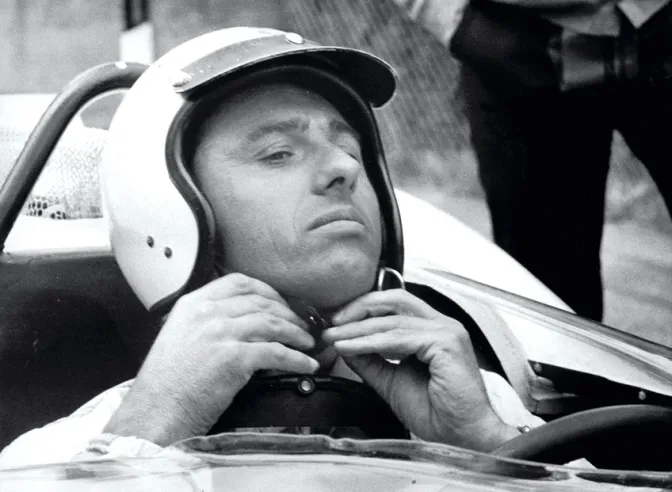
Gerhard Mitter, a German hill-climb specialist, was appointed driver of the 909 at Gaisberg and Mont Ventoux. Although history records the entry of two Bergspyders, the only one with a 909 chassis was that of Rolf Stommelen, while Mitter's own car, used for testing, was replaced by a 910/8, a model he favoured. In addition to his three Hill Climb Championship titles in 1966, 1967 and 1968, Mitter claimed a class win at the 24 Hours of Daytona and first place overall at the 1968 Targa Florio. His countryman Rolf Stommelen's career is fully associated with Porsche, whose cars brought him three class wins at the 24 Hours of Le Mans in 1966, 1976 and 1979, the last of which was a second place overall with a 935 teamed with Dick Barbour and actor and gentleman driver Paul Newman. Driving a 935, Stommelen lost his life in April 1983 while racing in the Los Angeles 6 Hours, when he suffered a ruptured rear wing.
© IXO Collections SAS - Tous droits réservés.
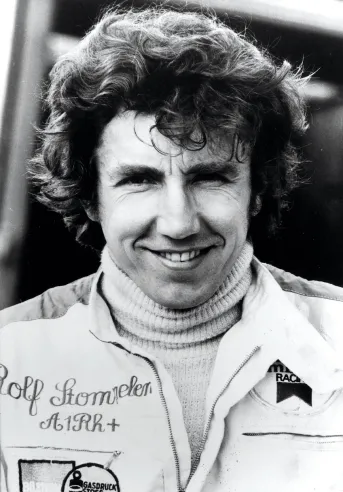
Above, Gerhard Mitter during the 1968 European Hill Climb Championship season, his third consecutive title. Below, Rolf Stommelen in 1976. © IXO Collections SAS - Tous droits réservés.
Technical sheet
Recent articles