 English
 français
 Deutsch
 español
 italiano
 português














25/11/2025
Porsche 956 - 1985
Porsche 956
In 1984, Richard Lloyd's team prepared an improved version of the 956, which competed on equal terms with the official 962s for two years and finished second in the 1000 km of Imola and the following year in the 24 Hours of Le Mans.
As was the case with the 935 and later with the 962, the Porsche 956 was improved and even further developed on the initiative of the private teams that raced it. Such was also the case when the model was replaced by its successor, the 962, by the brand itself. A number of teams decided to continue developing the 956s they had in their possession, focusing primarily on the structure, suspension and design.
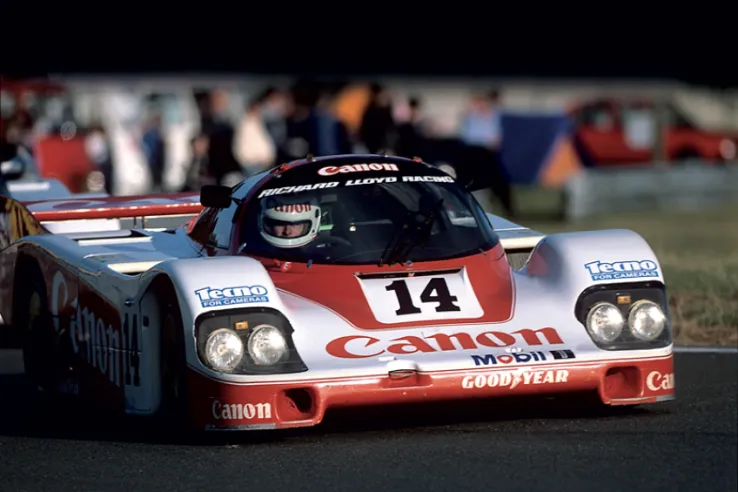
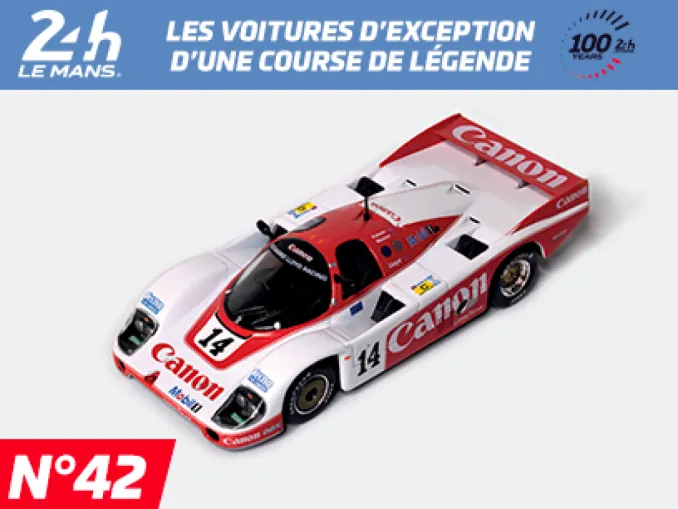
The Porsche 956 modified by GTi Engineering at the 1985 Le Mans 24 Hours finished second, just three laps behind the 956B of the German Joest team.© IXO Collections SAS - Tous droits réservés.
GTi Engineering, founded by racing driver Richard Lloyd, took the same approach. After having successfully raced the 956 with chassis 106 from April 1983 to July 1984, the company decided to make changes to correct the car's weaknesses, such as insufficient body rigidity. A new body was designed by Nigel Stroud, made of aluminium, but with a honeycomb structure instead of sheet metal, and equipped with a modified front suspension. The parts and mechanics of the original car were mounted on this new frame, with chassis number 106B. The body was also partially redesigned.
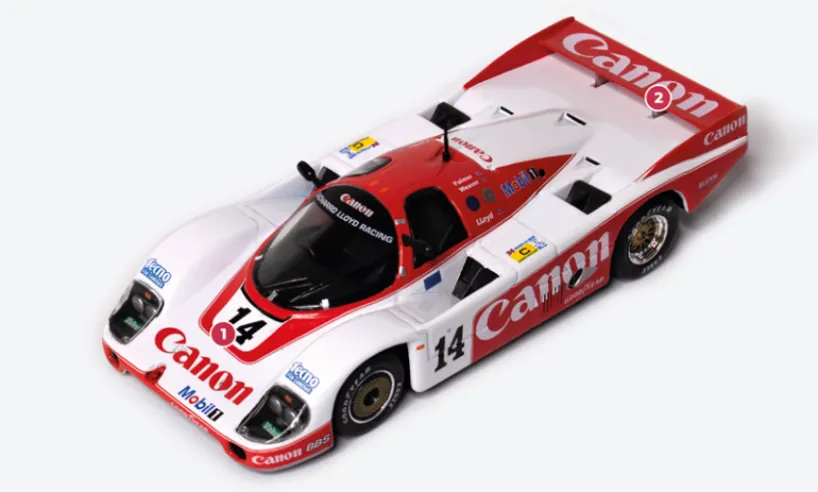
1. Among the modifications introduced by Richard Lloyd's team to the original 956, the new front suspension uses double wishbones and pull rods.
2. The configuration of the 956 for Le Mans includes, as usual, a rear end with a lower and less inclined spoiler, which on other circuits is replaced by a system that provides greater aerodynamic downforce.
© IXO Collections SAS - Tous droits réservés.
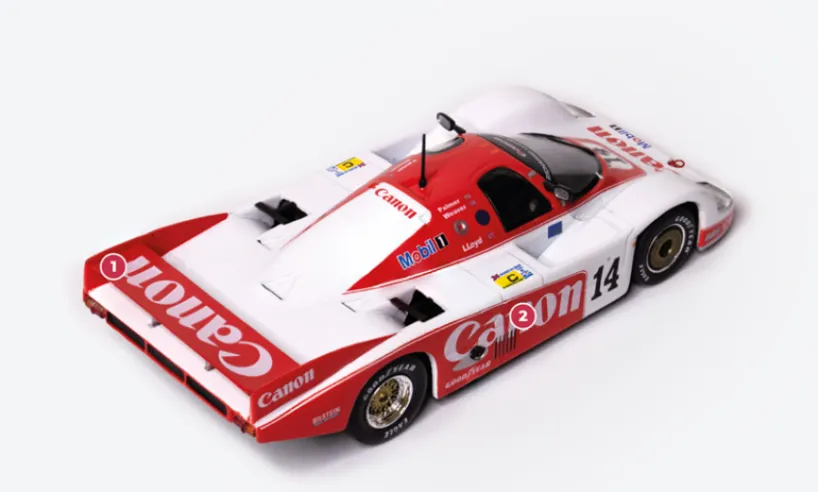
1. Even before replacing the bodywork with an entirely new honeycomb structure, GTi is experimenting with various solutions such as carbon spoilers and biplanes.
2. In 1985, GTi Engineering became Richard Lloyd Racing, but retained the white and red livery of its sponsor, Canon, which had been supporting the team for several years.© IXO Collections SAS - Tous droits réservés.
The improved car made its debut in September 1984 during the 1000 km of Spa, but failed to finish the race. Shortly afterwards, it made up for this by finishing second at Imola, ninth at the Japanese circuit of Mount Fuji and third at Sandown Park (England). GTi Engineering, renamed Richard Lloyd Racing, brought its 956 back on the grid in 1985, but was again forced to quit at the 1000 km of Mugello, followed by two fifth places at Monza and Silverstone. Lloyd initially confirmed his two drivers, Jonathan Palmer and Jan Lammers, for the 24 Hours of Le Mans, with team boss Richard Lloyd himself as the third driver. However, a week before the race, Lammers left for the Indycar series and was replaced at the last minute by James Weaver.
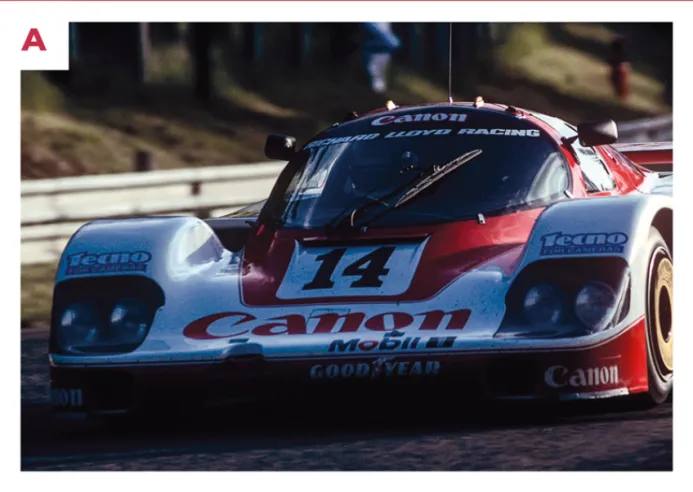
A. The Porsche 956 driven by Richard Lloyd's team retained its number 14 in almost every race it competed in between 1983 and 1985, except at the Norisring in July 1983, where it was assigned number 21.© IXO Collections SAS - Tous droits réservés.
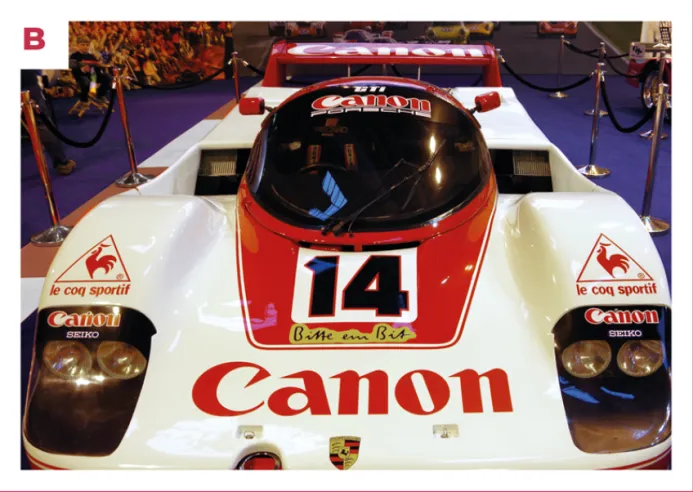
B. In September 1985, the car was involved in an accident during the 1,000 km race at Spa-Francorchamps. The damage was so severe that it had to be rebuilt on a new chassis.© IXO Collections SAS - Tous droits réservés.
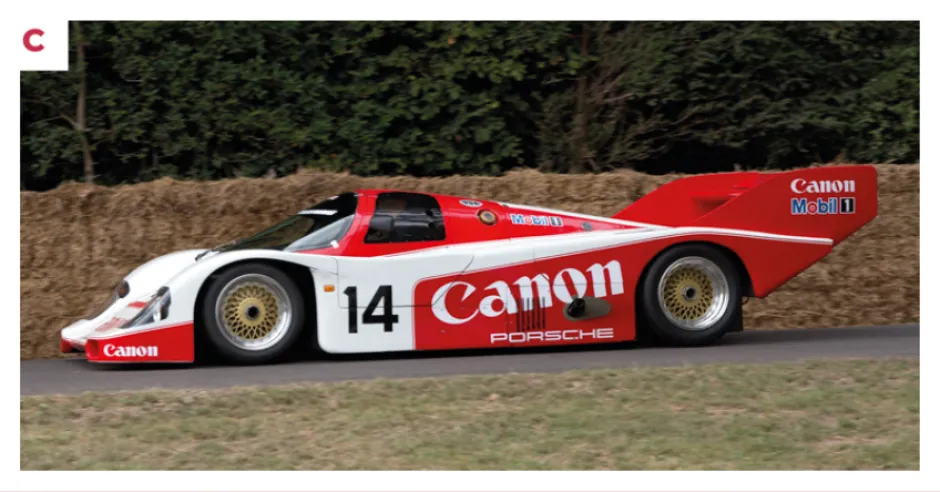
C. Restored in 1990, the 956 GTi would subsequently appear in historic car races.© IXO Collections SAS - Tous droits réservés.
Most of the cars entered were of the 956 type, but the new 962s would push them into the background by taking the top two places in qualifying, followed by the Lancia Martini LC2s. However, things turned out differently during the race: the Porsche team drove cautiously to save fuel, which proved to be a disadvantage, as the private 956s (including those of Joest, Brun and Lloyd), driving more aggressively, eventually took the lead definitively. The 956 GTi temporarily defended its second place, but eventually had to relinquish it due to a technical problem that required a lengthy repair. During the night, it made a spectacular comeback and ended up just behind the leader, the No 7 956B of the Joest team (driven by Klaus Ludwig, Paolo Barilla and an industrialist driving under the pseudonym John Winter), a position it maintained until the finish.
Recent articles