 English
 français
 Deutsch
 español
 italiano
 português

















17/02/2026
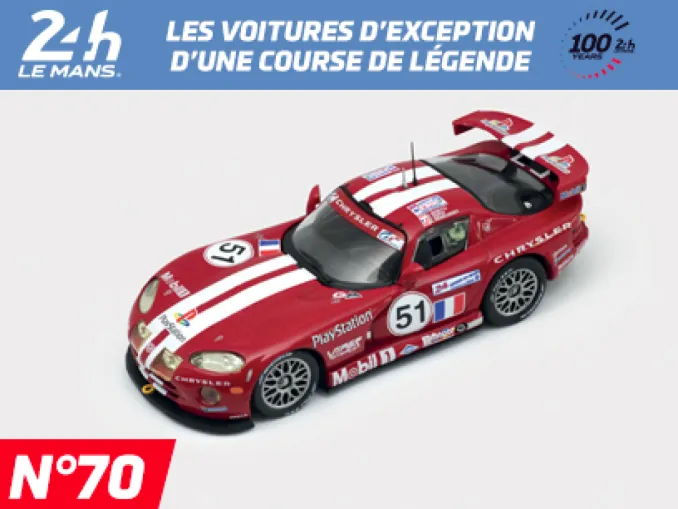
Chrysler Viper GTS-R – 2000
Chrysler Viper GTS-R
The 2000 Le Mans 24 Hours marked the end of an era for the Chrysler Viper GTS-R, the queen of the GT2 class throughout the second half of the 1990s. Developed by the Oreca team in collaboration with Reynard and the parent company, the car's evolution provided the perfect opportunity to make one last statement just as the new millennium dawned.
In the mid-1990s, the GT2 class represented the highest level of Grand Touring racing cars derived from high-performance street models. The most competitive class was expected to be GT1, featuring cars with the same origins but more extensive modifications placing them closer to prototypes. Yet some manufacturers took advantage of a permissive set of regulations allowing them to build cars that were essentially prototypes, such as the famous Porsche 911 GT1.
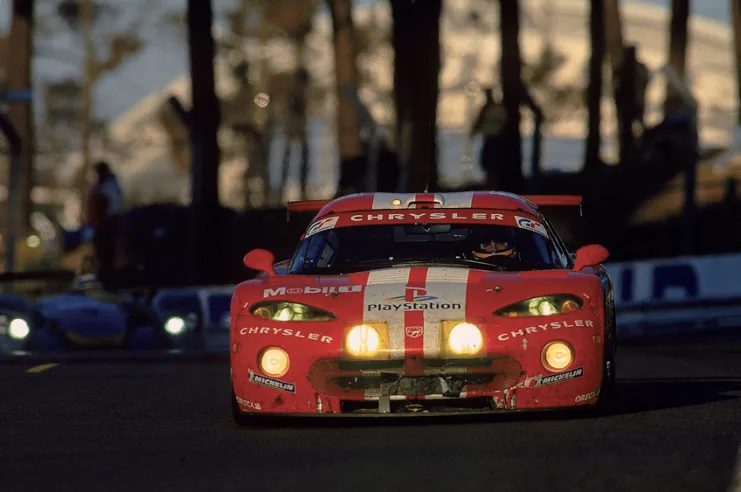
Having started in 24th position, the Viper driven by Karl Wendlinger, Olivier Beretta and Dominique Dupuy finished the 2000 Le Mans 24 Hours in seventh place overall and first in GT2.© IXO Collections SAS - Tous droits réservés.
With the launch of the sporty Viper in 1992, Chrysler had an excellent foundation that it used to develop the GTS-R, approved for GT1 racing, and which immediately proved inferior to more ‘specialised’ rivals such as Porsche. As a result, Chrysler switched to the GT2 class in which cars closer to production models competed, enabling it to demonstrate the true value of its V10-powered coupé developed by Reynard and built by Oreca. For several years, Oreca was the American team's official partner in GT2 competitions, alongside private teams such as Orion/Oftedahl Motorsport.
Besides winning several class victories, its first overall victory for a Viper GTS-R in a British GT Championship event came at Silverstone in 1998, marking the start of a winning streak that would culminate in more than 160 victories and numerous Constructors' and Drivers' titles by the end of 2005.
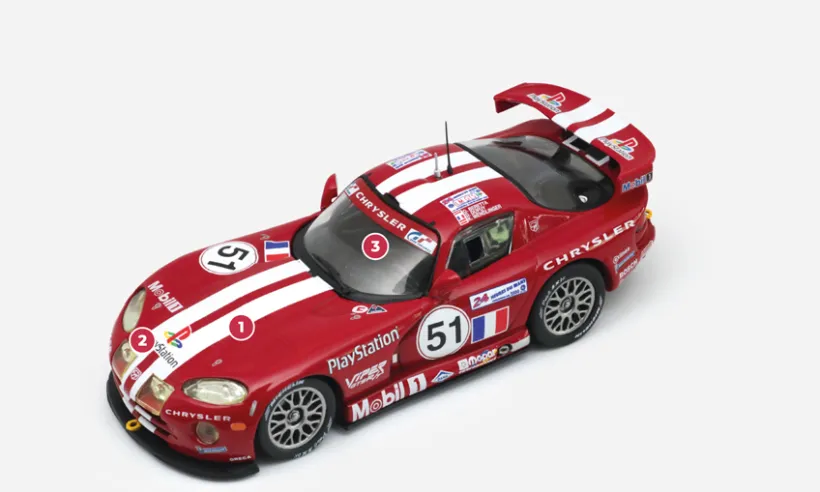
1. Viper's aluminum V10 engine is derived directly from the engine block found in the large Ram pick-up truck. With a displacement of 8 litres (the maximum allowed), it has been modified in terms of intake and injection management to comply with the restrictions imposed by the regulations.
2. Modifications to the front include a lower splitter and two additional headlights above the grille.
3. The regulations also require the installation of a roll cage in the passenger compartment.© IXO Collections SAS - Tous droits réservés.
The first victory at Le Mans was achieved in 1998 with the No. 53 Viper Oreca driven by Luca Drudi, Justin Bell and David Donohue, winning its class and finishing eleventh overall ahead of several LMP 1 cars. History repeated itself in 1999 when, after the GT1 class was discontinued, this class was renamed LMGTS. This time, the winning crew consisted of Frenchman Dominique Dupuy, Monegasque Olivier Beretta and Austrian Karl Wendlinger, finishing tenth overall in the No. 51 car. In 2000,the arrival of the new Chevrolet Corvette C5-R reshuffled the deck at the top of the GTS class, and Chrysler-Oreca made the switch to LMP1 in 2001, although private teams continued to use Vipers to their great satisfaction until 2005.
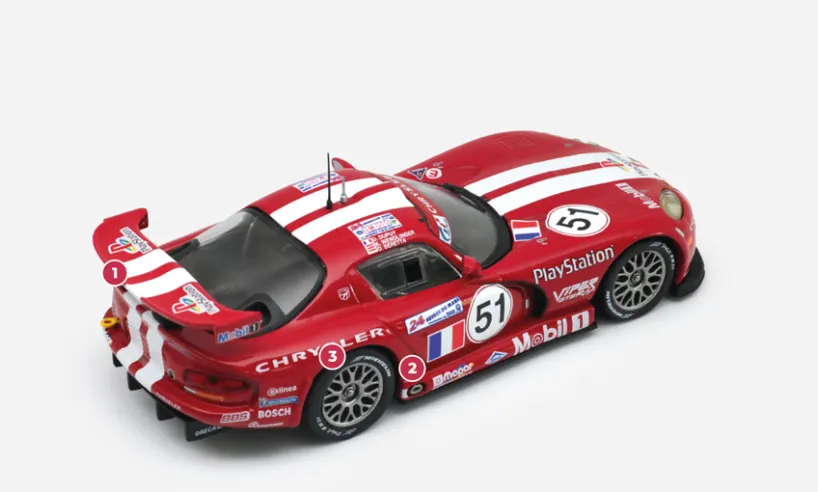
1. On the Viper GTS-R, the large spoiler and lower extractor at the rear are the most visible aerodynamic elements.
2. To free up the space needed for the extractor, the exhausts are positioned just in front of the rear wheels, similar to the design used on the RT/10, the first road version of the Viper.
3. The standard Viper is a ‘race-oriented’ car, but the GTS-R has been redesigned in terms of suspension and aerodynamics, and made lighter to make it more competitive.© IXO Collections SAS - Tous droits réservés.
In 2000, Oreca entered three official GTS-Rs at Le Mans and outperformed the powerful Corvette C5-Rs, which were forced to slow down due to reliability issues. Thanks to its consistent pace and rigorous race management, the Viper consolidated its lead during the night, while the Corvettes made pit stops for repairs and fell back in the standings. The first GTS to cross the finish line was once again the No. 51 car, with the same three drivers finishing 7th overall. Next came David Donohue, Ni Amorim and Anthony Beltoise in car No. 53, 9th overall and 2nd in their class; the third car, No. 52, finished 12th.
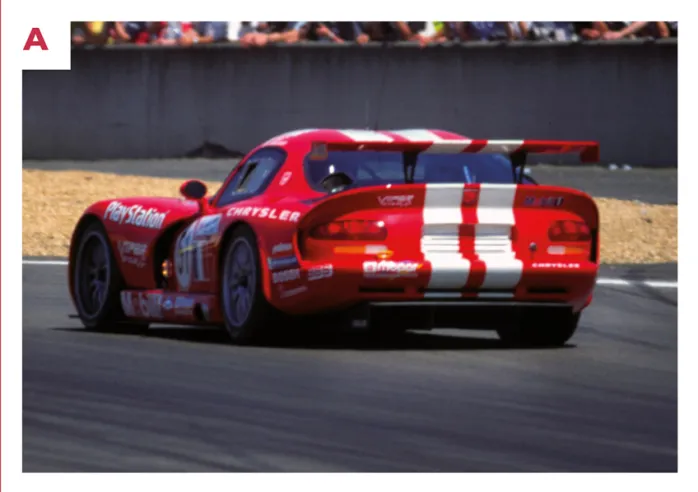
A. To get the GTS-R to meet the homologation requirements, Chrysler produced a limited run of 100 road-going Vipers with a modified front end and a spoiler added to the rear.© IXO Collections SAS - Tous droits réservés.
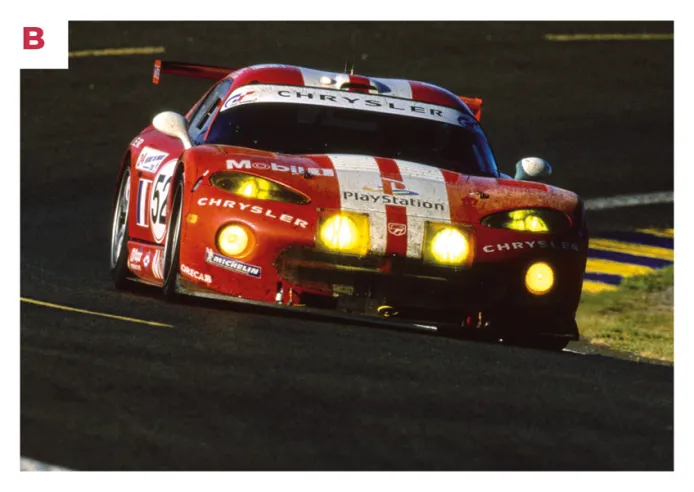
B. After the GT2 program was discontinued in 2001, Chrysler and Oreca produced 52 Viper GTS-Rs for private teams up until 2005.© IXO Collections SAS - Tous droits réservés.
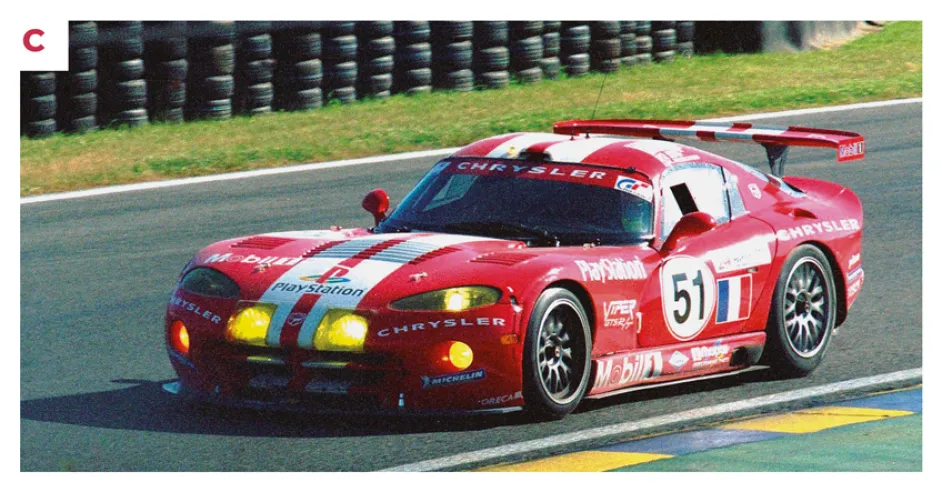
C. The Viper first appeared under the Dodge brand, absent from European markets where the car was marketed as a Chrysler. The same applies to the competition version.© IXO Collections SAS - Tous droits réservés.
Recent articles