 English
 français
 Deutsch
 español
 italiano
 português














10/02/2026
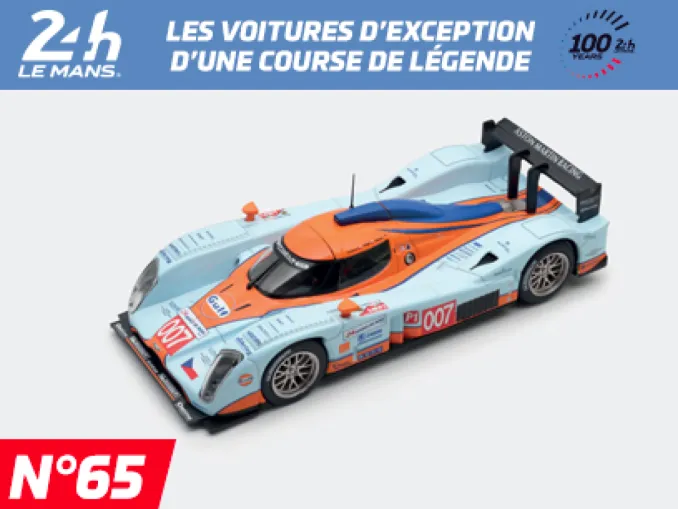
Lola Aston Martin B09/60 – 2009
Lola Aston Martin B09/60
After making its V12 available to Lola for a season, Aston Martin officially made its comeback in endurance racing.
The English team built a chassis for 2009, to which Aston Martin made the necessary modifications. This resulted in a winning car that took the drivers' and manufacturers' titles in the LMS in its only full season and narrowly missed out on a podium finish in the 24 Hours of Le Mans.
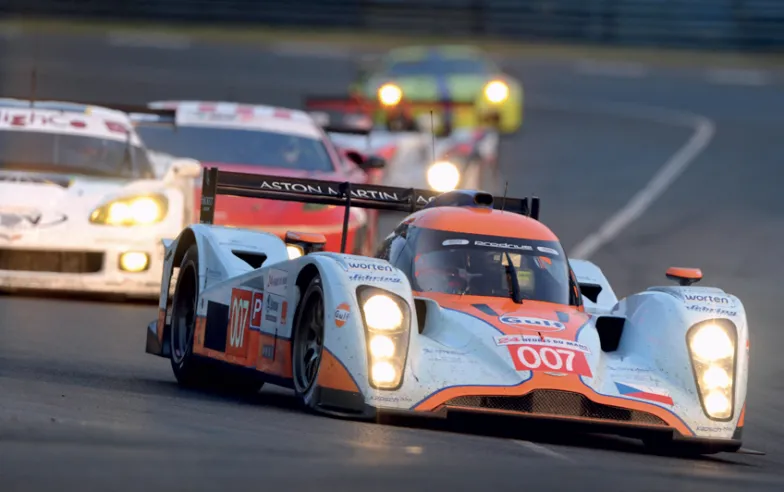
The Lola Aston Martin from the Czech AMR Eastern Europe team was the best-placed of the three Lolas competing in the 2009 edition of the 24 Hours of Le Mans, finishing eighth during qualifying and fourth in the race.© IXO Collections SAS - Tous droits réservés.
The return to the highest level of endurance racing in 2009 was certainly no coincidence. That year, the Gaydon-based brand celebrated the 50th anniversary of its only victory at Le Mans, achieved by the DBR1 with American drivers Carroll Shelby and Roy Salvadori, and the 20th anniversary of the AMR1, built in 1989.
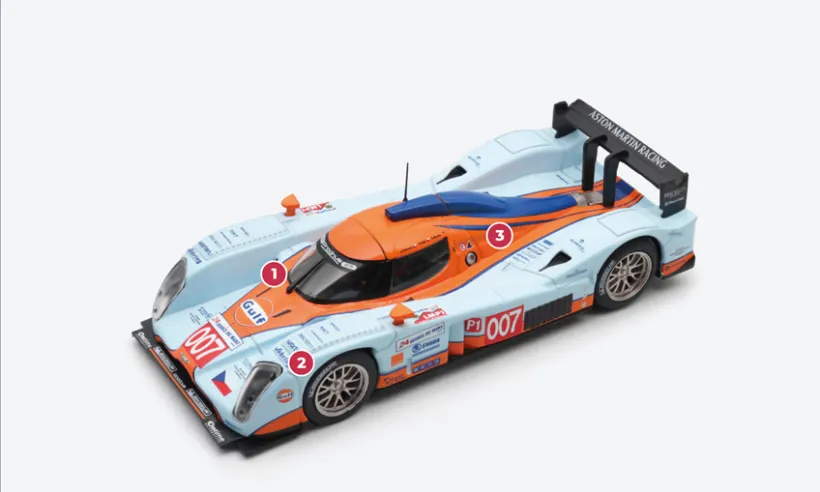
1. The shape is more fluid and less angular than that of the Lola B08/60 models, which are the basis for the B09/60 ‘signed’ DBR1-2 by Aston Martin.
2. The carbon fibre body and front suspension of the original Lola chassis have been retained by Aston Martin, which has made modifications mainly to the rear section.
3. The periscopic air intakes designed to ventilate the rear brakes were removed. The discs are cooled by a rear grille using an electric fan.© IXO Collections SAS - Tous droits réservés.
As a tribute to the past, the new car was named DBR 1-2, even though Lola opposed this and ensured that it also became known under the project name B09/60, a code name that Lola itself had given to the model. The car was derived from the 2008 B05/60, which several teams had raced in combination with various engines, including Aston Martin's V12, the engine used in the DBR9 in the GT class.
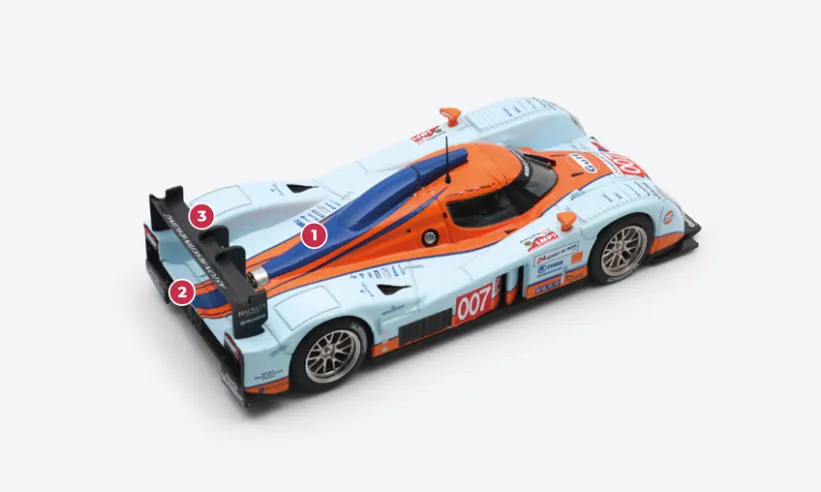
1. The 6-litre V12 engine, already used on the DBR9, is not produced specifically for the B09/60, but is derived from the standard Aston Martin block and, as a result, benefits from larger air intake apertures, enabling it to deliver 650 hp.
2. The larger engine meant that the standard gearbox supplied by Lola could not be used, so it was replaced by an X-Trac sequential gearbox.
3. Before the 24 Hours of Le Mans, the bodywork received several aerodynamic refinements, the most visible of which was the spoiler supported by gooseneck mounting brackets.© IXO Collections SAS - Tous droits réservés.
Aston Martin's new LMP1 competed in the European Le Mans Series (ELMS) with the numbers 007 and 009, a reference to the James Bond film series for which Aston Martin had supplied several cars. During test drives in March at the Paul Ricard circuit, the car proved its speed, even though one of the two cars, which had been damaged in an accident, had to be repaired quickly for the first race of the season, the 1000 km of Catalonia, which took place in early April. Czechs Jan Charouz and Tomás Enge and German Stefan Mücke achieved their first official victory. They finished third in qualifying, behind their teammates Harold Primat, Darren Turner and Miguel Ramos, who had to retire from the race after an accident. This victory was followed by a third and fifth place in the 1000 km of Spa, an excellent prelude to the 24 Hours of Le Mans, although this race did not feature on the LMS calendar.
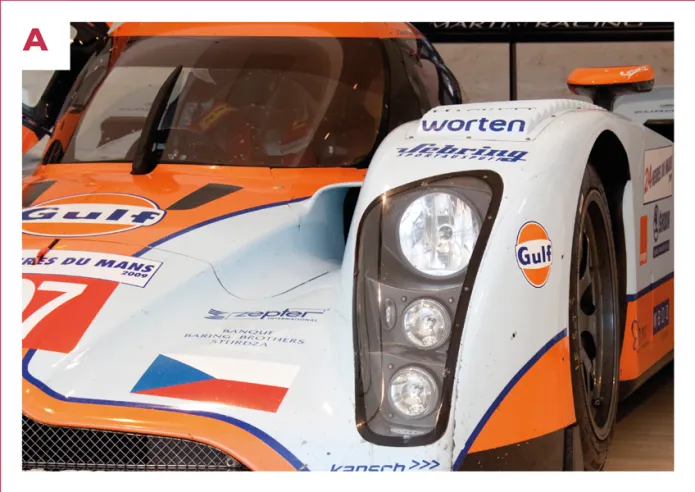
A. Aston Martin also redesigned the styling in order to create a certain similarity with its road models. Compared to the Lola on which it was based, the front lighting configuration was unique.© IXO Collections SAS - Tous droits réservés.
Three Lola Aston Martin cars started at Le Mans: the 007, with Charouz, Enge and Mücke for the AMR Eastern Europe team, while the other two, 008 and 009, formed the official team. The race was a historic duel between the LMP1 turbo diesel-powered Audi R15 and the Peugeot 908, with the French brand dominating for the first and only time at Le Mans, taking the first two places, ahead of the Lola Aston Martins, which held impressively and finished fourth with the 07, three laps behind the Audi that finished third. One of the two other British cars had to retire and the 008, driven by Anthony Davidson, Darren Turner and Jos Verstappen, finished thirteenth.
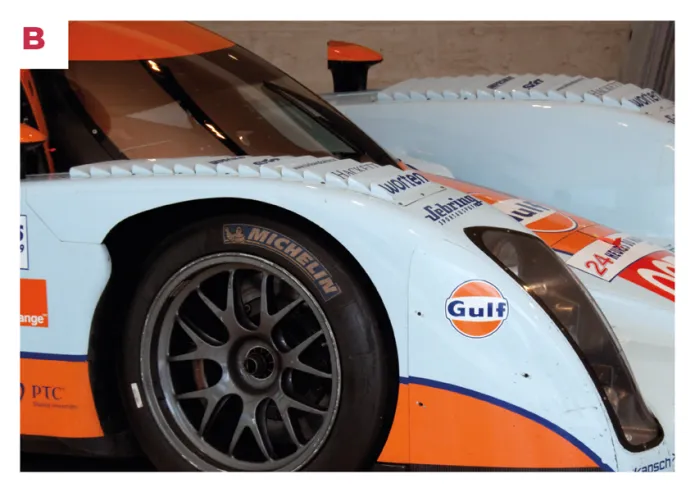
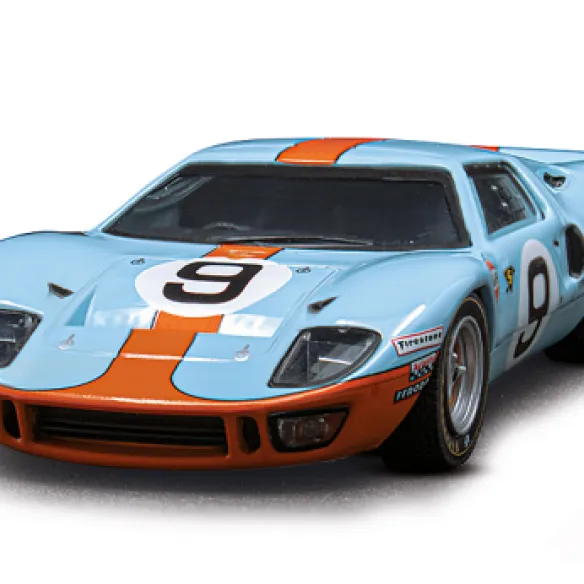
B. The historic Gulf blue and orange colours were used again in 2008 by Aston Martin on the DBR9s entered in the GT1 category.© IXO Collections SAS - Tous droits réservés.
During the three other races of the ELMS championship, the 007 achieved second place in Portugal, a victory at the Nürburgring (where all three cars finished on the podium) and third and fourth place at Silverstone, enough to finish as the best in the manufacturers', drivers' and team classifications.
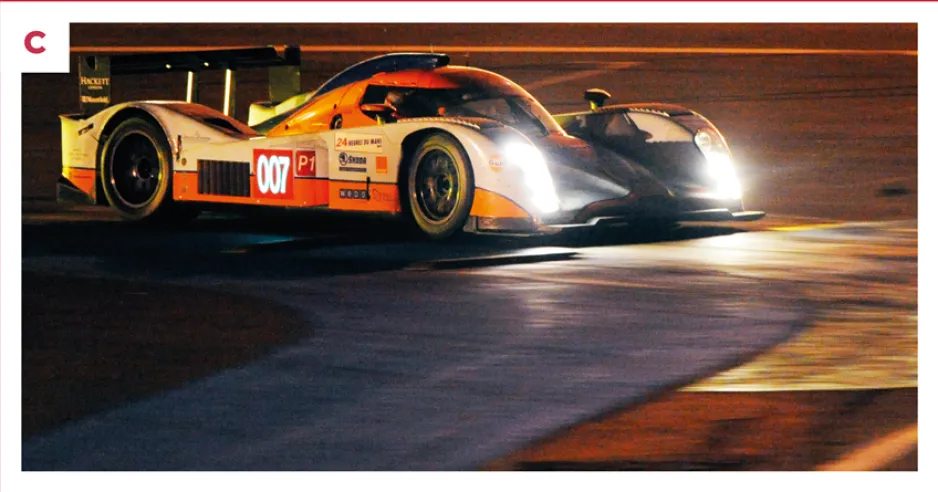
C. This is the B09/60, or DBR1-2, being driven by Tomás Enge, Jan Charouz and Stefan Mücke, photographed at night during the 2009 24 Hours of Le Mans.© IXO Collections SAS - Tous droits réservés.
Recent articles