 English
 français
 Deutsch
 español
 italiano
 português














18/04/2026
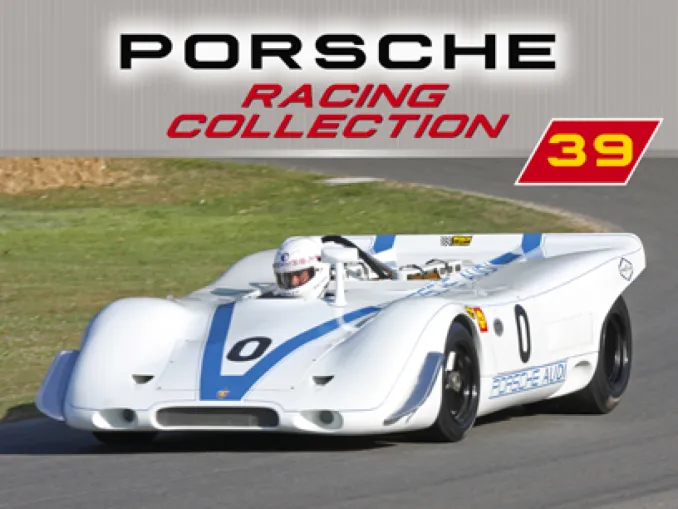
Porsche 917 PA - 1969
Porsche 917 PA
The 917 ‘Spyder’, designed for the Can-Am races, lacked the power to beat the american v8 engines. Jo Siffert managed to get it onto the podium... Just once!
While the new Porsche 917 completed its first season in the Sport category in 1969, the North American importer of Porsche and Audi, Vasek Polak, asked the German brand to develop a Spyder version to compete in the highly popular Can-Am series. The car, called the 917 PA Spyder (PA for Porsche-Audi), lacked the power needed for a race whose rules allowed much greater freedom in comparison to the FIA Sport Prototype Championship. Despite this, Swiss driver Jo Siffert still managed an impressive third place and finished the championship in fourth position with 56 points, including six points scored at Watkins Glen, albeit in the 908/02.
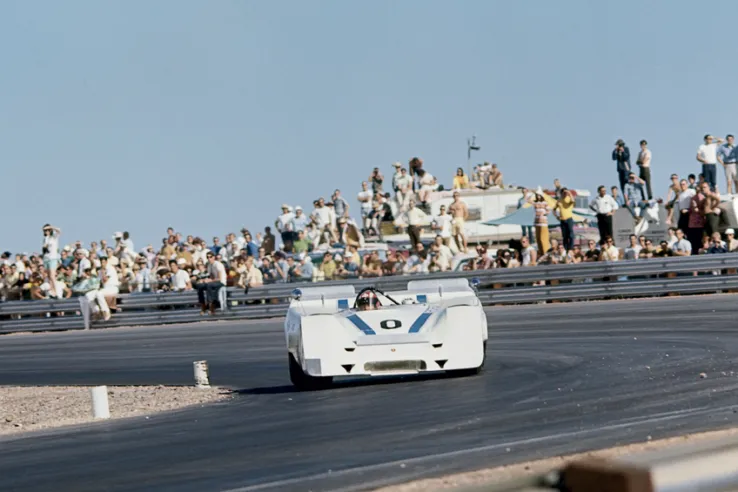
© IXO Collections SAS - Tous droits réservés.
ALWAYS BEHIND THE MCLARENS, ENDING UP FINISHING THIRD AT BEST
The Porsche 917 PA was tuned in accordance with FIA Group 7 regulations. This two-seater sports car, in contrast to the Group 5 Sports cars to which the original 917 belonged, benefited from greater freedom reserved for prototypes, with no required minimum number of cars produced for homologation. Entrusted to Jo Siffert, it made its debut mid-season, more precisely during the fifth event at Mid-Ohio, replacing the 908/2 that the Swiss driver had been using until then. Having started from seventh position, it finished fourth, a good performance which, unfortunately, would hardly improve. With over 600 hp, the all-powerful Chevrolet-powered McLarens (and Lolas) won every race of the season and soon proved unbeatable, including by the most sophisticated of the Porsche 12-cylinder engines, which produced less than 600 hp. Having pulled out at Road America, the PA took third place at Bridgehampton, its best result of the season for both the car and the driver. This was followed by a fourth place in Michigan and a fifth at Laguna Seca, whereas during the last two races, Siffert withdrew again at Riverside and once more secured fourth place on the Texas circuit, earning a total of 56 points, placing him just off the podium position in the overall standings.
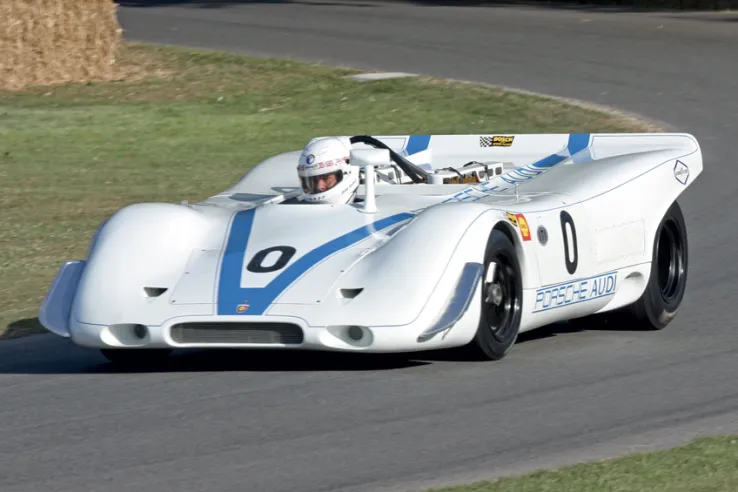
As Can-Am race events only take place during daylight hours, none of the cars are equipped with headlights.© IXO Collections SAS - Tous droits réservés.
THE ‘PA’ AWAKENS IN 1971
By the end of the 1969 season, the car and driver's career paths went their separate ways. The barquette model was set aside in favour of the development of the new 917/10, which would make its debut in 1971 with Siffert at the wheel for his final season. Later in 1971, the PA ownership was transferred to the North American team, having changed its name from Porsche-Audi to Vasek Polak Racing Inc. The car returned to the track with a 5-litre engine producing well over 600 bhp, although this configuration was still insufficient to beat the insatiable McLarens.
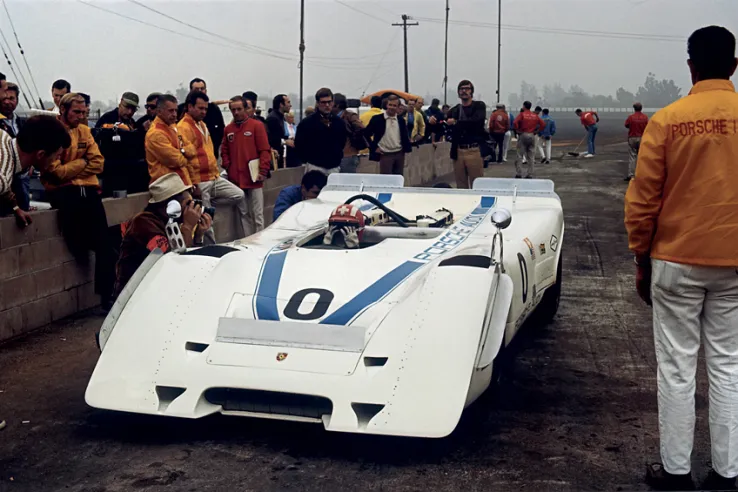
Siffert's 917 PA on the Riverside circuit, the penultimate event of the 1969 Can-Am season, has been modified with a more flat and sloping front end. © IXO Collections SAS - Tous droits réservés.
[THE 5-LITRE BLOCK INTRODUCED IN 1971 PROVED INSUFFICIENT]
The American driver Milt Minter finished seven times (out of ten races) between fifth and ninth place, ending the season in sixth place overall with a total of 37 points. The following year, Sam Posey drove the car twice, finishing fifth at Laguna Seca. In June 1973, the PA was finally converted into a 917/10 and, with this configuration, competed for another two years with 5-litre and 5.4-litre naturally aspirated engines followed by the first 5.4-litre twin-turbo, but never achieved a podium finish.
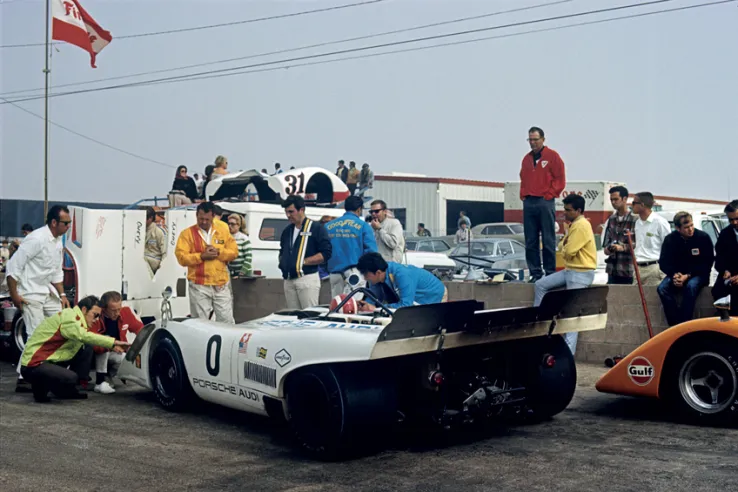
The rear end of the 917 PA is similar in shape to that of the 917 K, which was introduced in 1970.© IXO Collections SAS - Tous droits réservés.
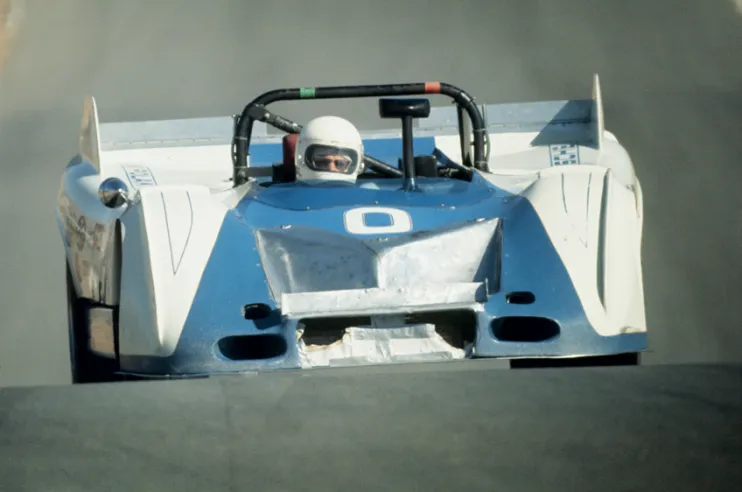
During 1971, the 917 PA continued to evolve, with the addition of side fins on the rear bonnet. Here we see it racing at Riverside, driven by Milt Minter, who finished sixth.© IXO Collections SAS - Tous droits réservés.
Jo Siffert
For this versatile Swiss driver, twice winner of the 24 Hours of Le Mans (1966 and 1967) and once winner of the 24 Hours of Daytona and the 12 Hours of Sebring (1968), the year 1969 was one of his busiest. In addition to competing in the Formula 1 World Championship and the Formula 2 European Championship, he also took part in the newly launched Can-Am Championship and, with Porsche, in the Endurance Championship, where he scored six victories. Regarding the Can-Am, Siffert's record includes three appearances; finishing fourth overall in 1969, then only managing second place in the 1970 6 Hours of Watkins Glen and ending up seventeenth overall. During the fatal 1971 season, Siffert raced for a team sponsored by STP, driving the new 917/10 (still without a turbo) model and finishing fourth in the final standings. A fatal accident at Brands Hatch in mid-October, which occurred during practice for a non-championship Formula 1 race, prevented him from competing in the final event and from winning third place.
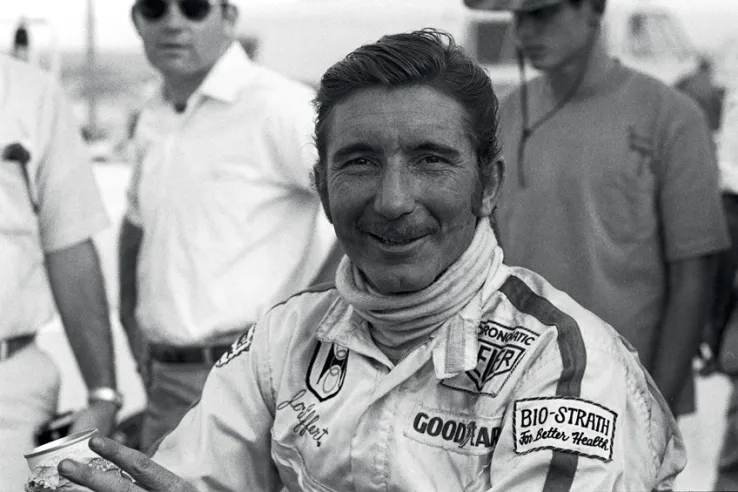
The photo shows a smiling Jo Siffert at the Texas circuit during the final round of the 1969 Can-Am season, which he finished fourth in both the race and the overall standings.© IXO Collections SAS - Tous droits réservés.
Technical sheet
Recent articles