 English
 français
 Deutsch
 español
 italiano
 português













03/08/2025
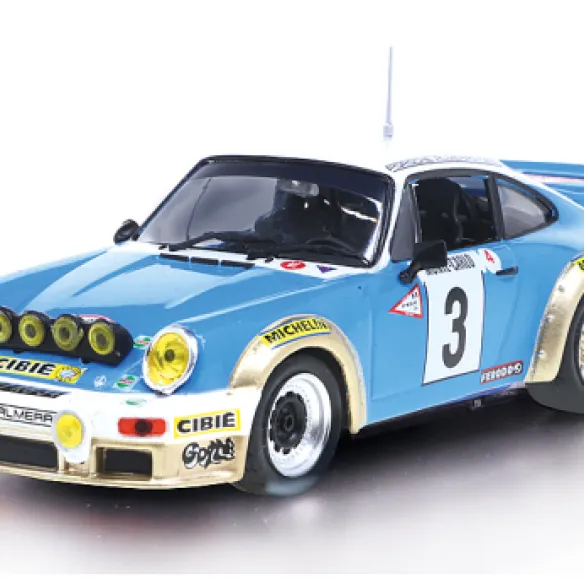
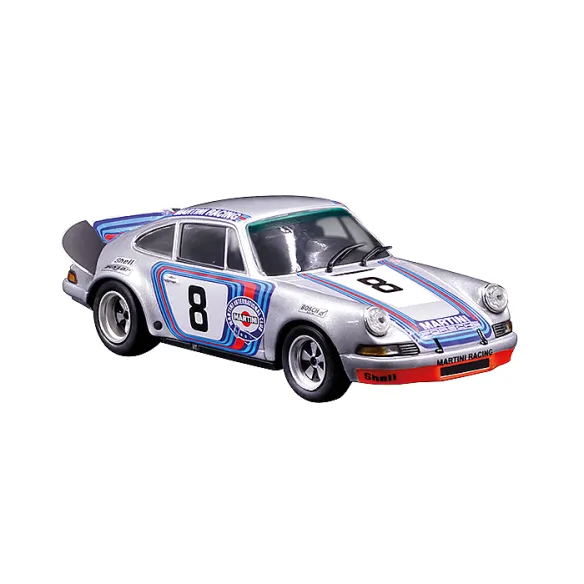
Porsche Carrera RSR Turbo GR 5 - 1974
Porsche Carrera RSR Turbo GR 5 - 1974
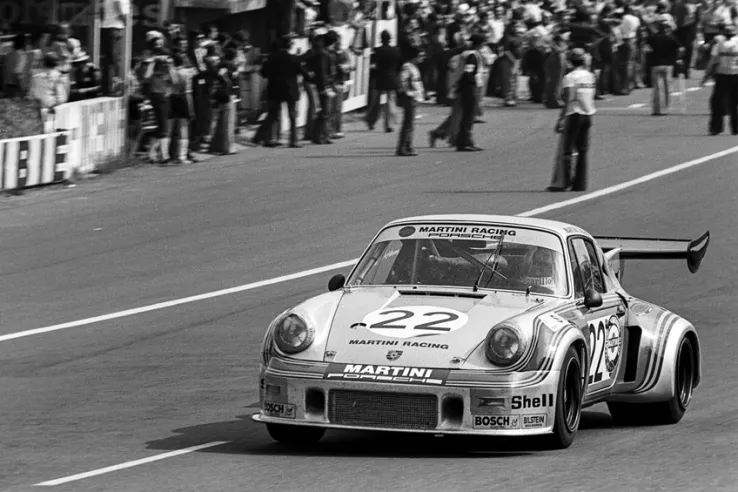
The final evolution of the 911 RSR, the turbo did not win an outright victory, but it introduced the engine that was to power the 934 and 935.
In the early 1970s, at a time when it was winning in the Sport category with various versions of the 917, Porsche became involved in the development of the evolution of the 911 RSR racing car, with its 2.8-litre engine starting to show its limitations. For Porsche, it was time to use the experience gained with the supercharged versions of the 917 and transfer it to the coupé's six-cylinder engine. The result was the first 2.1-litre RSR Turbo. This new car immediately showed interesting potential, but due to its teething problems and the limits imposed by the regulations, it failed to make its mark, although it was a valuable test bench for the development of the 934 and 935 to come.
© IXO Collections SAS - Tous droits réservés.
ITS BEST RESULTS? SECOND AT LE MANS AND WATKINS GLENN
The 911 RSR Turbo made its debut on the racetrack in 1974. At the time, Porsche was developing its street car alter ego, the 911 Turbo 930, which did not appear until the end of the year. The new 911 was not to be considered a derivative of a production model, as required by the Group 4 regulations applicable to Grand Touring Specials, which demanded the production of 500 units over a 24-month period. Porsche therefore had to homologate the 911 RSR Turbo as a Sport-Prototype, which put it in competition against some very different cars, designed for racing and therefore more competitive. Despite this, the 911 RSR Turbo 2.1 achieved some interesting results, particularly with the duo of Dutchman Gijs Van Lennep and Swiss driver Herbert Müller, who finished fifth at the 1,000 km of Monza, third at Spa and sixth at the Nürburgring over the same distance. The results of the other 911 RSR Turbo, which was often driven by Helmuth Koinigg and Manfred Schurti, who were just behind their team-mates at the Nürburgring, were more irregular. At the 1,000 km of Imola, the event preceding the 24 Hours of Le Mans, both cars were forced to withdraw due to problems with their engines and gearboxes.
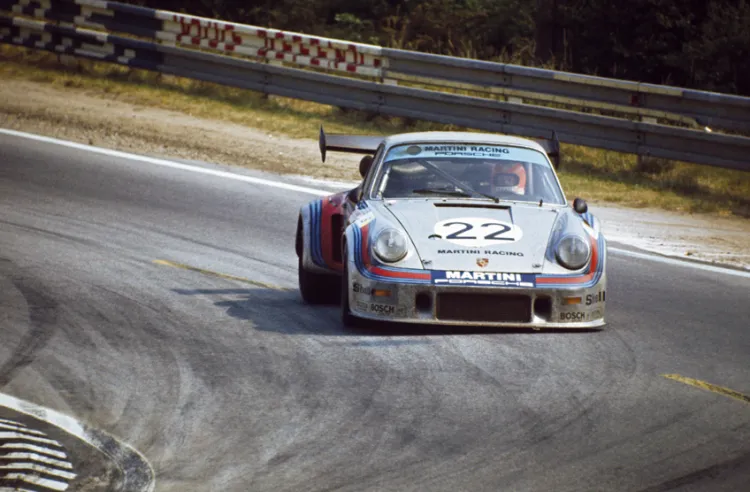
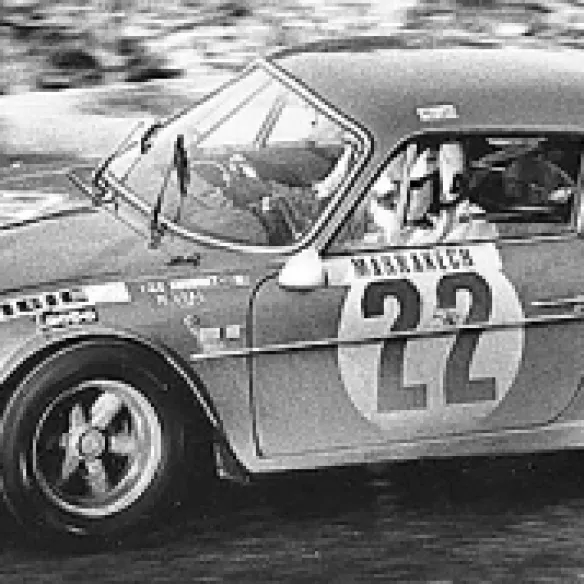
The RSR Turbo no. 22 finished second in the 24 Hours of Le Mans 1974 with Gijs Van Lennep and Herbert Müller, who were the car's best performing drivers.© IXO Collections SAS - Tous droits réservés.
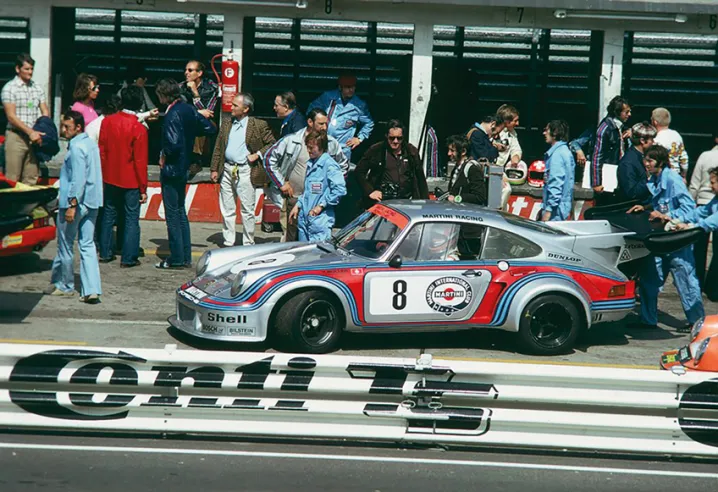
Van Lennep and Müller in the pits at the 1000 km Nürburgring 1974, which took place a month before Le Mans and where the two drivers finished in seventh place with the RSR Turbo.© IXO Collections SAS - Tous droits réservés.
FACING MATRA
At the 24 Hours of Le Mans, the Porsche-Martini Racing team was able to build on the experience it had acquired during testing in March, which was also the first time the RSR Turbo 2.1 had driven. This time, Koinigg was sixth before Van Lennep and Müller, who set the seventh fastest time. But in the following 4-hour race, both teams pulled out. At the June test, the Dutch-Swiss duo repeated their March result, just behind the Matra and Gulf-Ford prototypes, while the second RSR finished eleventh.
In the race, the two Porsches quickly moved to the top of the rankings, before finally claiming third and fifth place, several laps behind the Matras, who were visibly faster. But after eight hours of racing, Koinigg and Schurti were once again let down by their exploding engines. However, the French barquettes also suffered engine problems and shortly afterwards, two out of four cars withdrew. These included the MS 670 C of Jean-Pierre Jaussaud and Bob Wollek, who lost second place to the Porsche of Van Lennep and Müller. Thereafter, the two drivers attempted unsuccessfully to close the gap on the Matra, being driven by Henri Pescarolo and Gérard Larrousse, who maintained their position at the front, but they managed to keep the MS 670 C of Jean-Pierre Jabouille and François Migault at bay, who finished third and 10 laps behind the Dutch-Swiss team.
[POWERFUL AND DELICATE, THE 2.1 PAVES THE WAY FOR VICTORIES IN 1976]]
Following this, the 911 RSR Turbo 2.1 took 2nd place in the 1,000 km of Zeltweg and the 6 Hours of Watkins Glen, 7th in the 1,000 km of Le Castellet and 5th in Brands Hatch, which enabled Porsche to finish third in the Championship of Manufacturers behind Matra and Gulf-Ford. In 1975, the German brand concentrated on developing the 934, 935 and 936 for 1976, with the result that the RSR Turbo 2.1 was sidelined. It did appear in a few events in 1977 in the hands of private teams, but without any notable results.
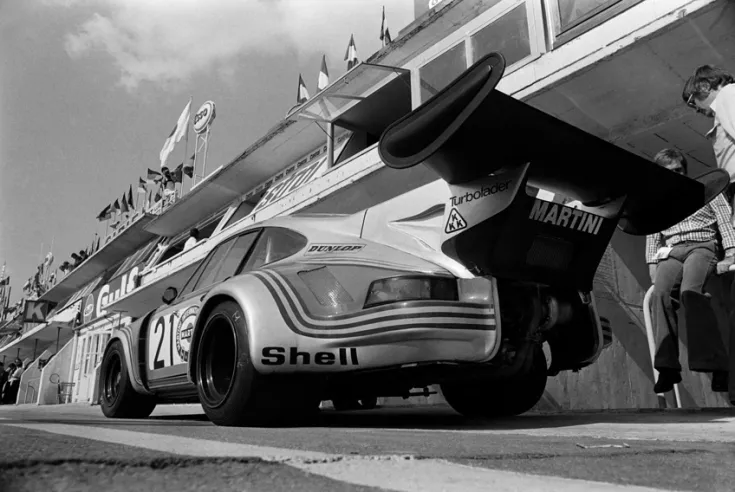
The 911 Carrera RSR Turbo 2.1 entered by the official Martini-Porsche team at the 24 Hours of Le Mans in 1974, entrusted to Manfred Schurti and Helmuth Koinigg, withdraws from the race on lap 87 due to engine problems.© IXO Collections SAS - Tous droits réservés.
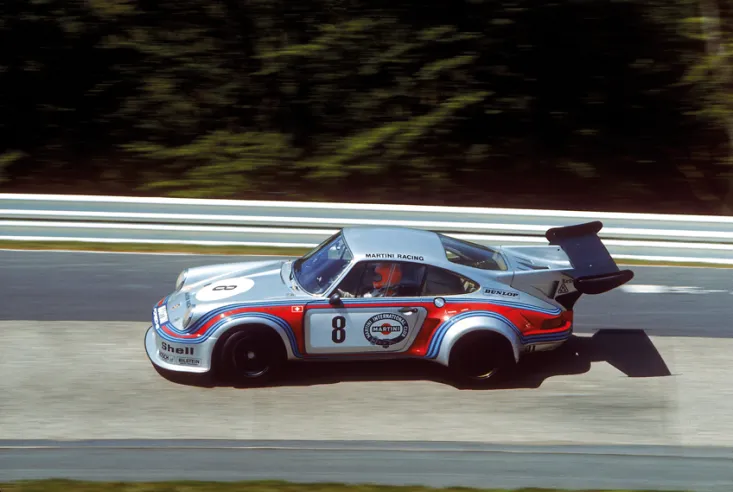
A Porsche 911 RSR Turbo 2.1 during a demonstration at Goodwood in England displays its large matt black wing mounted on support brackets attached directly to the rear posts.© IXO Collections SAS - Tous droits réservés.
HERBERT MÜLLER AND GIJS VAN LENNEP
The most successful driver combination ever to drive the 911 RSR Turbo was made up of two veterans of the Porsche brand who, in 1973, already took a naturally-aspirated RSR to victory in the Targa Florio, in addition to a number of other successes behind the wheel of cars manufactured in Stuttgart. Dutchman Gijs Van Lennep won the 1971 24 Hours of Le Mans in a 917 K with Austrian Helmut Marko, a feat he repeated in 1976 at the wheel of the new 936 co-driven by Jacky Ickx.
For the Swiss Herbert Müller, success began with victories in the European Championship Hill Climb in 1963 and 1965, and followed with the 1966 Targa Florio as a duo with the Belgian Willy Mairesse, repeated in 1973 with Van Lennep. At Le Mans, his best result was second place in 1974, replicating that of 1971 with Briton Richard Attwood in a 917 K.
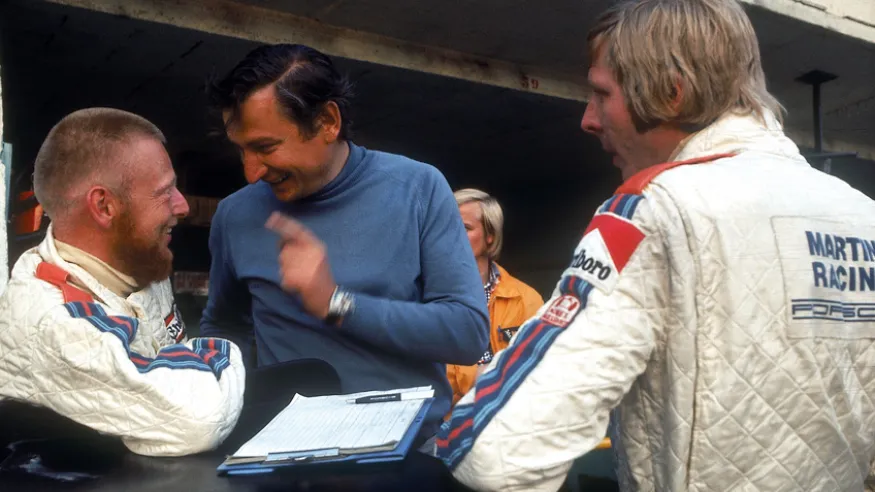
Herbert Müller and Gijs Van Lennep, first and third from left to right, with the team's technical director Norbert Singer at the 1974 Le Mans 24 Hours.© IXO Collections SAS - Tous droits réservés.
Technical sheet
Recent articles