 English
 français
 Deutsch
 español
 italiano
 português




















12/09/2025
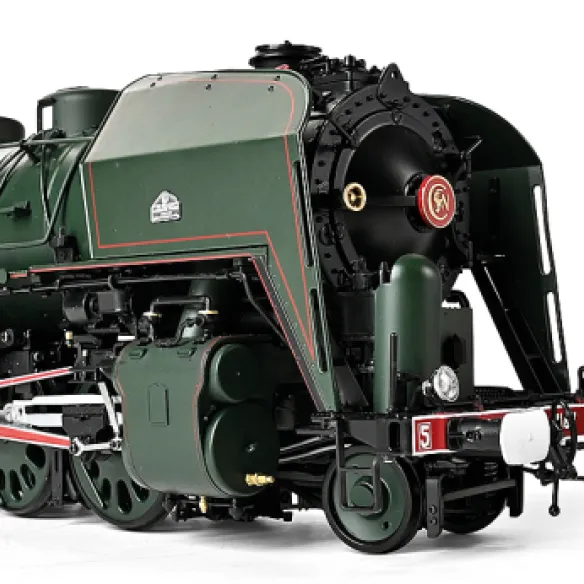
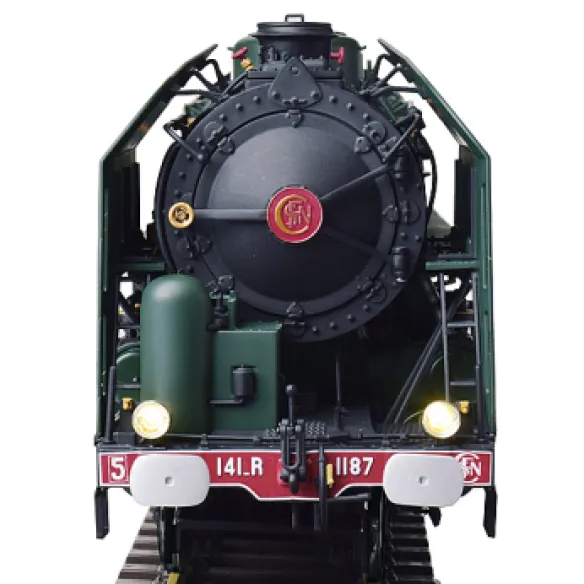
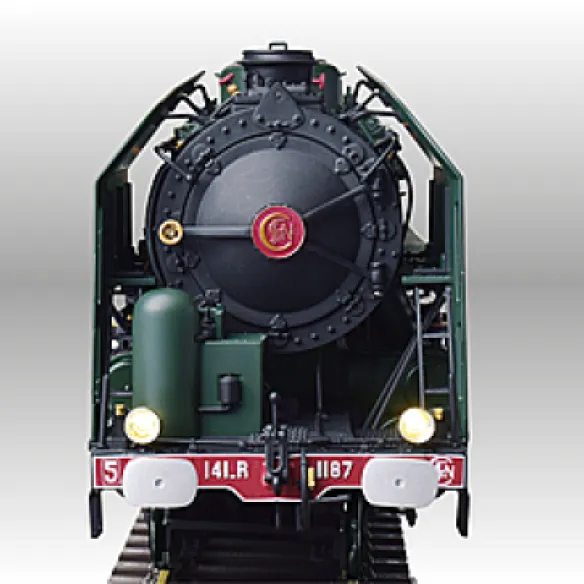
The 141-R, at the peak of their glory
The 141-R, at the peak of their glory
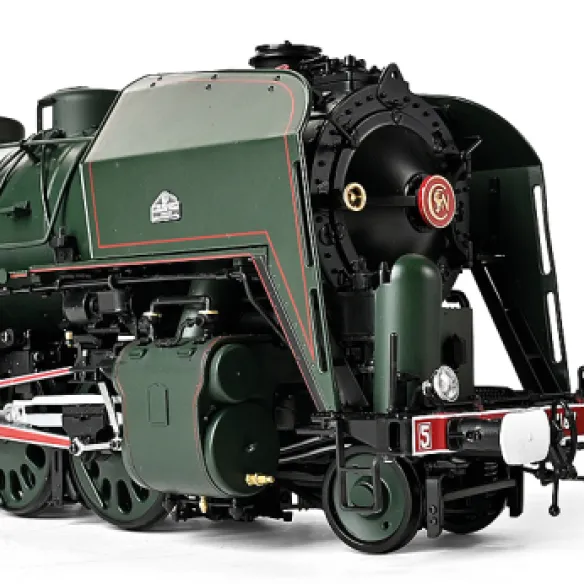
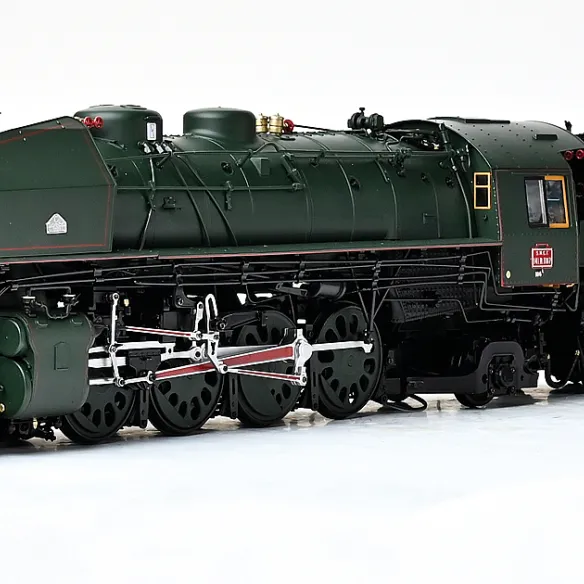
Ordered from the American industry, these steam engines were very different from the French ones and, especially given their number of 1,323 locomotives, they marked a turning point in the end of the history of steam traction in France.
Representing the largest series ever to run in France, the American 141-R accounted for 44.8% of SNCF's total tonnage in the early 1950s. Capable of covering twice the daily mileage of conventional SNCF locomotives, they were extremely sturdy and simple to operate, and could be run on a ‘banalisation’ basis (i.e. by rotating crews that were not titular to their machine, contrary to the SNCF tradition of titular crews). These locomotives were produced for France by the USA as part of the Marshall Plan.
They were built on the basis of an old model dating from 1918 and modified; deliveries started in 1945. By 1946, 700 R locomotives were already in service, and by 1947, all the Rs were in operation, demonstrating that simpler machines, which required less coal because they were less sophisticated, could be more profitable.
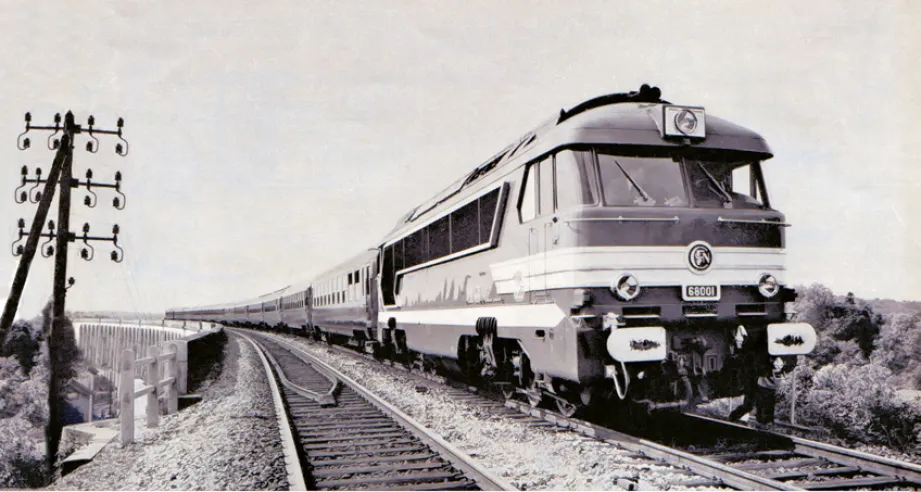
The arrival of the 141-Rs took place on an SNCF network converted massively to diesel traction, fast and heavy passenger trains included. The A1A-A1A-68500s struggled to make their debut on the main lines and, for some time , served as a reminder that steam was powerful and reliable.
© IXO Collections SAS - Tous droits réservés. Crédits photo © Collection Trainsconsultant-Lamming
THEY FORCED SNCF ENGINEERS TO BECOME AWARE OF SOME NOTORIOUS FACTS
This prompted the SNCF to reflect on its traction policy at the end of the 1940s. It became clear that the great French tradition of sophisticated, “pushed” locomotives, driven with finesse by highly qualified permanent crews, was in fact an expensive policy and a serious financial mistake. With 141-R, a different policy was inevitably put in place, with machines powered by single expansion engines, automatic lubrication, automatic adjusters, etc.
The SNCF realised that coal, despite its high price, was cheaper than labour, and that it was better to focus on savings in maintenance and running costs than on coal alone; until the problem of coal could be solved by eliminating it altogether. The conversion of half of the 141-Rs to fuel oil heating was one solution, pending the resumption of major electrifications or the introduction of diesel traction. However, the order for the 141-Rs was not made explicitly with this in mind: the aim was to make use of the only industry in the world capable, at the end of the war, of supplying France with 1,340 locomotives in record time.
Only the American and Canadian industries could do it, and they did it with the means at hand: France's request for a type 141 mixed locomotive was only possible using the old USRA type, whose axle weight and overall dimensions were compatible with the French network. Compared with a national average of 75 km/day for the SNCF's classic locomotives, the ‘R’ locomotives achieved an average of 200 km/day as soon as they were brought into service, and even reached 500 or, exceptionally, 800 km/day in 1949 in the Western region.
© IXO Collections SAS - Tous droits réservés. Crédits photo © Collection Trainsconsultant-Lamming

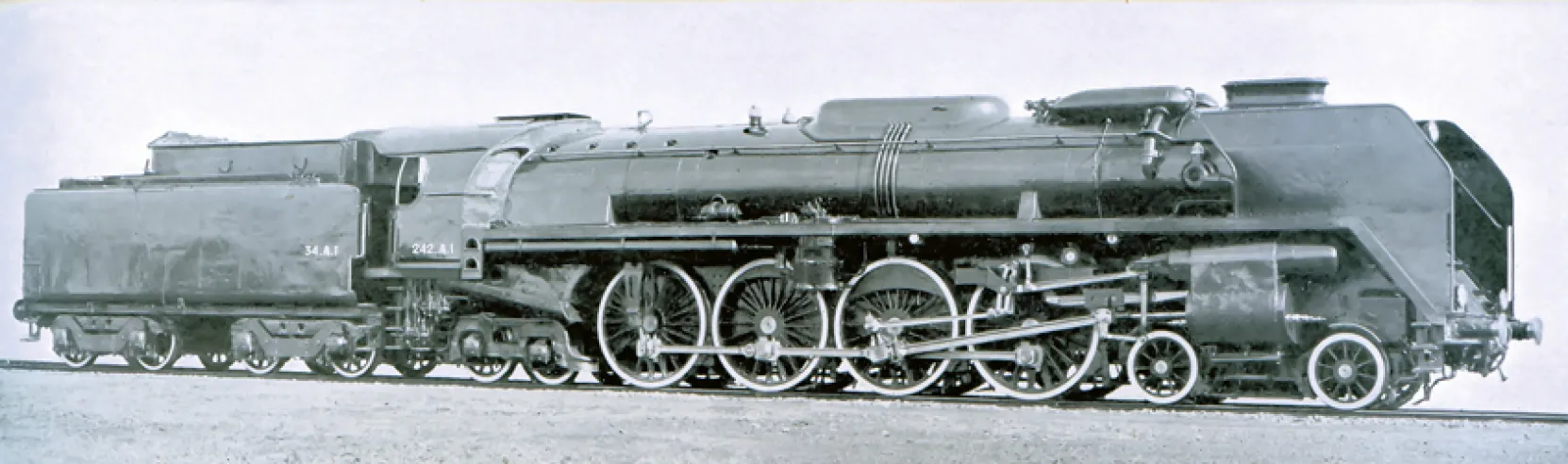
When the 141-R locomotives arrived, a few SNCF engineers still believed in the future of steam, such as the famous André Chapelon, whom the SNCF allowed to conduct tests with the 242-A-1, which developed 4,000 hp. When Chapelon retired in 1953, the page was turned and this locomotive was scrapped in 1957.
© IXO Collections SAS - Tous droits réservés. Crédits photo © Collection Trainsconsultant-Lamming
AN IMPOVERISHED IMAGE OF STEAM TRACTION
With historical hindsight, we can assume that this massive presence of 141-R locomotives, while it certainly saved the French railways by quickly reviving them, also contributed to the poor image of steam traction. The 'R's were likeable, reliable and robust, but totally outdated compared with the very best on European networks... and far inferior to the locomotives designed by the Englishman Gresley, the German Wagner or the Frenchman Chapelon, to take just a few examples.
They contributed to the decline of steam traction, but they also anticipated the driving and maintenance of the future. The introduction of standardised operating teams, high mileage for the machines and low-cost maintenance all paved the way for a completely revised traction policy that the SNCF would be pursuing for the foreseeable future, whatever the mode of traction, especially electric traction.
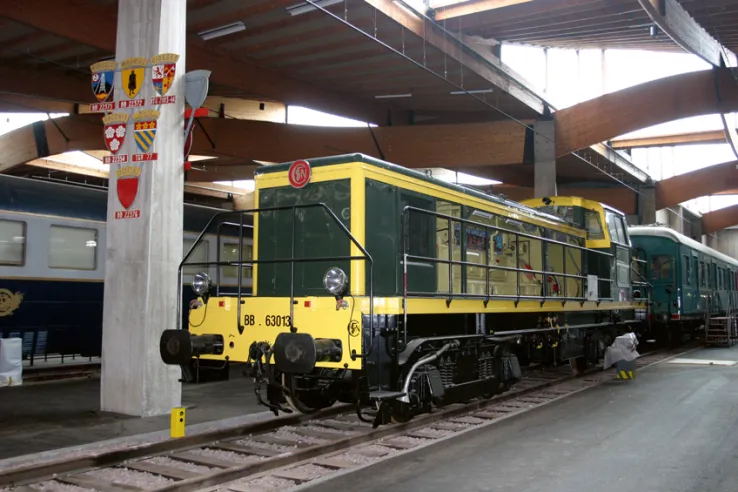
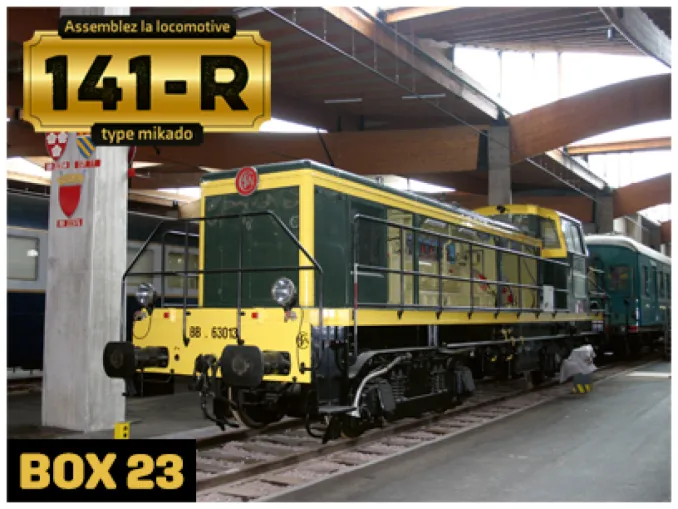
Built between 1953 and 1967, BB-63001 to 64819 were the SNCF's “all-rounders”, running trains of all kinds, including freight, on all the medium and small lines. This is N° 63013.
© IXO Collections SAS - Tous droits réservés. Crédits photo © Collection Trainsconsultant-Lamming
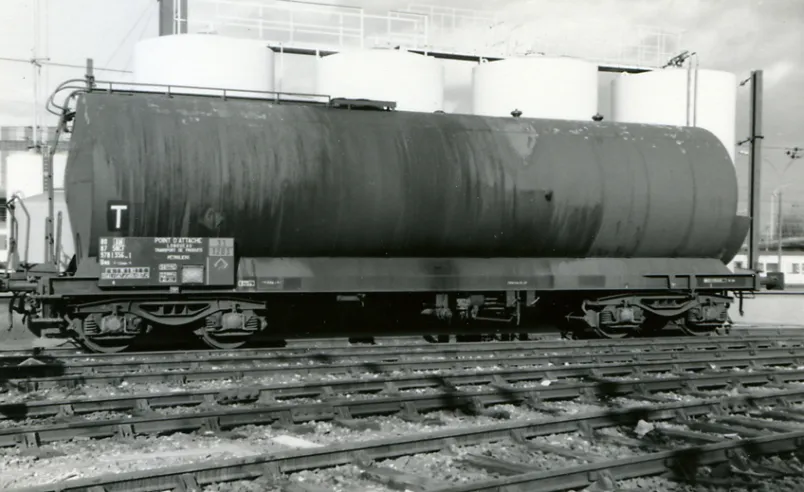
Swarming the service tracks of depots in trainloads, tank wagons were the faithful servants to the diesel revolution and the ‘all oil’ policy. This strategy was suddenly called into question with the 1973 oil crisis!
Crédit : Document Philippe Mirville - Cité du Train. © IXO Collections SAS - Tous droits réservés.
THE “GENERAL” STAR OF THE WILD WEST, ALSO AT THE CINEMA
Made famous by Buster Keaton's film ‘ The General ’, this type of locomotive was par excellence the locomotive of the conquest of the American West. Thousands of these locomotives were built, and were given the name ‘American’. It remains inseparable from the legend of the conquest of the Far West.
NO! THE GENERAL'S WIFE WAS NOT PLAYING WITH MECCANO...
The film “The General ” was made in 1926 and its success has continued ever since. The only problem was the film's title, as if a general's wife employed a mechanic to fix her car... Others thought that the general in question had been playing with “Meccano”. No, there was no general: the locomotive which Buster Keaton made immortal was called ‘General’ in tribute to the famous Southern general Lee during the American Civil War.
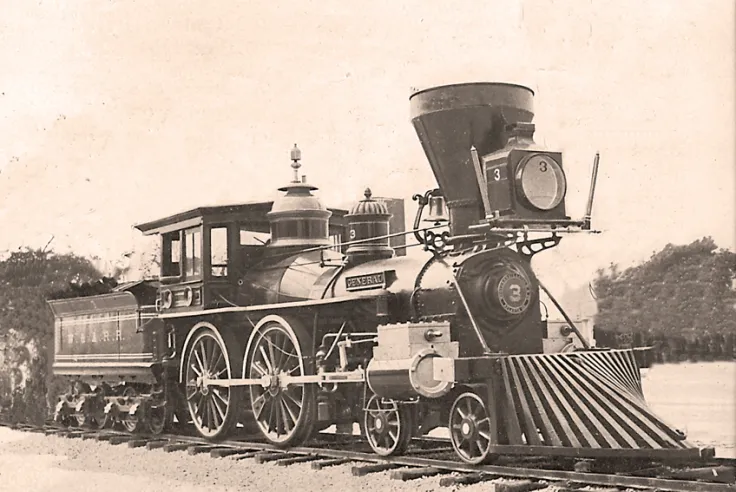
The real “General”. This is just one of the countless Type 220s known as ‘American’, more than 26,000 units being built by all manufacturers and for the entire network. They created the power of the American nation.
© IXO Collections SAS - Tous droits réservés. Crédits photo © Collection Trainsconsultant-Lamming
ROGERS' MASTERPIECE
This type of locomotive was designed by the manufacturer Rogers, of Paterson, New Jersey in the USA, in 1855. Following American pragmatism, this locomotive was the fruit of experience and met a very specific need. The front bogie had widely spaced axles to ensure good stability on very irregular tracks. It controlled and supported the front of the locomotive, making it easier to navigate curves.
The firebox positioned vertically between the drive axles to ensure good stability and to provide maximum weight where needed: on the drive axles. The suspension had plenty of range and ensured the essential three-point contact patch for handling on deformed tracks. The chassis was light and flexible. The driver's cab with its high, glazed windows offered a clear view when driving in a new and often hostile country, where the unexpected could happen at every bend of the track...
FAMOUS, THEREFORE IMITATED
This type of locomotive was very quickly imitated by other American manufacturers such as Baldwin, Grant, Danforth and Hinkley, etc... More than 25,000 ‘American’ locomotives were sold between 1855 and 1880. This figure of 25,000 is considerable: it remains by far the highest world record for a series of locomotives.
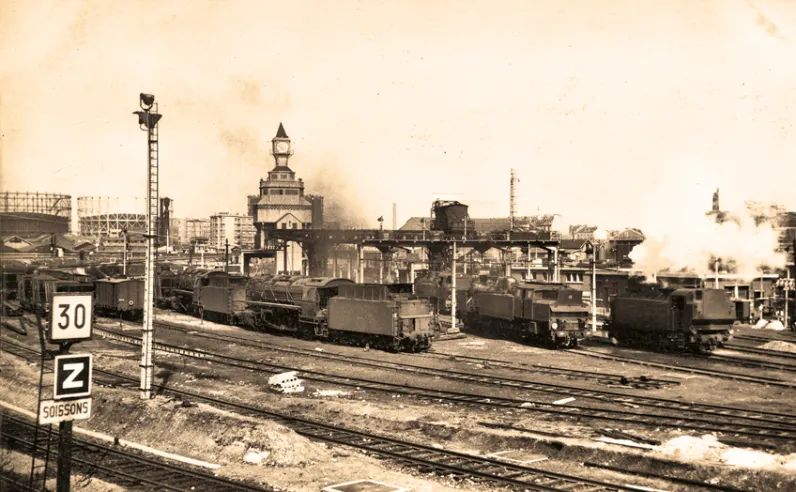
When the suburbs of Paris were ‘smoking’ – in the best sense of the word. Here we are in the 1950s at the La Plaine-St-Denis depot, created by the Northern Railway in 1874. Dozens of locomotives fill the sky with smoke day and night. The clock on the tower known as the ‘Florentine’ keeps track of time down to the minute.
Crédit : Document J. Renaud.© IXO Collections SAS - Tous droits réservés.
Recent articles