 English
 français
 Deutsch
 español
 italiano
 português







































24/06/2025
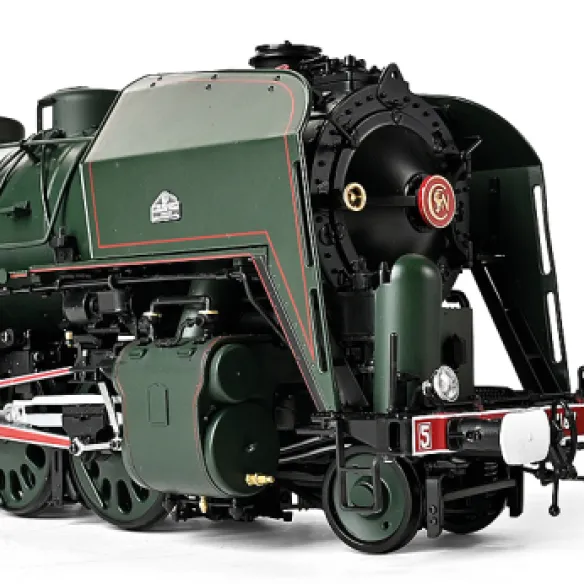
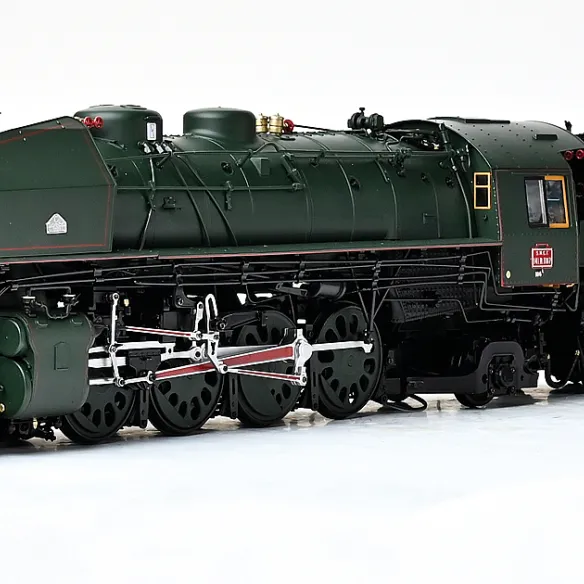
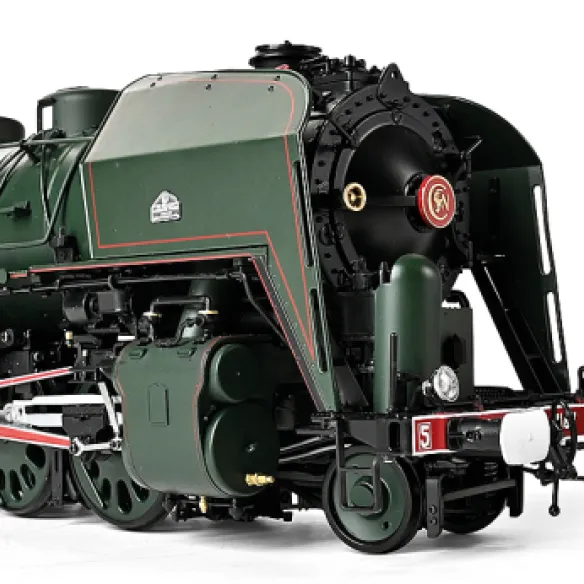
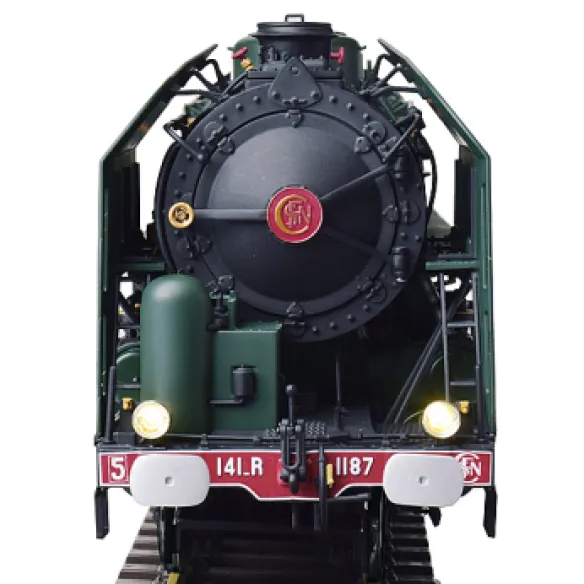
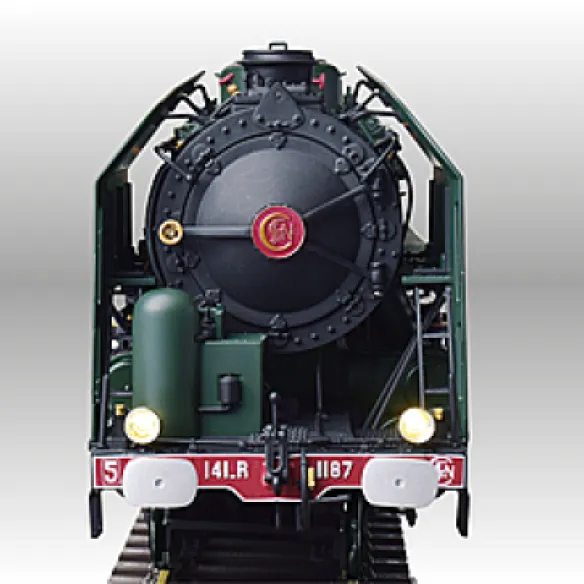
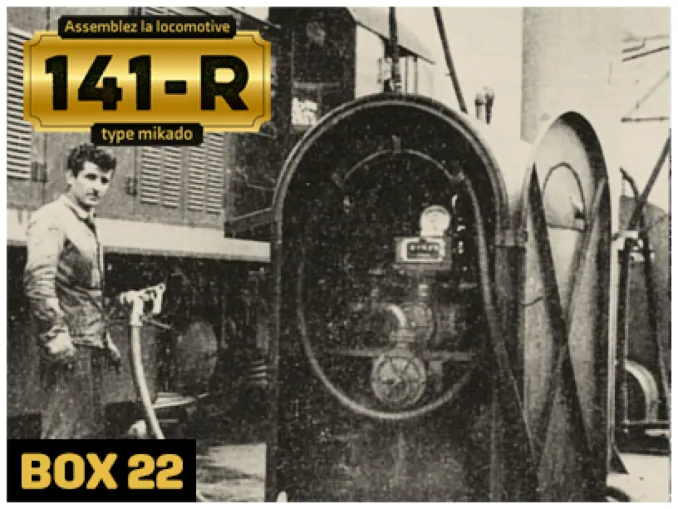
The 141-R, late queens of petrol
With the 141-R, the reign of coal in France suddenly declined.
Read moreSince its introduction at the beginning of the 19th century, as a consequence of the combination of the steam locomotive and the railway, high quality coal of the industrial type with high calorific value (Cardiff, Pennsylvania, Ruhr, etc.) had become the norm. For countries like France, this type of coal had to be imported, and its price was exorbitant.
Petroleum refining produces a large number of specific products, but all these products must be processed and cannot be used directly. We obtain liquefied gases (butane, propane), unprocessed petrol which has to be reformed by catalysis to give automotive or aviation carburants: kerosene used for aircraft engines and diesel used for diesel engines.
Fuel oil is a heavy product (combustible oil). Finally, paraffins and bitumens are also heavy products, yet extracted by vacuum distillation of residues. The term ‘fuel-oil’ (or “fuel” for short) is English, but with 141-R it became in France ‘fioul’. For the same reasons, the term ‘gas-oil’ became ‘diesel’.
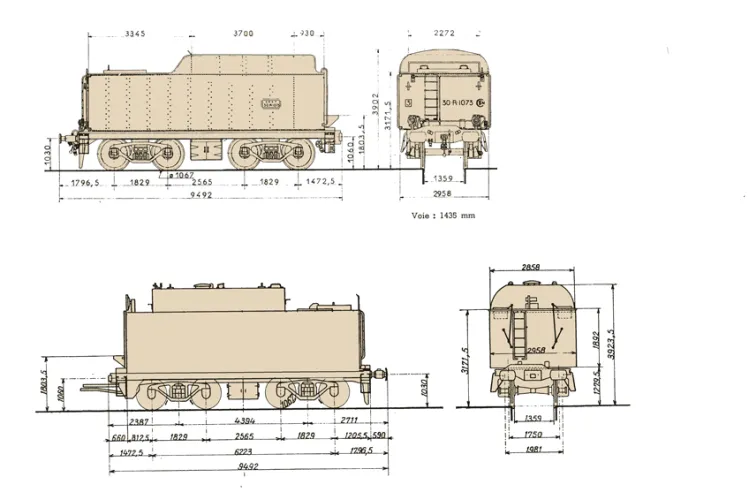
The main difference between a 141-R ‘fuel’ and a 141-R ‘coal’ lies in the tender. On the diagram, at the top, the classic coal tender with its large open-roof bunker dominating the body, and at the bottom, the fuel tender with its imposing tank with a smooth, closed roof. The water is stored in boxes surrounding the bunkers.© IXO Collections SAS - Tous droits réservés. Crédits photo © Collection Trainsconsultant-Lamming
THE FIRST TRIALS
They began in 1887 in Romania, a country with a shortage of coal. As a result of the success of these trials, the use of fuel oil spread to Russia and Asia, however, in the form of a combination of heating with fuel oil sprayed onto the coal. As would be expected, the presence of oil fields in the United States prompted that country to equip a very large number of its steam locomotives with fuel oil.
In the aftermath of the Second World War, networks in the United States consumed 17,000,000 tonnes of fuel oil and 124,000,000 tonnes of coal, which is 14% of the fuel oil and 20% of the coal generated locally. The UK followed the trend during the mining strikes of 1912, 1921 and 1926, only to abandon this technique and re-embrace it, as France had done, in the aftermath of the war.
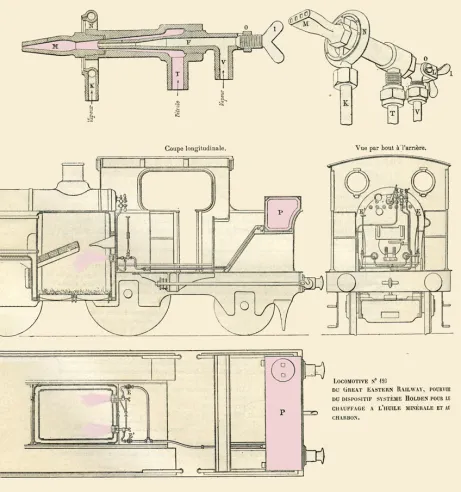
As early as 1888, there was talk in the United Kingdom (a major world producer of coal) of testing the Holden system of using mineral oil to accelerate the combustion of coal in steam locomotives of the Great Eastern Railway. Top right: drawing of an injector.© IXO Collections SAS - Tous droits réservés. Crédits photo © Collection Trainsconsultant-Lamming
AN INTERESTING CASE: TRIAL RUNS ON PLM FROM 1919
The French PLM network decided to test oil-firing on shunting locomotives from 1919. The transformation of 35 locomotives in the Villeneuve-St-Georges workshops totalled around 450,000 francs, but resulted in annual savings of 300,000 francs. By the end of the First World War, coal had become very expensive. Given the excellent results achieved, the company then converted 90 locomotives to be used at the Villeneuve, Paris and Lyon depots.
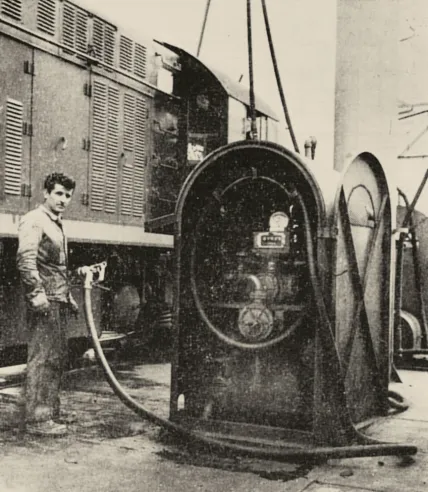
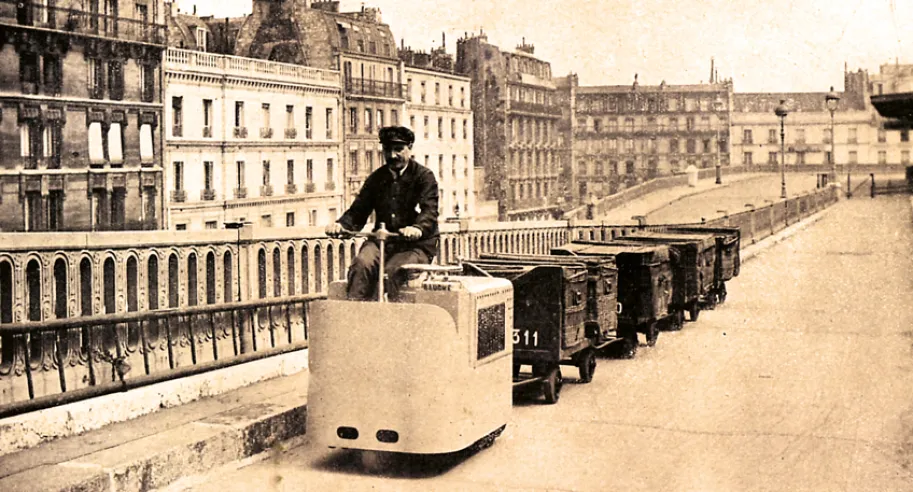
With the arrival of diesel traction, the depots changed and were transformed into real service stations with automobile-type distribution stations. The depots using 141-R fuel were thus equipped with sidings for entire trains of tank wagons.© IXO Collections SAS - Tous droits réservés. Crédits photo © Collection Trainsconsultant-Lamming
THE DISCUSSION ABOUT DIESEL TRACTION IN FRANCE AFTER THE SECOND WORLD WAR
The introduction of new diesel locomotives for mainline and shunting services and new standardised railcars marked the years 1946-1950, during which SNCF gradually converted to diesel traction. It saw this mode of haulage power as a substitute for steam traction on lines whose traffic did not justify electrification. For SNCF, diesel-powered train was not an immediate priority. The company was therefore missing out on the opportunity to use oil that was still very cheap, and that would delight its competitors.
Many SNCF engineering missions studied the American railway, that was still the best in the world at the end of the 1940s: what struck these experts was the transition from steam traction to diesel traction by the American network, even though the country produced coal that was excellent for traction and cheaper than oil in terms of traction costs. The triumph of diesel traction in the USA has even led to the removal of overhead catenary wires on electrified lines and the switch to diesel: a striking choice when you consider that the Americans are known for not doing anything haphazardly and for being mindful of how to invest in what pays off.
The SNCF was reluctant to implement an intensive diesel traction policy. The company had a large fleet of new or recent high-performance steam locomotives that need to be used. Could the massive order for 1,323 type 141-R steam locomotives in the aftermath of the war, signed by Louis Armand despite his support for electric traction, be seen as an economic flaw that deprived SNCF of the opportunity made available by abundant and cheap oil? Would it not have been better to order 1,323 diesel locomotives of equivalent performance, which already existed in the catalogues of American manufacturers?
THE PLM 220 "COUPE-VENT" (WINDBREAKER) QUEEN OF THE BELLE ÉPOQUE
This beautiful locomotive is the most famous of the Belle Époque period. It was the object of a true hype because it hauled the most prestigious trains operated by the PLM company to the Côte d'Azur...
The increased weight of trains in the 1860s, as a result of heavier, more spacious carriages that were more resistant to a collision, meant that locomotives had to be more powerful and heavier, with two drive axles joined by a connecting rod. But the addition of the bogie meant that the locomotive could navigate curves more easily and steer more precisely.
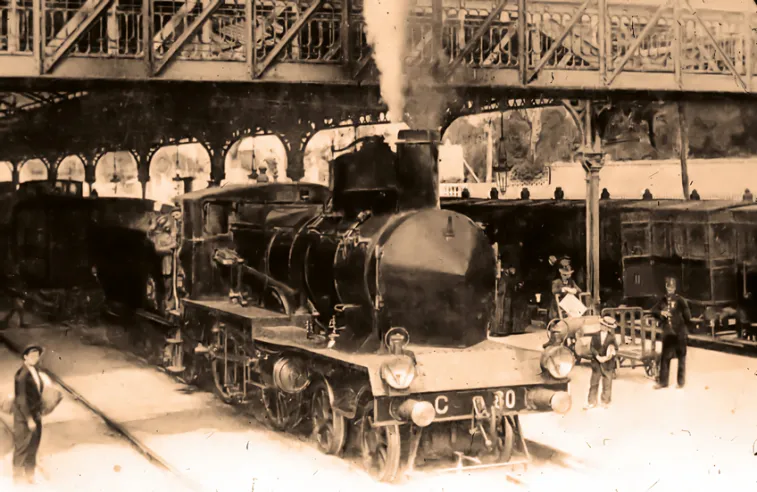
PLM type 220 locomotive, No. 80, series 220C61 to 220C180 then 220A1 to 220A120, built between 1898 and 1901. Pictured Cannes station in 1906. The smokebox door and wind-protected cabin front made this locomotive famous, even on toy trains.© IXO Collections SAS - Tous droits réservés. Crédits photo © Collection Trainsconsultant-Lamming
In 1894, PLM chief engineer Baudry launched the type 220 C21 to C60 series locomotives. They were capable of towing trains weighing more than 200 tonnes at 90 km/h, developing more than 1,000 hp by means of the towing mechanism. They remained in service until 1929. But in 1898, new ‘Cs’ were brought into service: the ‘Big Cs’ forming the C61 to C180 series.
These new locomotives were the first really powerful French steam engines, capable of running a service from Paris to Marseille at a commercial speed of 87 km/h towing trains weighing between 200 and 300 tonnes. They remained in service until 1936, and one of them, the C115, is on display at the Cité du Train museum in Mulhouse.
© IXO Collections SAS - Tous droits réservés. Crédits photo © Collection Trainsconsultant-Lamming
Recent articles