 English
 français
 Deutsch
 español
 italiano
 português






































15/10/2025
THE 141-R, THE 1958- 1960 YEARS AND THE APOTHEOSIS
THE 141-R, THE 1958- 1960 YEARS AND THE APOTHEOSIS
Electrification of French railways continued to progress steadily after the Second World War, but the 141-R locomotives were unaffected by this change, thanks to their robustness, manoeuvrability, ease of operation and maintenance.
But above all, it was their low cost price that was remarkable, whereas electrification was very expensive: the installation of catenary wires and substations involved billions of francs. As for the purchase cost of electric locomotives with their advanced technology, that was double the price.
46 DEPOTS EQUIPPED WITH 141-R
An incredible figure for today's enthusiasts: 46 SNCF depots shared the 1,320 141-R locomotives in service in the early 1960s. Among these 46 depots, no fewer than seven had more than 50! This was the case in Avignon, Blainville, Blancarde (Marseille), Chalons, Nevers, Nîmes and Vaires.
As the catenary system advanced, the 141-R locomotives were moved from one depot to another, but they did not disappear. Instead, they ended up in other depots, replacing old locomotives, a number of which dated back to the former railway companies that were established in the 19th century. As a result, throughout France, the 141-R locomotives were used for everything that was running on SNCF rails: work trains, ballast trains, but also omnibus and express passenger trains, heavy freight trains and mail trains of all weights and lengths.
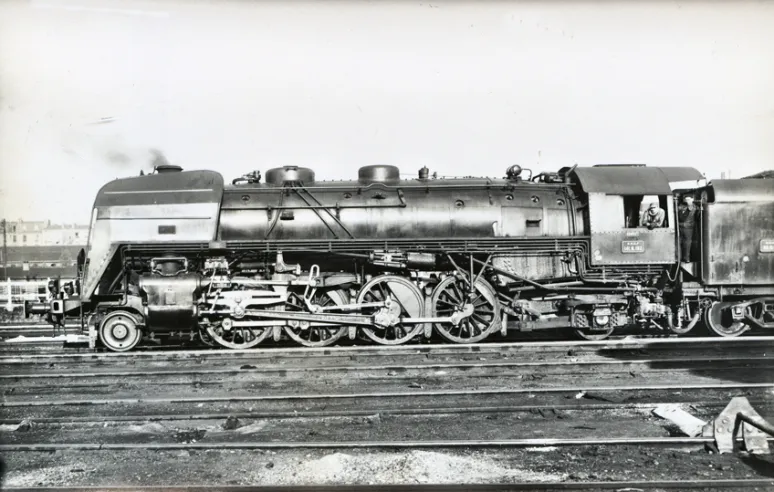
The 141-R No. 192, with its Delta rear bogie and four drive axles with spoked wheels, still in service in the 1960s. The driver poses proudly. © IXO Collections SAS - Tous droits réservés. Crédits photo © Collection Trainsconsultant-Lamming
THE ROUTES OF THE 141-R IN THE 1960S
In the eastern region, many 141-R trains operated between Belfort and Delle, around Mulhouse and Sarreguemines, while in the northern region, they operated around Calais and on the line from Calais to Dunkirk, Béthune to St-Pol and towards Étaples, or between Creil and Beauvais, but also in the Sambre basin or between Valenciennes, Cambrai and Douai. And the same applied to the lines radiating out from Aulnoye. In the western region, the 141-R trains operated between Dol and Folligny, Plouaret and Lannion around Cholet. In the south-eastern region, the former network of the glorious PLM, the ‘R’ trains invaded the historic lines around St-Etienne or ran between Dôle and Tavaux, Mouchard and Frasne, or on the lines from Évian to Le Bouveret, or around Nîmes, particularly on the right bank of the Rhône, or also from Livron to Veynes, from Marseille to Veynes on the Alps line, from Cavaillon to Pertuis, from Nice to Breil, etc.
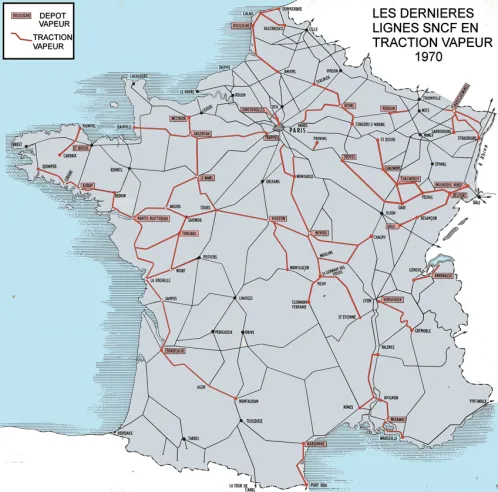
Map of the last remaining steam-powered routes in 1970. For the 141-R locomotives, their days were numbered: they only had a few beautiful regional and cross-country routes left. © IXO Collections SAS - Tous droits réservés. Crédits photo © Collection Trainsconsultant-Lamming
STEAM AGAINST STEAM: THE 141-R BEING CHASED BY THE 241-P
However, during the 1960s, the 141-R locomotives gradually gave way to catenary systems on their busiest lines, such as Longueau-Arras-Lille and, above all, Dole-Vallorbe. For a while, they continued to operate on the Paris-Beauvais-Le Tréport and Paris-Soissons-Laon lines, as well as on the major Amiens-Rouen transverse line. The progress made in catenary technology finally resulted in the release of a large number of powerful 241-P locomotives, capable of pulling fast, heavy passenger trains at 120 km/h. Once the Paris-Lille line was electrified, the 241-P locomotives were transferred to Le Mans, where they were used to pull the beautiful passenger trains travelling from the west of France to Brest and Nantes. They were also found in Vierzon, chasing the ‘R’ trains on the beautiful connections to Tours, Clermont-Ferrand and Montluçon. But the years of triumph for the 241-P locomotives were also numbered, and by the 1970s steam traction had almost completely disappeared from the national rail network.
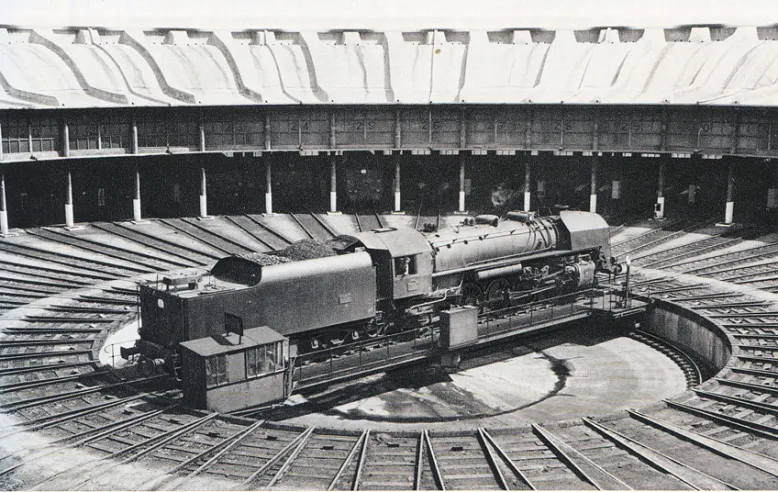
Type 141 locomotive. Series 141-R-1 to 141-R-1340, pictured at the Creil depot on the magnificent swing bridge. © IXO Collections SAS - Tous droits réservés. Crédits photo © Document Jacques Renaud.
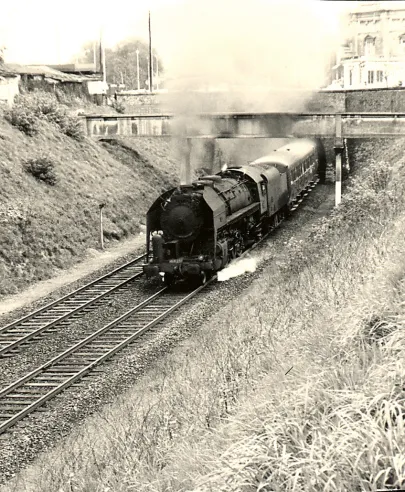
In the early 1970s, locomotive No. 141-R-232 was still pulling a regional express train in northern France, composed of beautiful carriages known as ‘C-11 Nord’ with lateral doors and curved bodies. © IXO Collections SAS - Tous droits réservés. Crédits photo © Collection Trainsconsultant-Lamming
THE SNCF'S 241-P, THE LAST OF THE BEAUTIES
In the wake of the Second World War, this beautiful locomotive stood out on the SNCF's main lines, which were still not electrified but carried fast, heavy passenger trains that required high-performance locomotives.
IT IS URGENT...
The SNCF decided to build a new series of 241 locomotives based on the PLM 241 C model from 1930. Experts at the time were surprised by this choice, as the SNCF could have continued to build the more powerful 240-P locomotives or mass-produce the 242-A-1 locomotives, which developed at least 2,000 hp more than the 24-P locomotives.
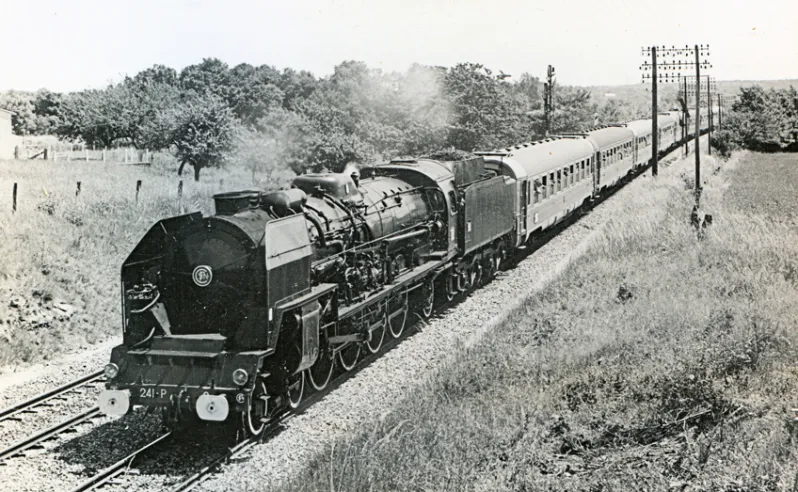
The 241-P-9 at the head of a remarkable string of DEV-Inox carriages, no doubt arranged by a group of enthusiasts, given the number of heads sticking dangerously out of the windows. © IXO Collections SAS - Tous droits réservés. Crédits photo © Collection Trainsconsultant-Lamming
URGENT DEMAND FOR FAST, HEAVY TRAINS
However, these 241-P locomotives were built between 1948 and 1949 by Schneider in Le Creusot, and were immediately put into service on the line from Paris to Marseille, where electrification had just begun. They were capable of developing an estimated power of around 3,000 hp. There have been reports of trains weighing over 800 tonnes being hauled at 110 km/h on a 5 per mille gradient on the line from Nevers to Moulins, requiring approximately 4,000 hp. Thirty-five of these locomotives were built between 1948 and 1949, and they ended their career in the late 1960s.
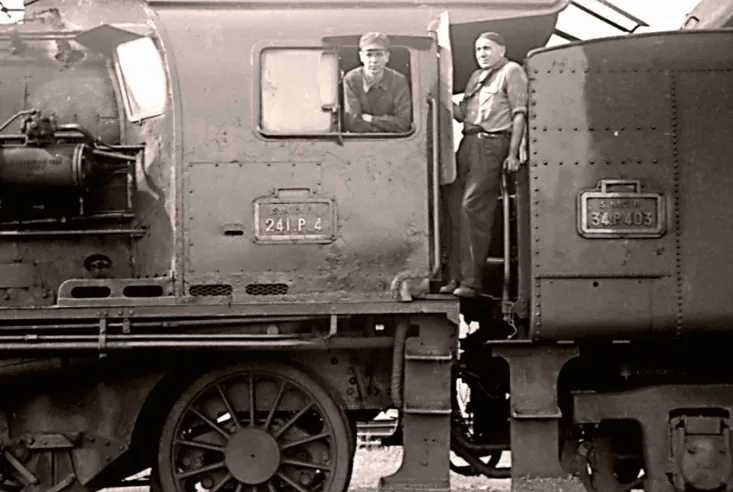
The 241-P-4 and its driving team. The driver modestly keeps his beret on. © IXO Collections SAS - Tous droits réservés. Crédits photo © Collection Trainsconsultant-Lamming
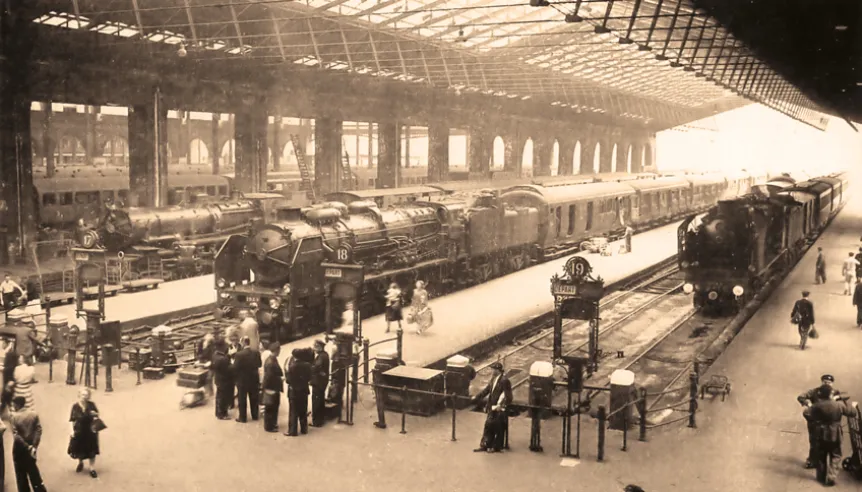
The Gare du Nord railway station in the glorious 1950s. What is known as ‘the back of the station’ (‘platform head’ for the uninitiated) is still very much frequented by the jewels of the beautiful Nord steam fleet, with a 230 and Chapelon ‘Pacific’ locomotives. Note the beautiful Nord ‘C-11’ carriages, with the rare mixed van with a guard's compartment. © IXO Collections SAS - Tous droits réservés. Crédits photo © Collection Trainsconsultant-Lamming
Recent articles