 English
 français
 Deutsch
 español
 italiano
 português















24/06/2025
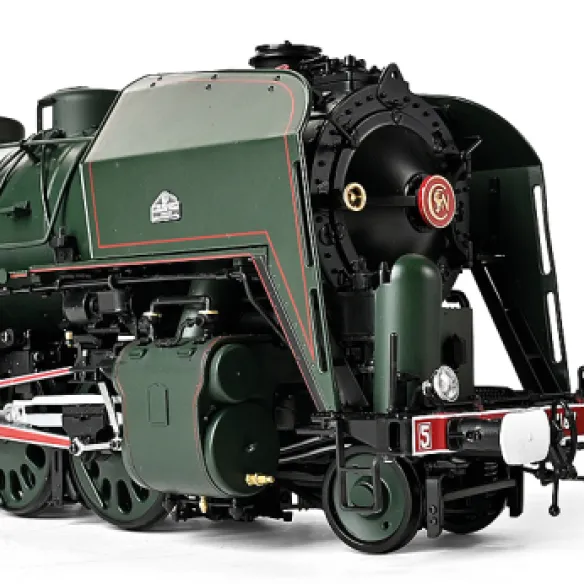
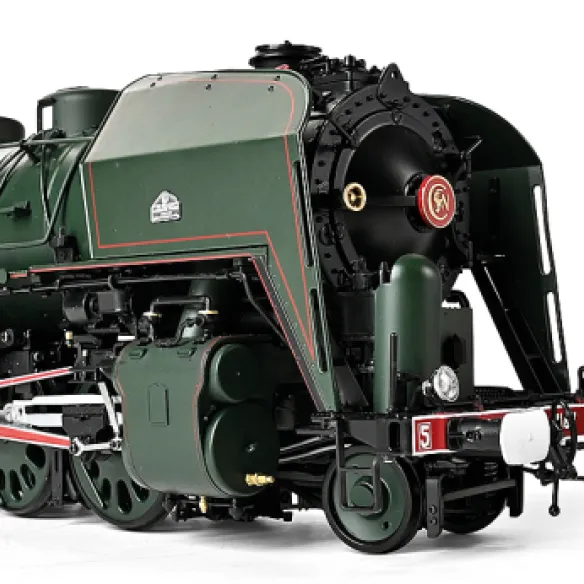
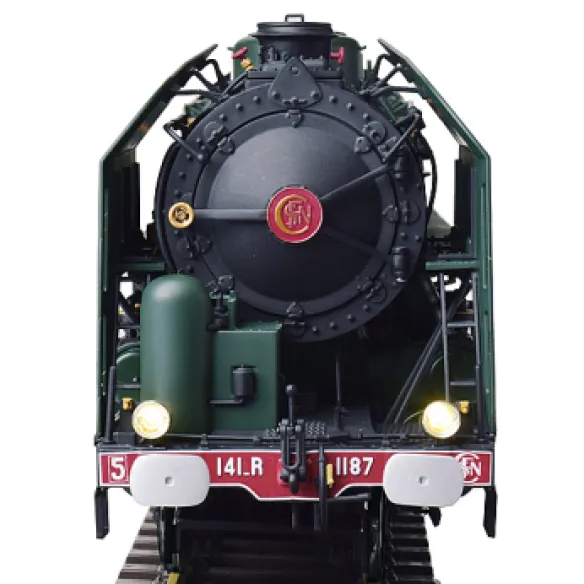
The 141-R, the arrival of the second tranche
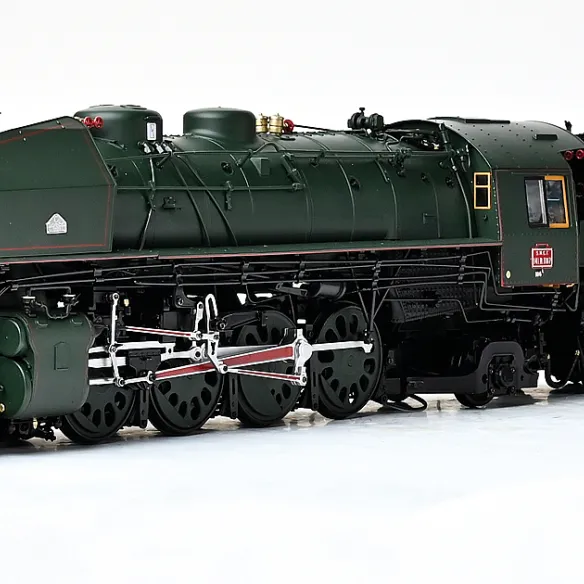
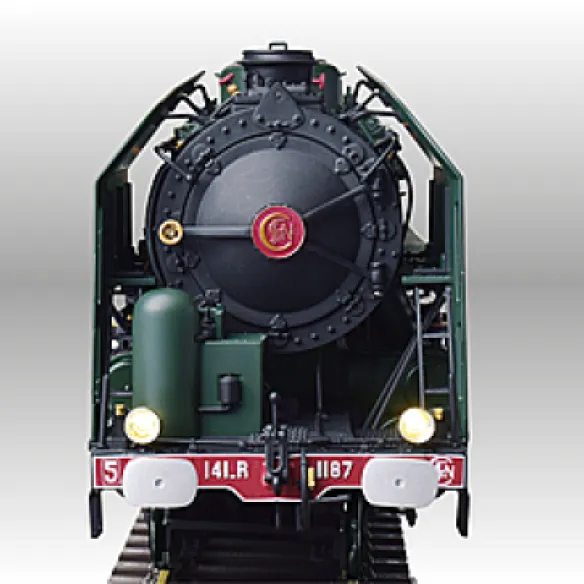
The 141-R-701 to 1340 locomotives make up the second tranche, delivered from 15 August 1946, while those in the first tranche are still being delivered.
The last 141-R to be delivered was the 1340, off-loaded at Cherbourg on September 5th 1947. This second batch consisted of 205 coal-fired locomotives and 27 oil-fired locomotives. The latter are numbered 961, 962, 964 to 968, 971 to 989 and finally 999. While the coal-fired locomotives were used at all SNCF depots that had already received an “R”, the 141-R oil-fired locomotives were used only at the depots at Marseille-Blancarde and Le Teil.
A SLIGHTLY DIFFERENT TYPE OF LOCOMOTIVE
The last 141-R to be delivered was the 1340, off-loaded at Cherbourg on September 5th 1947. This second batch consisted of 205 coal-fired locomotives and 27 oil-fired locomotives. The latter are numbered 961, 962, 964 to 968, 971 to 989 and finally 999. While the coal-fired locomotives were used at all SNCF depots that had already received an “R”, the 141-R oil-fired locomotives were used only at the depots at Marseille-Blancarde and Le Teil.
A SLIGHTLY DIFFERENT TYPE OF LOCOMOTIVE
Most of these locomotives were used for freight trains and express services. As the war gradually drew to a close, SNCF rediscovered and reintroduced its old fleet of locomotives suitable for passenger trains, with many ‘Pacifics’ from the old networks, or the very new 141-Ps, whose top speed of 105 km/h was higher than that of the 141-Rs, which were temporarily limited to 90 km/h due to the poor state of the French rail network. The oil-fired 141-Rs transformed many customs and habits in SNCF depots at the time: they were fitted with “Boxpok” wheels and roller boxes on the driving and coupling axles. Some were equipped with ‘Kylchap’ exhausts (Kyläla and Chapelon). But most importantly, they offer a run time of around 700 km, thanks to generous fuel tanks that make you forget the 400 km range offered by the previous 141-R ‘charbonnières’. For this reason, the SNCF also converted 320 coal-fired 141-R locomotives at the Nevers and Niort depots into fuel-fired locomotives: this fact was also related to the coal crisis at the end of the 1940s, when prices soared.
These conversions were completed in record time, usually just 5 to 8 days. In the Western region, at Le Mans, Laval, Rennes, St-Brieuc or Argentan, the oil-fired 141-Rs competed openly with the 141-Ps, particularly for hauling heavy passenger trains on the South Brittany or Paris-Brest lines, and they practically only hauled ‘Accelerated Service’ (AS) or ‘Ordinary Service’ (OS) freight trains. In the Mediterranean region, to take another example, the “fuel” trains were distributed between Avignon, Le Teil, Nîmes and Marseille, and were used to head heavy goods trains on both banks of the Rhône, or passenger services on the Côte d'Azur (Marseille and Nice depots), where they quickly made the famous PLM 241s disappear!
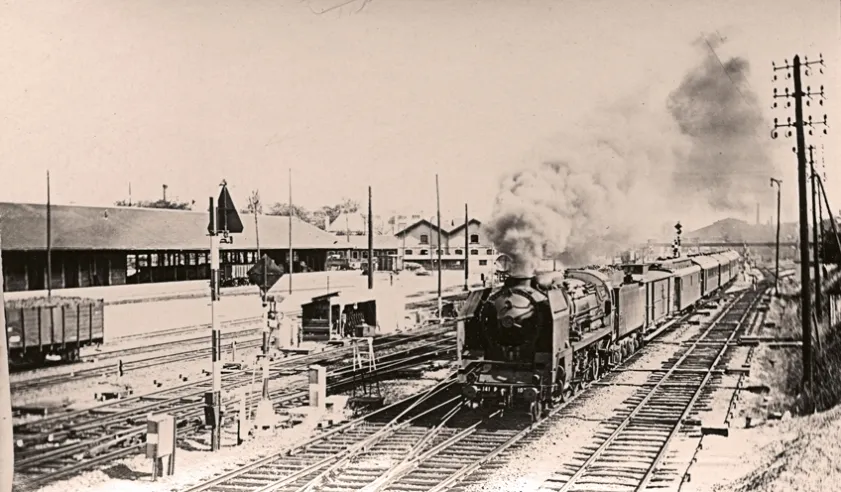
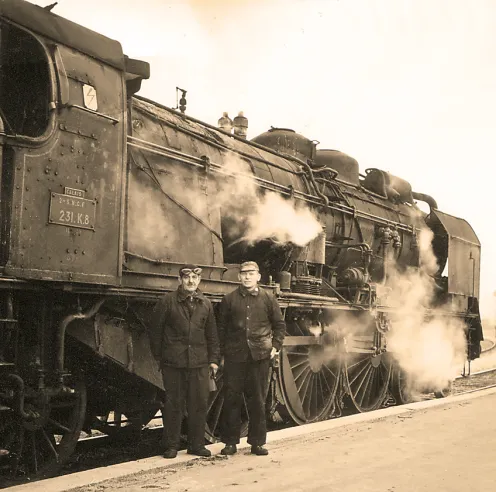
The 141-Rs of the second batch were to make their mark on passenger trains, which were the domain of the SNCF's 141-Ps designed during the war. Competition was fierce: here a 141-P seen at the head of a heavy express train on the Eastern network in the 1950s.© IXO Collections SAS - Tous droits réservés. Crédits photo © Collection Trainsconsultant-Lamming
THE COAL EMPIRE NOW IN DECLINE
Just as it is today, the SNCF was the biggest consumer of electricity in France. At the time, it also used a lot of coal to run its trains, but the mass conversion of 141-Rs from coal to fuel oil gradually marked the end of the reign of coal between 1947 and 1949. An identical phenomenon occurred at the same time in other European countries, where diesel traction or oil-fired heating saw its last days.
Around fifty SNCF depots would need to find suitable sites (or demolish existing facilities) in order to install proper pumping stations to empty entire trains of tank wagons into huge tanks capable of storing between 50 and 1,000 m3 each. In addition, the tracks will need to be concrete-paved and equipped with heating systems to keep the fuel at a temperature of 80°C. Oil? It's not as easy or economical as you might think! That's why, from the 1940s onwards, the SNCF began to plan a major electrification of its network and to think about the “nuclear” era!
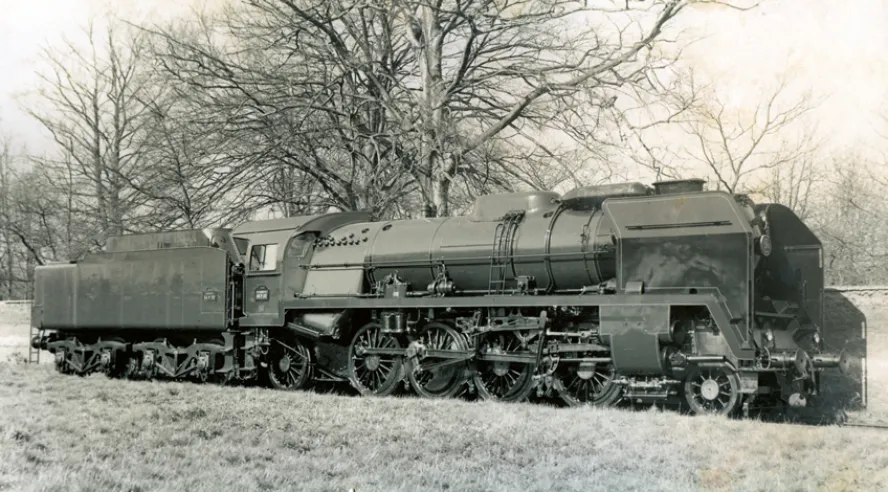
© IXO Collections SAS - Tous droits réservés. Crédits photo © Collection Trainsconsultant-Lamming
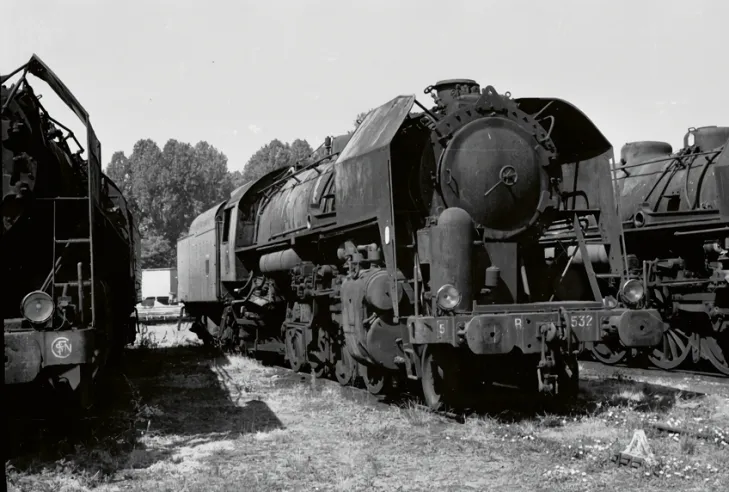
141-R-532 is waiting for a long time on the very ‘flowery’ rails of a depot in the SNCF's south-east region.© IXO Collections SAS - Tous droits réservés. Crédits photo © Collection Trainsconsultant-Lamming
THE SWISS JEWEL, THE A3/5 LOCOMOTIVE
While Switzerland is an exemplary country and a pioneer in the electrification of its rail network, there was a time when all its trains ran behind steam locomotives. One of Europe's 230 most successful locomotives was the very attractive A 3/5, which made a name on the challenging Gotthard line.
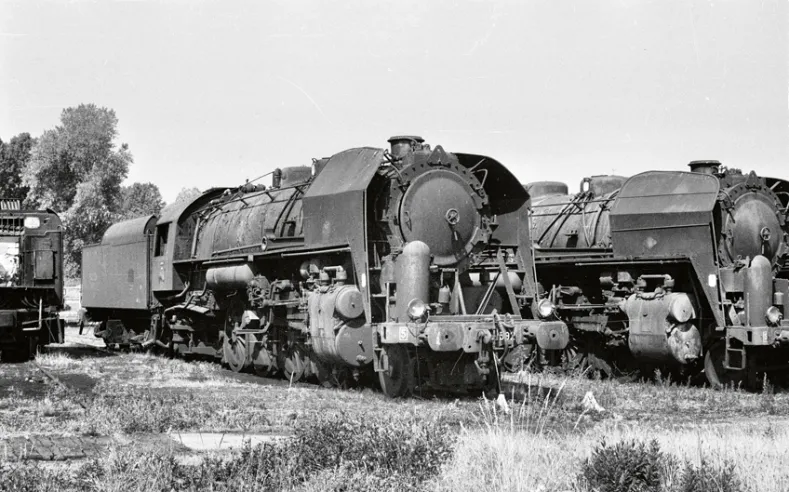
141-R-532 is waiting for a long time on the very ‘flowery’ rails of a depot in the SNCF's south-east region.© IXO Collections SAS - Tous droits réservés. Crédits photo © Collection Trainsconsultant-Lamming
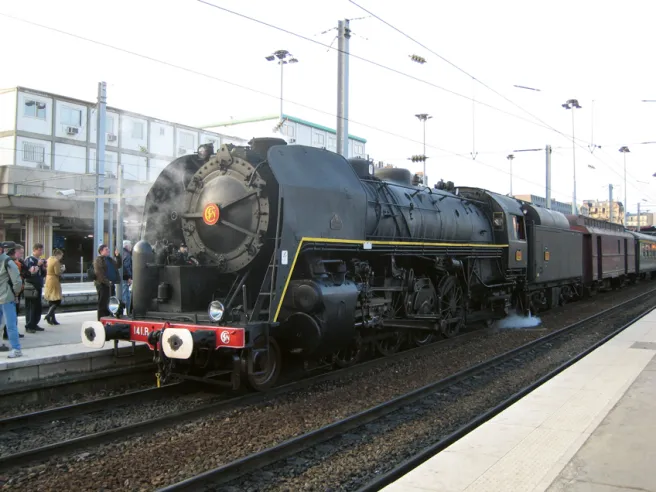
Magnificently restored, the 141-R gained prominence in the 2010s heading amateur trains. Here we are at the Gare du Nord on our way to the Baie de Somme.© IXO Collections SAS - Tous droits réservés. Crédits photo © Collection Trainsconsultant-Lamming
SWITZERLAND DEPENDS ON FOREIGN TRANSPORT
In 1913, the all-electric Lötschberg line marked a new era: that of the total electrification of the Swiss network. The Swiss Confederation was short of coal. Having to import it, Switzerland realised how dangerous it was to depend on the international market and foreign countries. In 1920, Switzerland started electrifying its rail network in order to protect it from the uncertainties of external factors. This mammoth task was nearing completion when the Second World War broke out.
THE 230, THE CLASSIC TYPE OF THE TIME
At the time, all the European networks used type 231 locomotives for fast passenger trains, but the Swiss networks preferred the type 230, which they called 3/5 (3 axles out of 5 were motorised), as they believed that, on steep mountain lines, a short type 230 engine would run more smoothly through the curves.
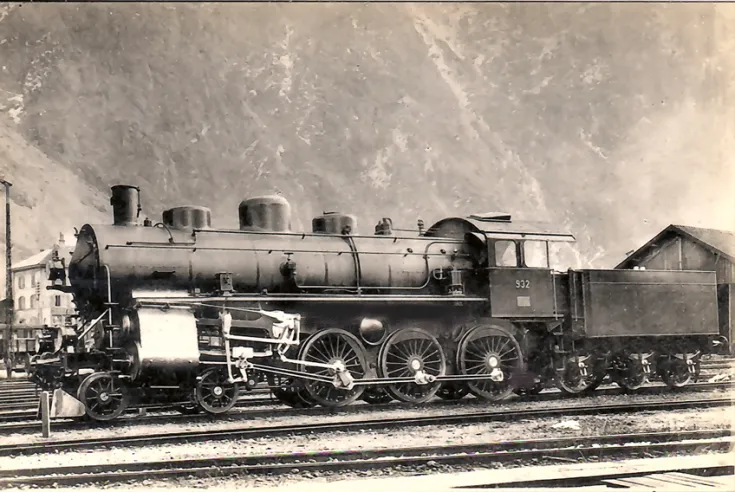
A magnificent A3/5, number 932, produced by Maffei, in service on the difficult St Gotthard line in the 1940s. Note the attack of the connecting rod by the first driving axle..© IXO Collections SAS - Tous droits réservés. Crédits photo © Collection Trainsconsultant-Lamming
These locomotives, numbered 701 to 809, were produced by SLM between 1902 and 1909. From 1905, the Gotthard Railway also had a series of 30 locomotives, type A 3/5, numbered 201 to 230, then 901 to 930. The models numbered 931 to 938, and 601 to 649, of which some were produced by Maffei in Munich, are characterised by a connecting rod on the first driving axle. The last A 3/5s were taken out of service in 1946.
© IXO Collections SAS - Tous droits réservés. Crédits photo © Collection Trainsconsultant-Lamming
Recent articles