 English
 français
 Deutsch
 español
 italiano
 português


















22/10/2025
THE DECLINE AFTER HAVING RESTORED THE FRENCH ECONOMY
THE DECLINE AFTER HAVING RESTORED THE FRENCH ECONOMY
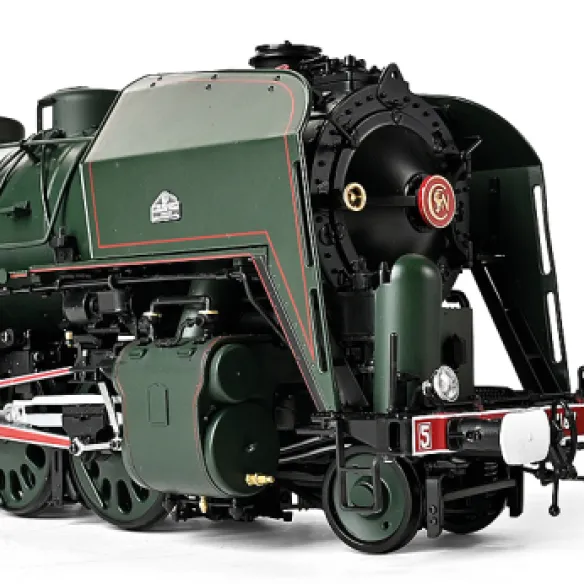
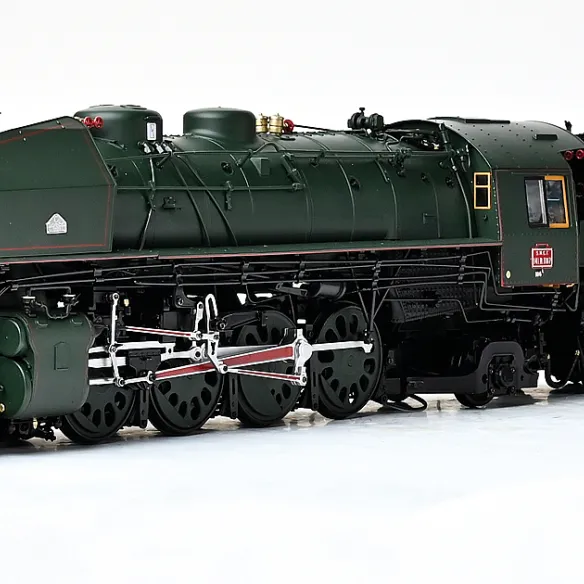
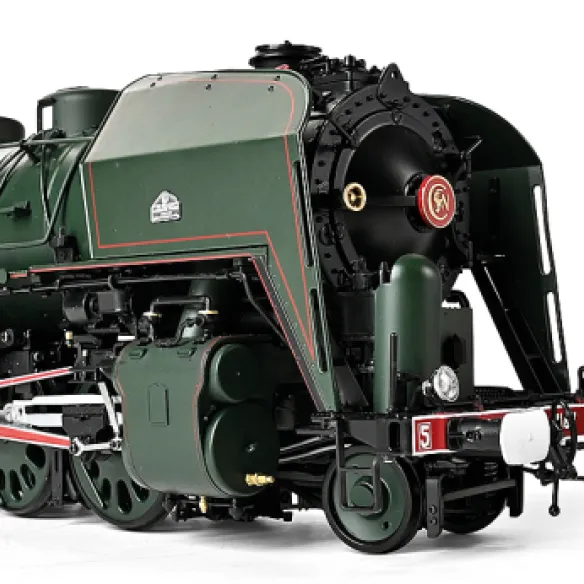
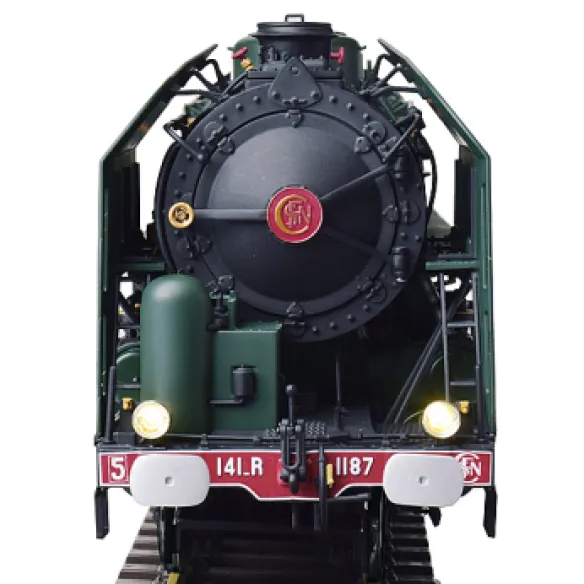
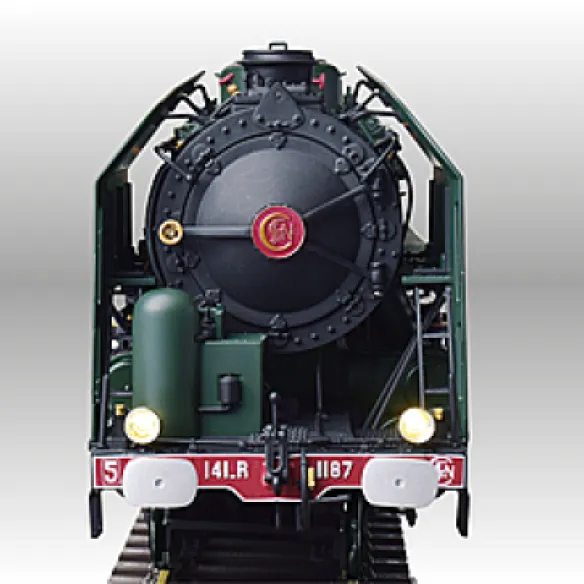
Nicknamed ‘Miss Liberty’ by railway workers, this beautiful American, which arrived at the end of the Second World War, revived the French economy, transporting nearly half of all SNCF traffic. However, their magnificent career came to an end in 1974.
The arrival of the 141-R in 1945 prompted the SNCF to rethink its traction policies for the late 1940s. The great French tradition of highly sophisticated compound locomotives, said to be ‘pushed’ and driven with finesse by highly qualified teams, was now perceived as too costly, and the choice made by the United States and Germany to use simple locomotives had proved successful.
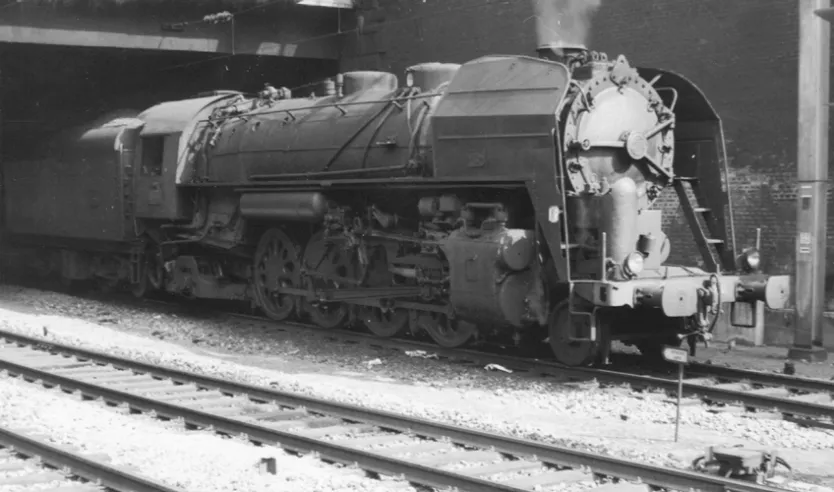
Locomotive 141-R with ‘Boxpok’ wheels in the North region and in magnificent condition.© IXO Collections SAS - Tous droits réservés. Crédits photo © Crédit : Document Néel.
ORIGINAL BUT WITH MODERATION
The 141-R inevitably marked the return to simple single-expansion engines, equipped with automatic lubrication and automatic clearance adjustment to reduce maintenance costs. The post-war SNCF was confronted with growing labour costs and believed it was better to focus on savings in maintenance and operation. The price of coal remained a crucial issue, but would be resolved by eliminating it altogether. Converting half of the 141-R locomotives to fuel oil heating systems also provided a solution to the problem of high coal prices, pending the resumption of major electrification projects and the arrival of diesel traction. Consequently, from double-traction ore trains to express or even high-speed passenger trains, the 141-R could be seen absolutely everywhere, from the north to the Côte d'Azur.
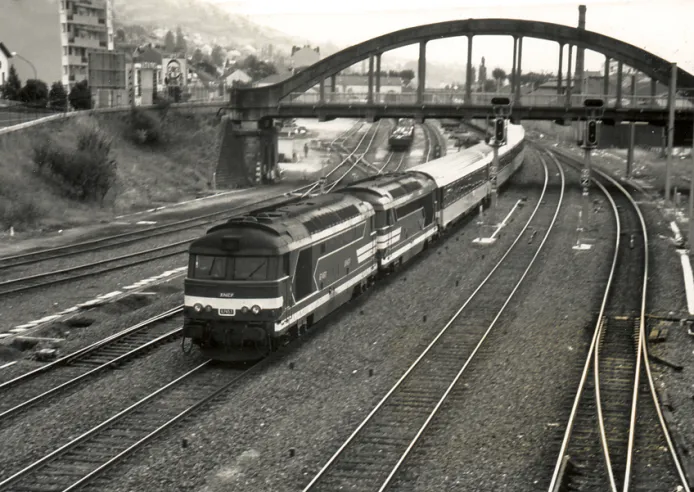
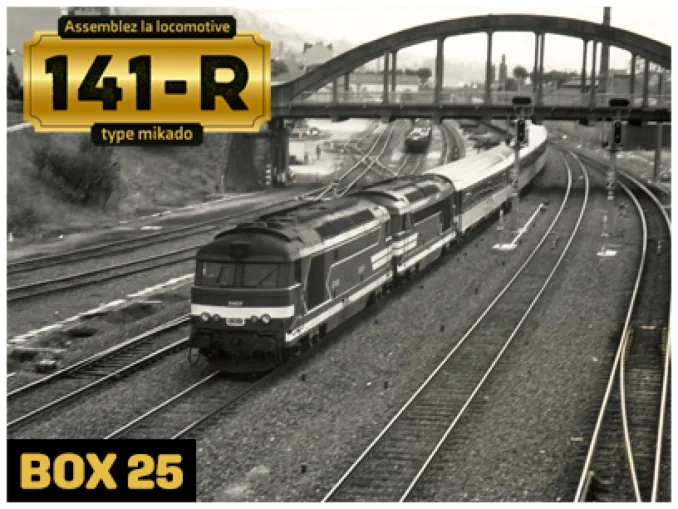
Yes, she's the one responsible... Diesel traction did indeed eliminate steam traction in France. Here, a coupling of BB-67400 serving a major cross-country line in Vichy at the head of a heavy passenger train composed of Corail carriages, which were very popular in the 1970s.© IXO Collections SAS - Tous droits réservés. Crédits photo © Collection Trainsconsultant-Lamming
THE END OF THE 'R's IN 1974
The mass arrival of 232 diesel locomotives 67400 in 1969 was intended to ‘wipe out’ steam traction, and this was quickly achieved. Thus, twenty-eight years after the arrival of the ‘R’ steam locomotives, the 141-R-420 from the Eastern Region had the honour, of bringing the steam era to a close by pulling the last commercial steam train on 29 March, in complete anonymity and without any press coverage. On 1 August 1974, no less than 39 locomotives were put on standby in Sarreguemines, Le Mans, Vierzon and Vénissieux. The last 141-R locomotives were still in service in Le Mans (2 locomotives), Vierzon (6 locomotives), Nevers (6 locomotives), Vénissieux (2 locomotives) and Narbonne (6 locomotives). These figures come from the book by Bernard Collardey and André Rasserie entitled ‘Les 141-R, ces braves américaines’ (The 141-Rs, those brave Americans), published by LVDR... not one of them would survive to see the year 1975.
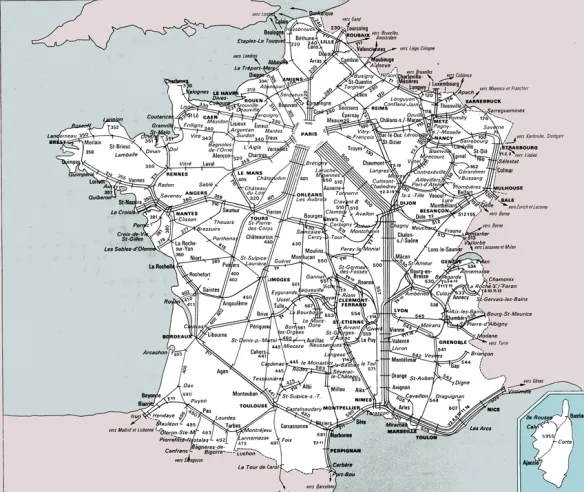
The SNCF network in 1972, according to an official SNCF document. All major national lines were finally electrified. While speed increased, the TGV was eagerly anticipated, finally arriving in 1981. © IXO Collections SAS - Tous droits réservés. Crédits photo © Collection Trainsconsultant-Lamming
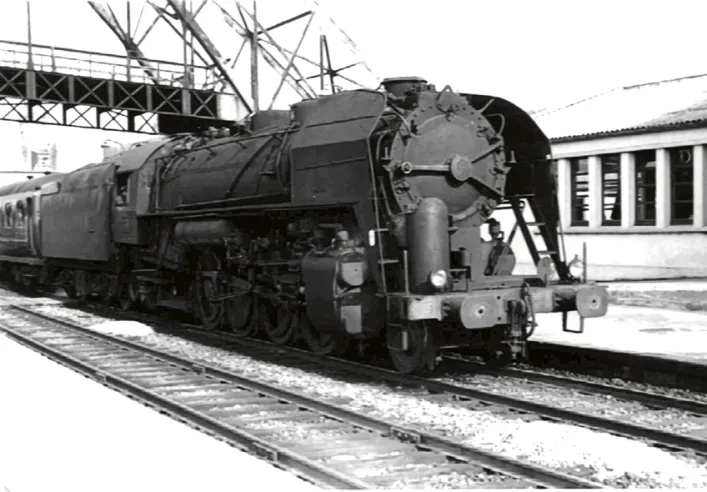
A 141-R in service, at the head of a passenger train composed of ‘Express Nord’ carriages that were typical of this network’s beautiful regional trains. © IXO Collections SAS - Tous droits réservés. Crédits photo © Collection Trainsconsultant-Lamming
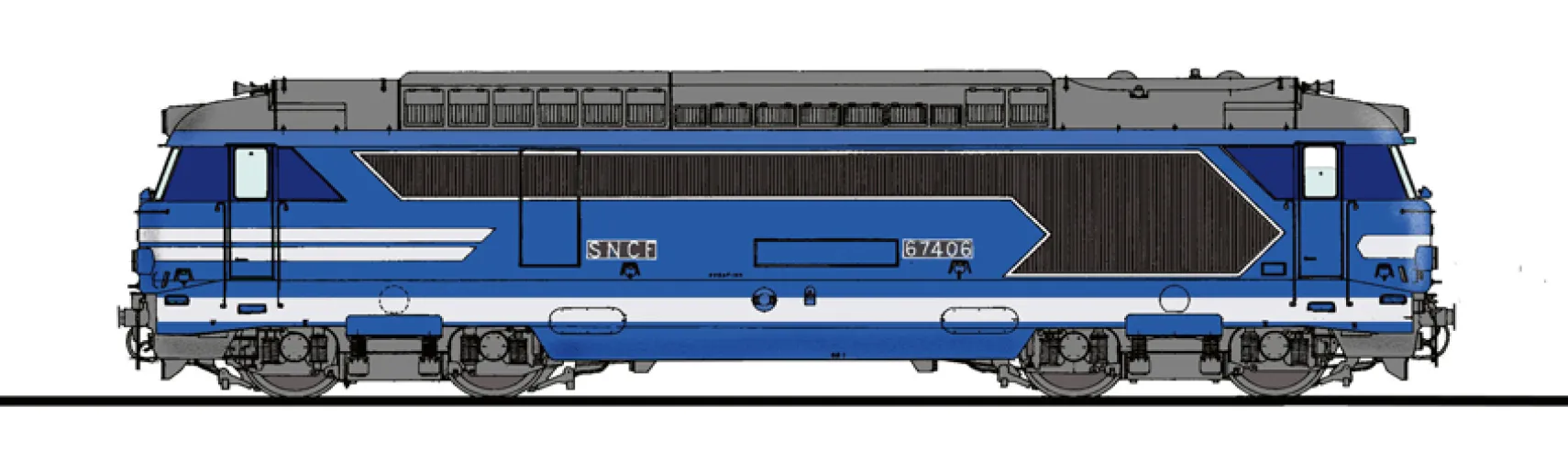
The discreet and efficient BB-67400 ended steam traction in France during the 1970s and replaced the 141-R on the remaining regional passenger trains. © IXO Collections SAS - Tous droits réservés. Crédits photo © Collection Trainsconsultant-Lamming
THE S 3/6, QUEEN OF BAVARIA
Designed by engineer Hammel from the renowned Maffei company, the S 3/6 is one of the most beautiful Pacific locomotives worldwide and continues to be loved by German and European enthusiasts to this day.
OVERSHADOWING PRUSSIA
In a Germany being unified under Bismarck, Prussia naturally assumed its leadership role in the new, large country located at the heart of Europe. However, Bavaria, the other large German ‘state,’ had always asserted its distinctiveness, and its network had its own technical and professional customs, which it insisted on maintaining.
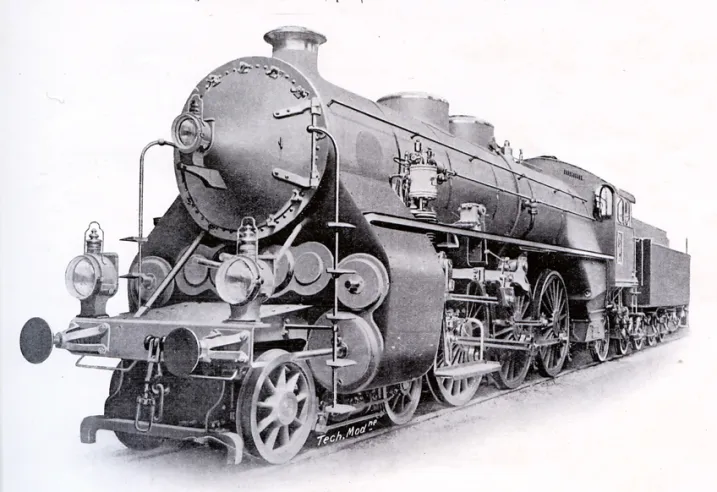
The very elegant German ‘Pacific’ S 3/6, built in Bavaria, became the world's leading high-speed locomotive in 1906. © IXO Collections SAS - Tous droits réservés. Crédits photo © Collection Trainsconsultant-Lamming
BETWEEN MUNICH AND SALZBURG
It was decided to build this S 3/6 locomotive in 1906, when the Bavarian railway network wanted a locomotive similar to the IVf locomotives used by the Baden railway network, but one capable of pulling 400 tonnes up a 2 per mille gradient at 95 km/h and up a 10 per mille gradient at 65 km/h. Testing was carried out on the stretch between Munich and Salzburg with a 410-tonne train, achieving a running speed of 70 km/h on a 10 per mille gradient, 96 km/h on a 5 per mille gradient and a top speed of 135 km/h without difficulty. With average speeds of over 90 km/h maintained at the front of trains weighing over 300 tonnes, the Bavarian network and later the Deutsche Reichsbahn ordered no less than 159 S 3/6 locomotives by 1931.
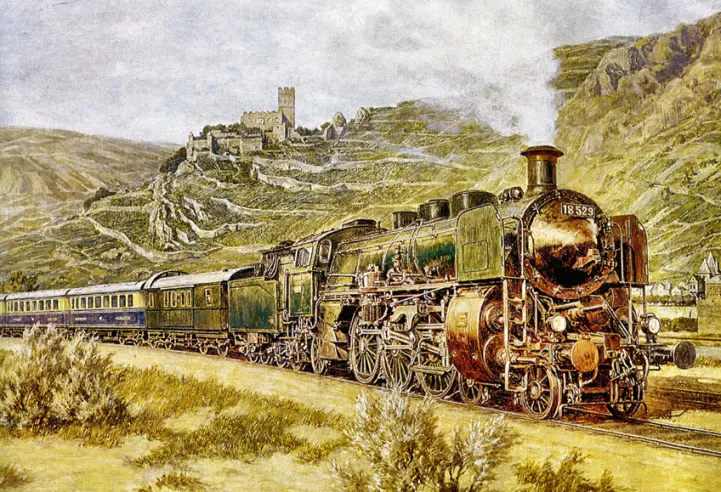
The German ‘Pacific’ S 3/6 very quickly became, in every sense of the word, the official locomotive of the greatest German luxury trains. Here in 1922, with the famous ‘Rheingold’ train. © IXO Collections SAS - Tous droits réservés. Crédits photo © Collection Trainsconsultant-Lamming
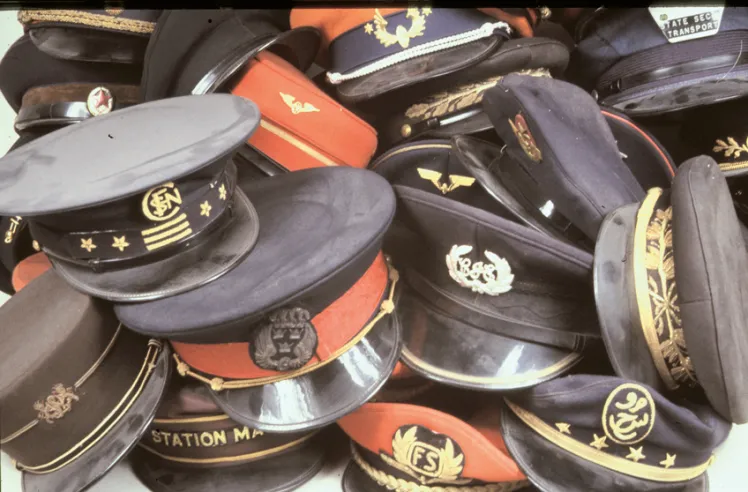
Railway workers' uniforms had panache... especially the stationmaster's cap. As the local representative of the company's image, he symbolised authority and competence, recognised by the entire nation. The stationmaster's cap became a collector's item. © IXO Collections SAS - Tous droits réservés. Crédits photo © Collection Trainsconsultant-Lamming
Recent articles