 English
 français
 Deutsch
 español
 italiano
 português















20/04/2026
Pescarolo 01 Evo Judd - 2010
Pescarolo 01 Evo Judd
Pescarolo became an independent manufacturer in 2007, initially with cars based on the Courage C60. Capitalising on the new regulations introduced in 2009, the team developed a more refined version of the 01, featuring a revised chassis and improved aerodynamics, achieving its best result at Le Mans with the 2010 LMP2 variant.
Simply called 01, presented in 2007 by Pescarolo following the end of the supply of Courage chassis, the car shared the same characteristics as the C60 designed by André de Cortanze, associated with all subsequent developments.Regulations introduced from 2009 onwards, particularly those relating to aerodynamics, led to refinements in the bodywork design, which compensated for the reduction in the size of the rear wing through a new design for the nose, tail and side panels. The architecture, suspension and engines remained unchanged: the LMP1 cars entered in races by the Pescarolo team used the Judd V10, whilst the LMP2 cars entrusted to partner team OAK Racing continued to use the Mazda MZR turbo, which was to be replaced from 2010 by the Judd V8.
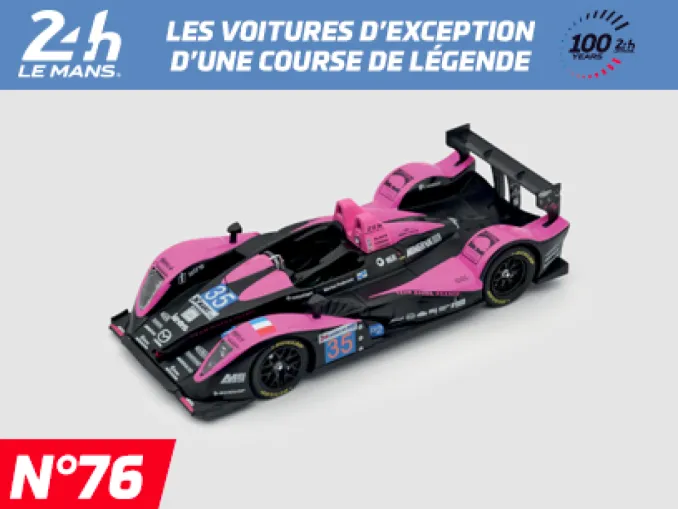
In 2010, its final year in LMP2, the Pescarolo 01 Evo finished seventh overall in the 24 Hours of Le Mans with the OAK Racing team.© IXO Collections SAS - Tous droits réservés.
After competing in its first race alongside the ‘old’ 01, the 01 Evo debuted at the 1,000 km of Catalunya, where the French duo of Boullion and Tinseau secured second place overall – a result they repeated at the 24 Hours of Spa, at which Pescarolo entered a second car, while OAK Racing took to the track with just a single LMP2. In between the two races that made up the first phase of the Le Mans Series (LMS) Championship, it set the fastest time in April’s qualifying session at Le Mans, ahead of the Aston Martin-powered Lolas.
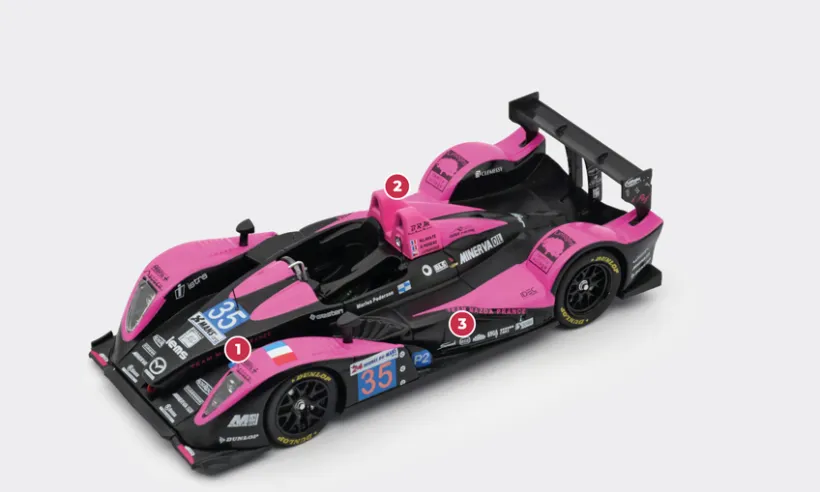
1. The front end is one of the areas subject to the most significant changes (although at first glance this is less obvious on the Evo than on the 01). These modifications were made following exhaustive wind tunnel testing.
2. The double safety cage, instead of a single one, was one of the unique features of the 01 right from the start, requiring a revision of the chassis in comparison with the Courage C60 model from which it is derived.
3. The side panels have also been redesigned to improve airflow and to compensate for the reduction in downforce caused by a more compact rear wing.
© IXO Collections SAS - Tous droits réservés.
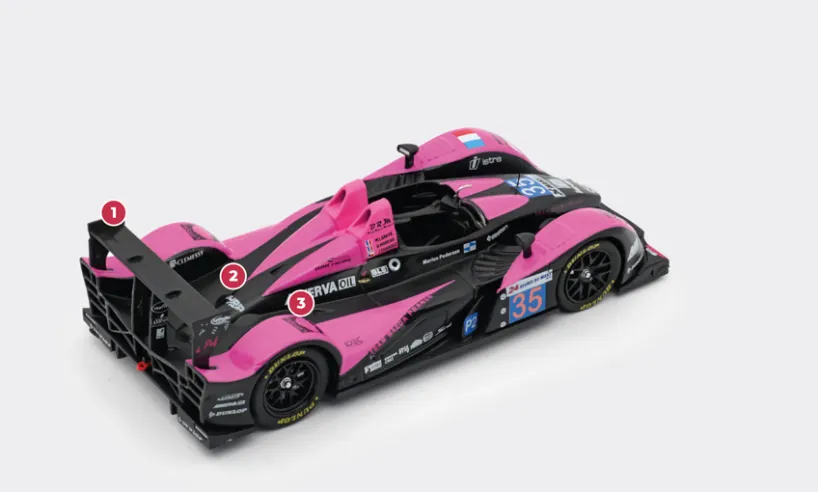
1. The 2009 regulations required a reduction to the length of the wings, resulting in a redesign to improve aerodynamic efficiency. Pescarolo used this change as an opportunity to completely overhaul the bodywork.
2. The carbon-fibre chassis of the Pescarolo 01 remained largely unchanged for the Evo. The main differences between the LMP1 and LMP2 versions relate to the engine layout, with the former featuring a 5.5-litre Judd V10.
3. The height of the wings and the shape of the rear end were revised in order to regain the downforce lost due to the reduction of the wing size.
© IXO Collections SAS - Tous droits réservés.
At the 24 Hours of Le Mans, Pescaro participated with a car registered under number 16, entrusted to Christophe Tinseau, Bruce Jouanny and Joao Barbosa, whilst OAK Racing entered two cars. Most of the attention was on the battle between Audi and Peugeot’s unbeatable diesel-powered LMP1 cars, with the French brand taking the win in what was to be their only victory. Close behind, Lola, Oreca and Pescarolo delivered a thrilling battle. The 01 Evo No. 16 finished eighth, positioned between two Audi R10 TDIs and behind its direct rivals.
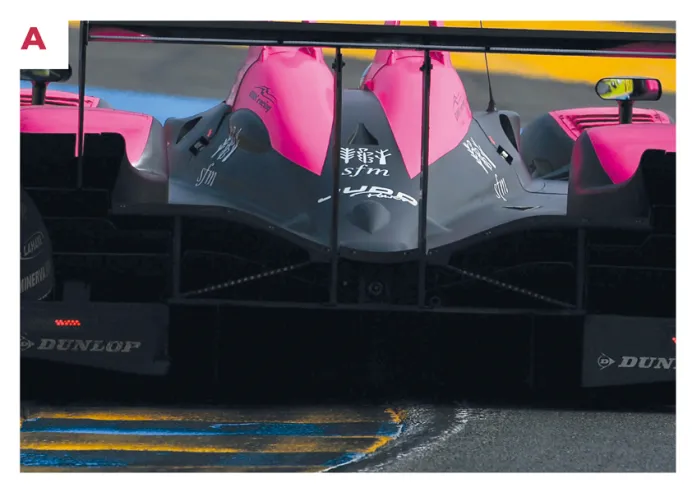
A. The Judd V8 engine replaced the previously used Mazda 4-cylinder turbo engine during the 2010 LMP2 season.© IXO Collections SAS - Tous droits réservés.
The LMS season continued with Boullion and Tinseau winning the 1000 km of the Algarve and finishing 13th at Silverstone. However, financial difficulties forced Pescarolo into handing over the organisation to his partners at Sora Composites, resulting in Tinseau and Nakano’s victory at Okayama in November – the first and only round of the Le Mans Series in Asia – bringing glory to Sora Racing.
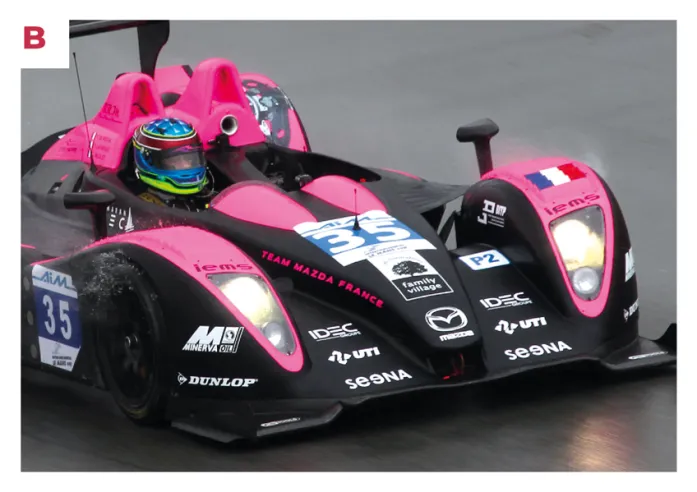
B. Despite the change of engine, the OAK Racing team kept the Mazda logo on the nose and retained the name ‘Team Mazda’.© IXO Collections SAS - Tous droits réservés.
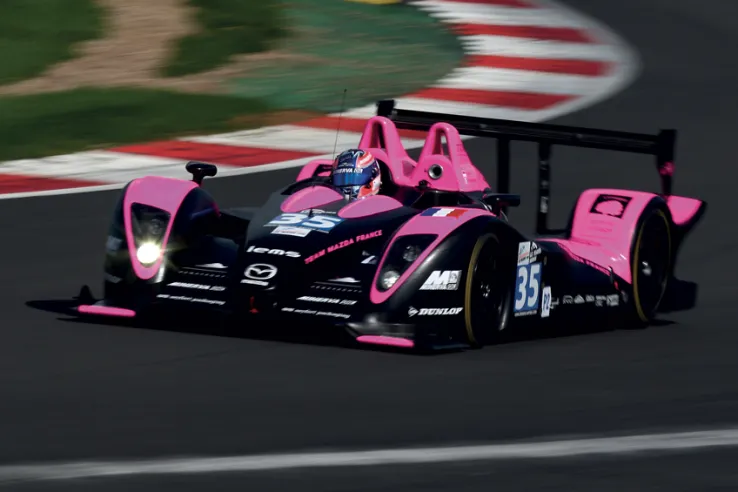
In 2010, the only 01 Evos on the starting grid were the OAK LMP2s, achieving several top-ten finishes and even third place overall at the 1000 km Hungarian Grand Prix. At Le Mans (where a Pescarolo Sport LMP1 was also entered, alongside a car from Sora Racing that failed to turn up), OAK Racing achieved an honourable result with its two cars: the No. 35 car, with Matthieu Lahaye, Guillaume Moreau and Jan Charouz at the wheel, managed to take seventh place overall and second in the LMP2 class, whilst the other, the No. 24 car with Richard Hein, Jean-François Yvon and Jacques Nicolet, ended up two places further back.
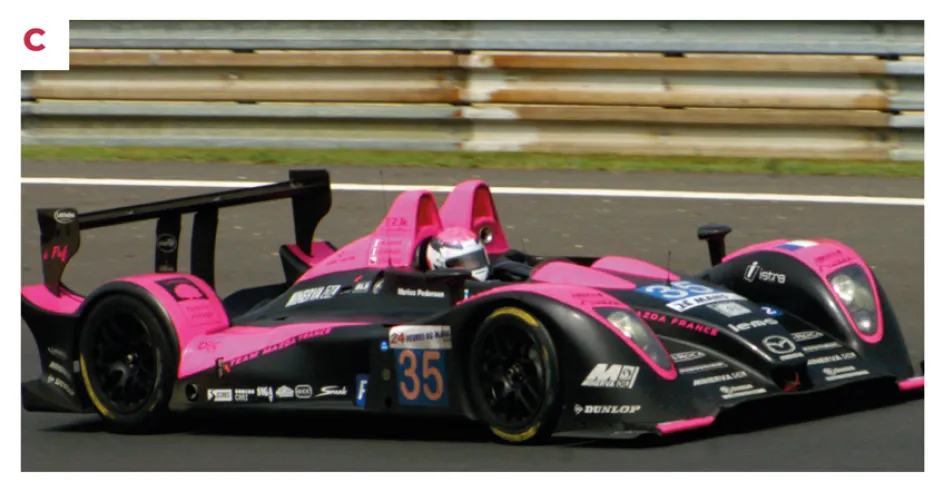
C. The No. 35 car of Czech driver Jan Charouz and Frenchmen Matthieu Lahaye and Guillaume Morteau finished seventh overall in the 2010 24 Hours of Le Mans after starting in 22nd position.© IXO Collections SAS - Tous droits réservés.
Recent articles