 English
 français
 Deutsch
 español
 italiano
 português















17/02/2026
BMW M1 - 1981
BMW M1
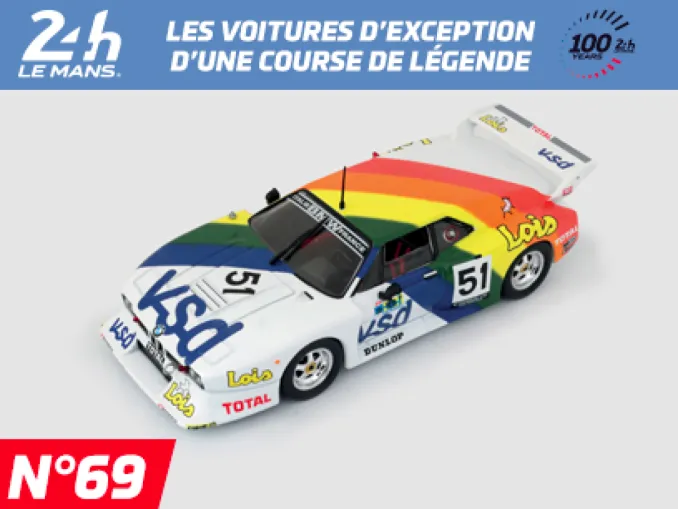
Having spent two years racing in the Procar championship while waiting for production volumes to reach the minimum number required for Group 5 homologation, the BMW M1 was finally able to compete in the FIA and IMSA championships in 1981, and above all participate in Le Mans, where only one of the six cars that entered the race finished in a qualifying position.
In 1978, the M1 was created on the initiative of Jochen Neerpasch, director of BMW Motorsport, who was looking for a car to succeed the CSL 3.5 in Group 5 “silhouettes”, a category consisting of series-produced cars that could be modified to a certain extent and in which the Porsche 935 dominated. The project for a new mid-engined car was entrusted to specialists such as Gian Paolo Dallara for the chassis and Giorgetto Giugiaro's Italdesign for the bodywork. Lamborghini took care of production, but stopped after only a few units, after which Italdesign and chassis builder Baur from Stuttgart took over the project.
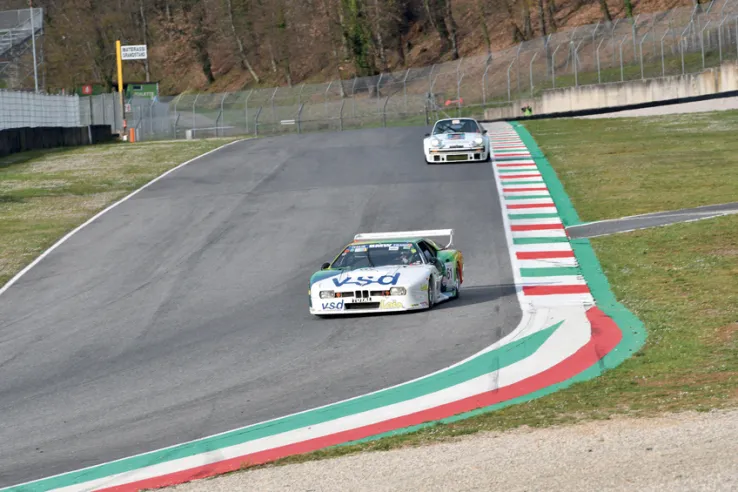
The M1 Gr. 5, which finished sixteenth at Le Mans in 1981, during a historic re-enactment that took place at the Mugello circuit in 2022.© IXO Collections SAS - Tous droits réservés.
Production of the 400 cars needed for homologation proved very slow. To solve the problem, Neerpasch created the Procar series, a one-make championship featuring F1 and Endurance drivers at the wheel of M1s leading up to Grand Prix races. Homologation was granted in 1981: the M1s were allowed to compete in the World Championship, which that year included a Drivers' title in addition to the Constructors' title, in Group 5 or Group 4 (for which modifications to the production model were more limited) and in IMSA events, in which the M1 had been competing since 1979, the year in which one car finished 6th overall at the 24 Hours of Le Mans.
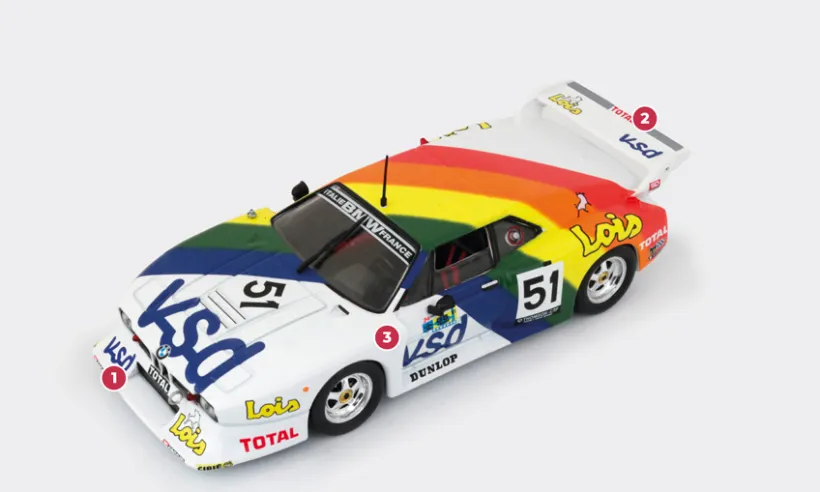
1. The Group 5 version of the M1 stands out for its extensive aerodynamic equipment and enlarged bodywork, alterations permitted by the category regulations which prohibited any alteration to the structure of the passenger compartment.
2. The rear wing is also an addition compared to the road version of the M1.
3. Both the racing and road cars were produced by Italdesign, with a total of nearly 500 units. The bodywork, made of resin and fibreglass, was manufactured and assembled onto the chassis by Baur in Stuttgart.© IXO Collections SAS - Tous droits réservés.
During FIA races, good placings and withdrawals due to technical problems alternated. Over the first few months, the BMW M1 Group 5 finished fourth in the 1,000 km of Monza with Dieter Quester and Teo Fabi, took second place in the 6 Hours of Silverstone with Derek Bell, Steve O'Rourke and David Hobbs, and won the 1,000 km Nürburgring with Hans-Joachim Stuck and Nelson Piquet. In Group 4, ex-Procars were among the most effective cars and even among the winners.
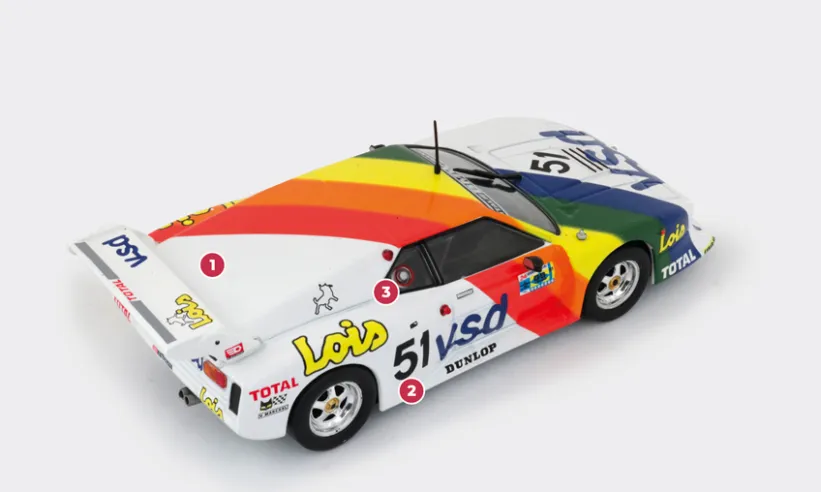
1. The bonnet is completely flat except from a rear ventilation grille. Neerpasch would have preferred a V10, but the project was cancelled in favour of a six-cylinder engine derived from the series.
2. The chassis, designed by Italian engineering firm Dallara, is a trellis structure made of square-section steel tubes.
3. Refilling is done via funnels that open on both sides into the custodes.© IXO Collections SAS - Tous droits réservés.
The 24 Hours of Le Mans hosts all these classes in order to be included in the FIA calendar as the eighth event in the World Drivers' Championship and the fifth in the World Manufacturers' Championship (which only validates a few races). In total, six M1s took part, one of which was in the IMSA GTX category and two others were entered in GT Group 4 (including the model entered by Helmut Marko, winner in 1971 with a Porsche 917), while the other three competed in Group 5.
The race was merciless for the Bavarian berlinettes, which had to retire due to engine problems. The only survivor was No. 51, entered by the Oreca team, supported by BMW's Italian and French subsidiaries and driven by rally driver Bernard Darniche, F1 driver Philippe Alliot and motorcyclist Johnny Cecotto, who would go on to have a brilliant career with BMW. After 278 laps, the trio crossed the finish line in 16th place, 77 laps behind the winning car, the Porsche 936 driven by Jacky Ickx and Derek Bell.
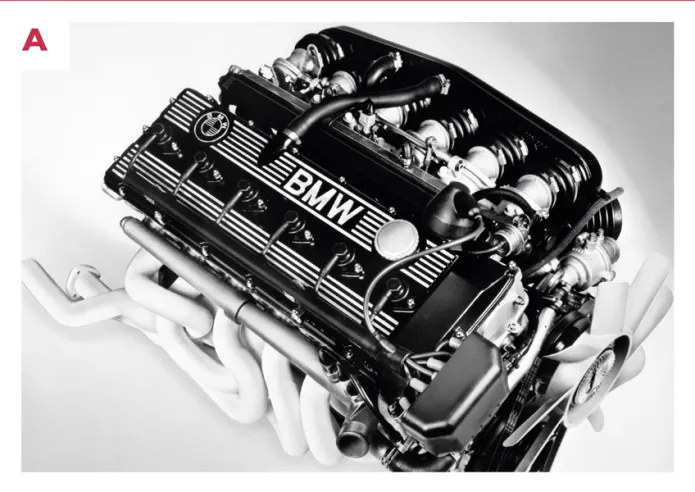
A. The M88 engine in the M1 racing car and in the road version with 277 hp (the S32B35) are part of the M30 family. Both are 3.5-litre, 24-valve, six-cylinder inline engines.© IXO Collections SAS - Tous droits réservés.
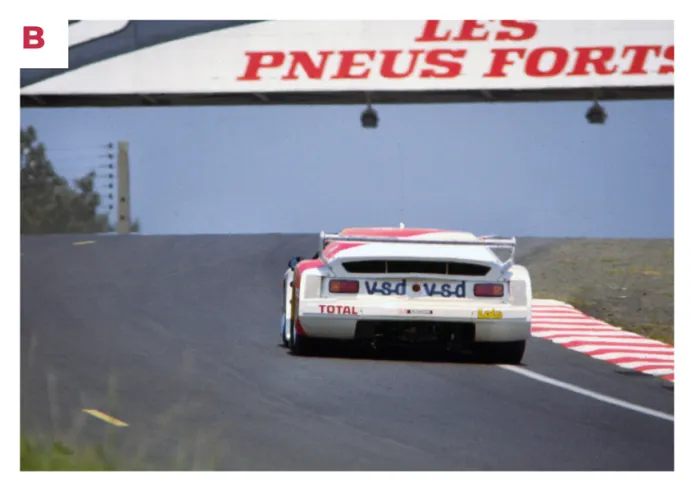
B. Designed for competition, the M1 features double wishbone suspension on each wheel and was developed in anticipation of the modifications permitted in Group 5 for track width and wings.© IXO Collections SAS - Tous droits réservés.
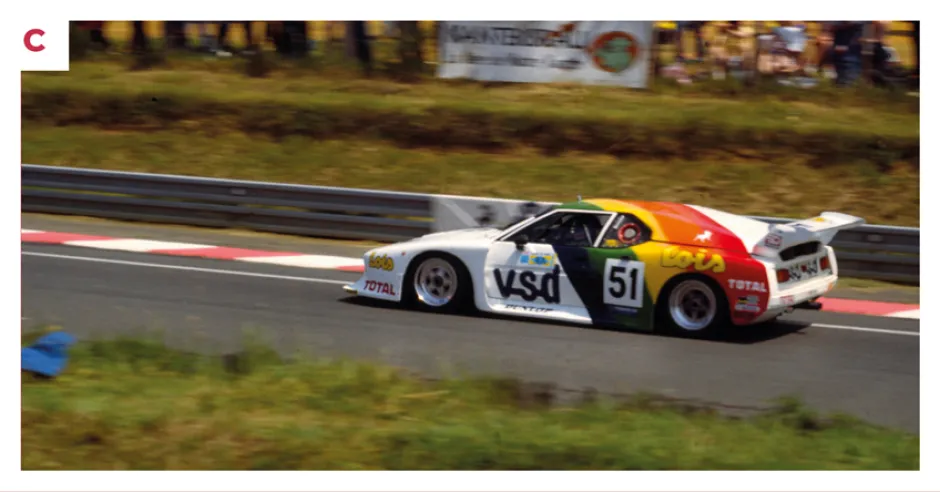
C. The M1 racing version can reach a top speed of over 300 km/h and accelerate from 0 to 100 km/h in 4.4 seconds.© IXO Collections SAS - Tous droits réservés.
Recent articles