 English
 français
 Deutsch
 español
 italiano
 português















18/12/2025
Jaguar XK120 C - 1953
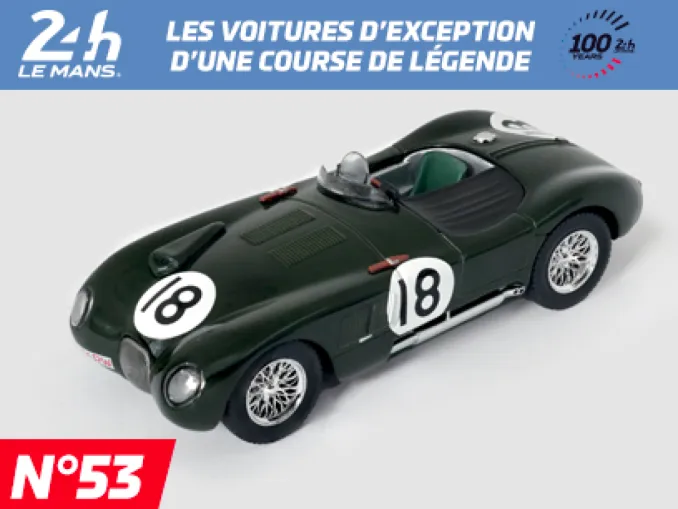
Jaguar XK120 C
The XK120, built using the XK engine, was perfect as a Grand Touring and competition car. In order to excel in racing, it underwent development that resulted in the 1951 ‘Competition’ version, also known as the Type C, which won Le Mans twice out of three races.
In 1950, the XK120 competed for the first time in the 24 Hours of Le Mans, entering three modified 2-seater roadsters, known as the XK120 S. In addition to an aluminium body, a lower windscreen and a streamlined rear wheel design, these cars benefited from improvements to their 3.4-litre , six-cylinder engine and chassis. The cars competed in the Sports Category under 5 litres, finishing 12th and 15th. Only one of them failed to reach the finish line due to a clutch failure.
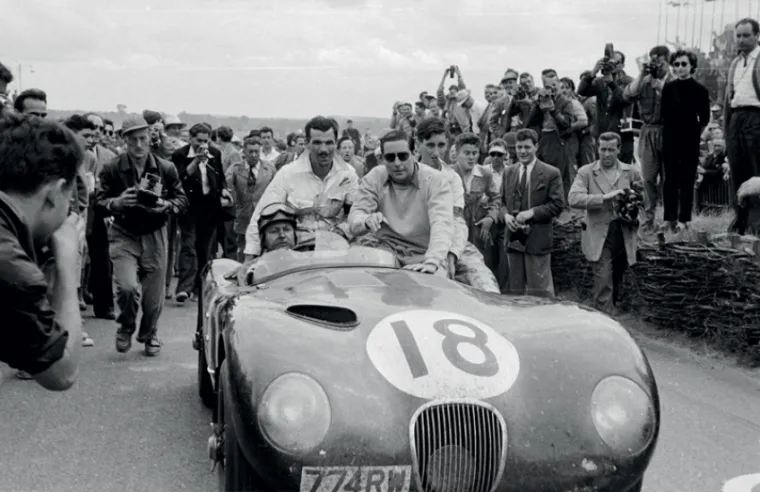
The winning Type C at Le Mans in 1953 with Tony Rolt (right, dark glasses) and Duncan Hamilton (at the wheel). Second place went to another Type C driven by Stirling Moss and Peter Walker.© IXO Collections SAS - Tous droits réservés.
Encouraged by this result, the company's head William Lyons decided to develop a racing version, a task he entrusted to engineer William Heynes. The mechanics were retained, but the chassis was made of a tubular trellis structure with sheet metal reinforcements instead of a chassis with of pressed longitudinal members. The front suspension was modified and the engine was upgraded from the 160 bhp of the XK120 to over 200 bhp. The entire car was given a new and more streamlined body.
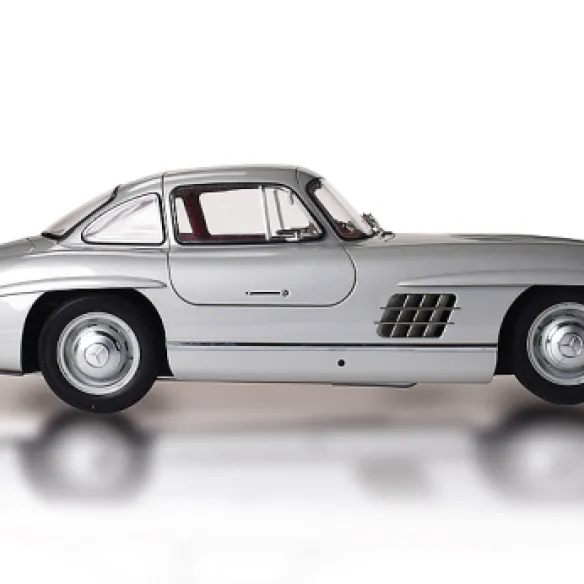
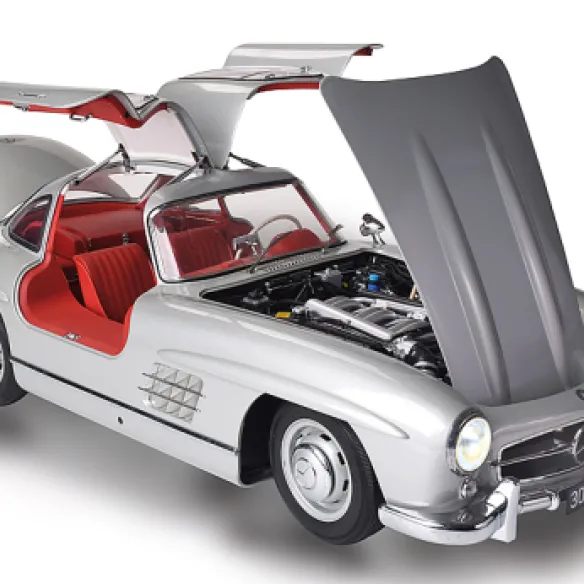
Three cars were entered in the 1951 24 Hours of Le Mans, driven by Stirling Moss/Jack Fairman, Leslie Johnson/Clemente Biondetti and Peter Walker/Peter Whitehead, who performed well during the test sessions. During the race, the first two were forced to retire due to mechanical problems; Walker and Whitehead triumphed despite the rain, leading by nine laps after battling for the lead with two Talbot-Lagos and two Aston Martins. It seemed to be the start of a period of domination, especially as the Type C went on to win other races that same year, including the prestigious Tourist Trophy with Stirling Moss. However, things were to change. In 1952, more competitive rivals emerged, such as the Mercedes 300 SL, which was a more streamlined version of the street car with more efficient cooling and disc brakes. A lack of testing time prevented the “C” models from being perfectly tuned. On the track, they experienced overheating problems and none of the three XKs finished the race, which was won by Mercedes. Jaguar returned to the original bodywork, while retaining certain improvements for a few races, such as disc brakes, which enabled Stirling Moss to win the 1952 Reims Formula Sport Grand Prix. The latter became standard the following year when three new, more powerful and lighter models arrived at Le Mans with the same crews as in 1952: Stirling Moss/Peter Walker, Whitehead/Ian Stewart and Tony Rolt/Duncan Hamilton. With their newfound reliability and more powerful brakes, the Type C cars won with Rolt/Hamilton followed by Moss/Walker and came close to a one-two-three finish, prevented only by Phil Walters and John Fitch's Cunningham C-5R, which finished third. Both Jaguars set records by breaking the 300-lap barrier (304 and 300), at an average speed of over 170 km/h for the winner. Replaced in 1954 by the Type D, the ‘C’ continued to race for private teams until the end of the 1960s.
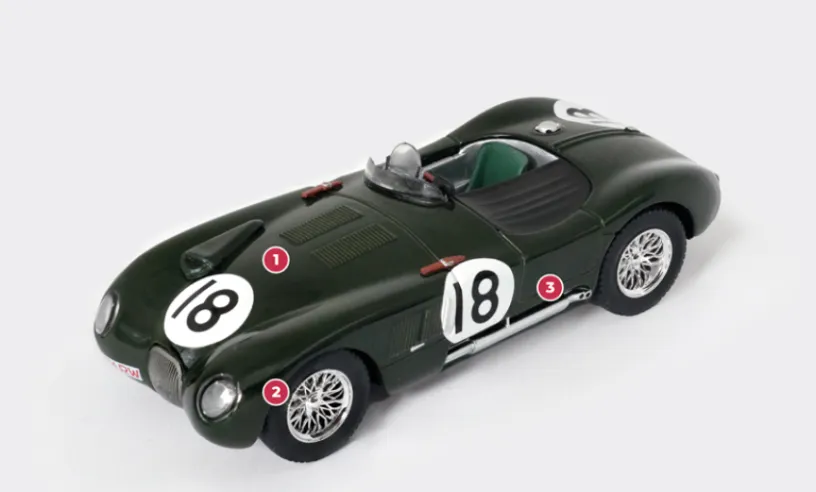
1. The classic lines of the road car XK120, with its long separate wings, were replaced by a large, one-piece enveloping bonnet. The large air intake on the right was used to improve the engine's air supply.
2. The new disc brakes supplied by Dunlop contributed significantly to the success of the Type C at Le Mans in 1953.
3. To reduce both weight and size, and to improve heat evacuation, the exhaust pipes emerging from the left side were routed to the front of the rear axle.© IXO Collections SAS - Tous droits réservés.
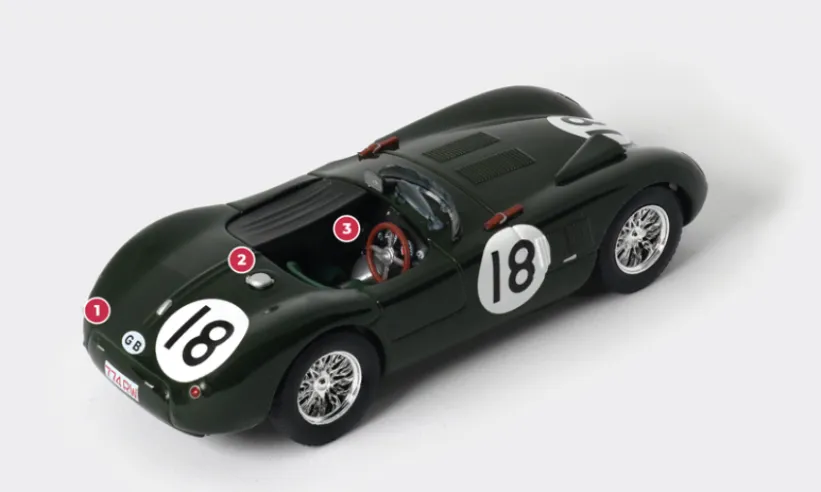
1. The spare wheel is housed in a compartment closed by a foldaway cover integrated into the profile of the bodywork.
2. Despite its compact dimensions, the designers have managed to fit a larger fuel tank, which, according to certain sources, has a capacity of over 200 litres.
3. The cabin must have at least two seats, but when racing, the driver is the only one in the car, so a canvas cover is placed over the passenger seat to reduce turbulence and noise while maintaining the car's aerodynamics.© IXO Collections SAS - Tous droits réservés.
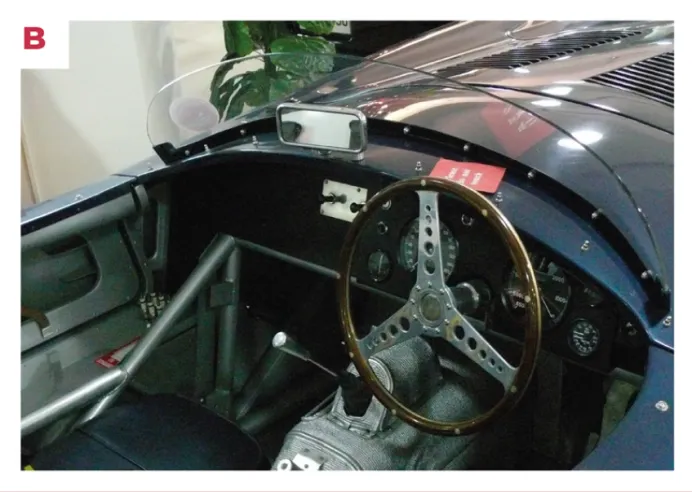
B. The tubular chassis structure and gearbox are visible in the passenger cabin. The only concession to elegance is the steering wheel with its wooden rim and openwork spokes.© IXO Collections SAS - Tous droits réservés.
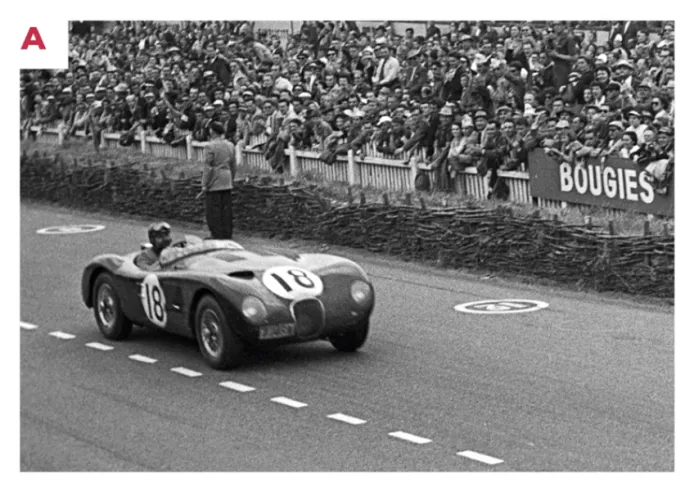
A. The Type C that won in 1953. Apart from winning the race, it set a new 24-hour distance record with 304 laps completed at an average speed of over 170 km/h.© IXO Collections SAS - Tous droits réservés.
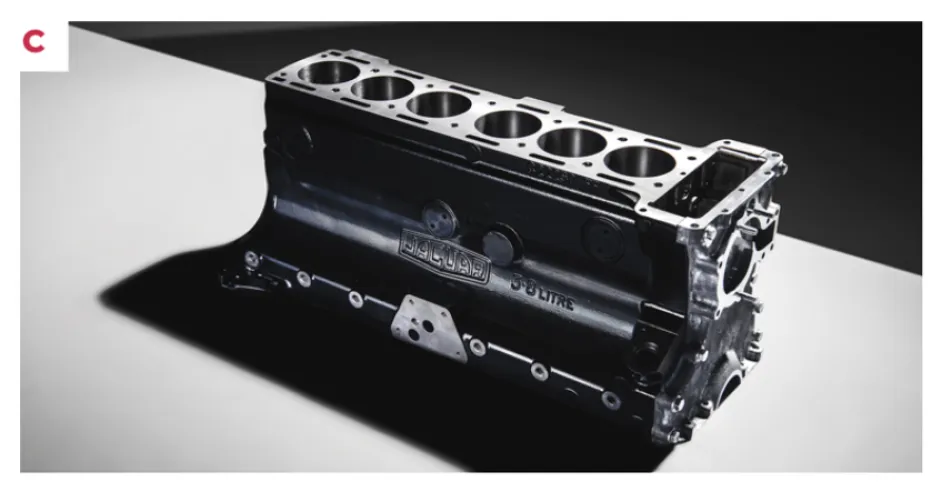
C. The cast iron block of a 6 cylinder XK engine, that Jaguar still produces as an original spare part for both street and competition models.© IXO Collections SAS - Tous droits réservés.
Recent articles