 English
 français
 Deutsch
 español
 italiano
 português



















18/12/2025
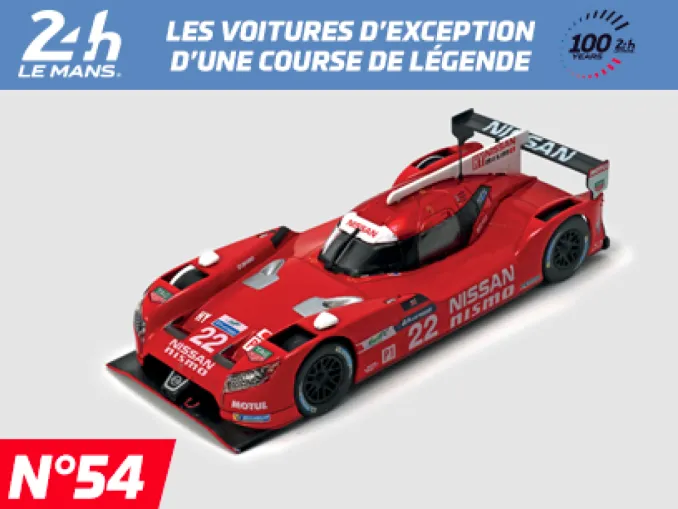
Nissan GT-R LM Nismo - 2015
Nissan GT-R LM Nismo
Nissan tried to rewrite the regulations for endurance racing's premier series in 2015 with a prototype using the name of its famous supercar, the GT-R, and experimenting with an unusual architecture featuring a front engine and front-wheel drive. It proved to be as much of a failure as it was a risk. Following its failure at Le Mans, its racing career came to an immediate end.
Development of this prototype originated from Nissan's commitment to innovation, a commitment resulting in a major role in the Le Mans Garage 56 programme, a project in which the company was involved since 2012 with the creation of the DeltaWing and its hybrid evolution, the ZEOD RC. Furthermore, the brand supplied engines for the LMP2 and LMP3 categories. In short, the GT-R LM Nismo, loosely based on the phenomenally successful GT-R ‘R35’ street supercar, could be described as the icing on the cake of Nissan’s motorsport activities. Its debut was planned for the first race of the endurance season, the 6 Hours of Silverstone, scheduled for April.
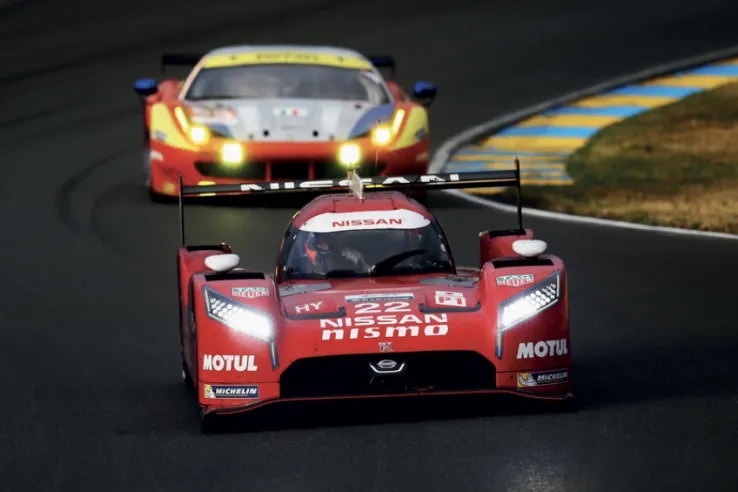
The GT-R LM Nismo #22 with Harry Tincknell, Michael Krumm and Alex Buncombe was the only car out of the three starting the 2015 Le Mans 24 Hours to finish the race.© IXO Collections SAS - Tous droits réservés.
However, development issues forced the team to skip this event, and the following one, the 6 Hours of Spa-Francorchamps, held in early May. The first outing on the track took place a few weeks later at Le Mans during the end-of-May tests, in which three official cars participated with the numbers 21, 22 and 23. The third car was the best, finishing eighteenth with a lap time that was in line with the average for LMP2 cars and nowhere near the performance of the LMP1 cars that the GT-R LM Nismo had to compete against. The other two finished even further behind, with 29th and 32nd fastest times.
What the prototype was lacking was not so much top speed, with lap times of over 360 km/h, but rather its handling in curves, its efficiency and its reliability. This resulted in lap times that were 20 seconds slower than those of the other LMP1 cars. The problem occurred during the 24 Hours qualifying session, in which two of the three GT-R LM Nismos finished last among the LMP1s, whilst the third car was outperformed by the best LMP2, the Oreca 05 from the KCMG team, which ironically was powered by a Nissan V8 engine. Furthermore, because their times were over 10% slower than the reference time for their category, the rules dictated that they be placed at the back of the LMP grid in between 30th and 32nd position, just in front of the GTEs.
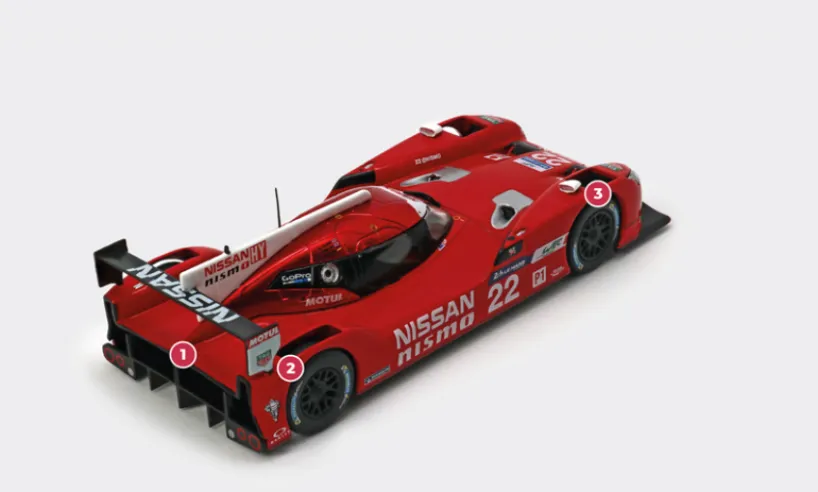
1. The V6 twin-turbo engine with over 500 hp was developed by Nissan based on the 3-litre VX series production engine in collaboration with Cosworth. It is an engine that has a structural function, i.e. it is fixed to the chassis, helping to increase rigidity.
2. The front-wheel drive system comprises a kinetic energy recovery and return device with a Torotrak flywheel. Nissan claimed a peak power output of just over 1,200 hp.
3. Two of the three Nissan cars competing at Le Mans in 2015 have been finished in red. The third, number 21, is painted blue, white and red in tribute to the R90CK that took pole position in 1990.© IXO Collections SAS - Tous droits réservés.
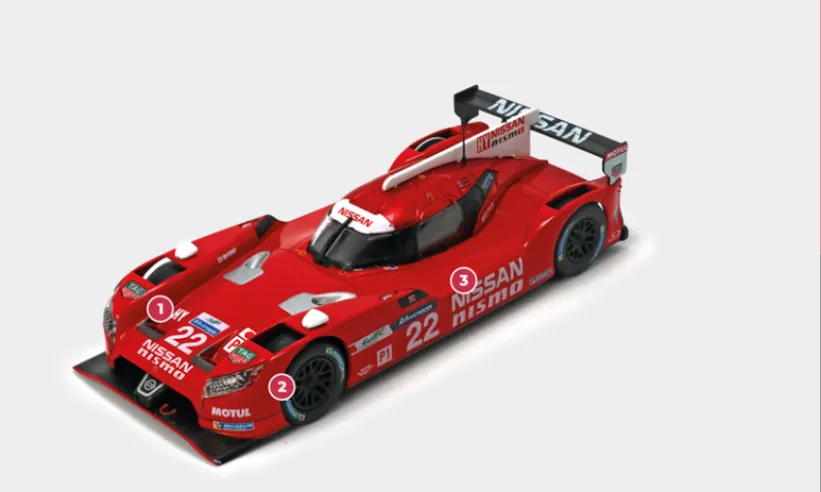
1. The rear end of the GT-R LM Nismo, developed with more freedom than other LMP cars, is characterised by a deep double channel.
2. With the engine positioned in front of the recessed passenger cabin, the Nissan sports division Nismo designed an innovative rear suspension featuring a hydraulic anti-roll bar.
3. The unique mechanical architecture dictates the tyre dimensions, with wider tyres at the front and narrower tyres at the rear.© IXO Collections SAS - Tous droits réservés.
During the race, the situation did not improve. The best Nissan, the No. 22 driven by Harry Tincknell, Alex Buncombe and Michael Krumm, struggled to finish the race after only 242 laps, not qualifying because of insufficient distance. The other two gave up due to technical problems. The #21 car with Tsugio Matsuda, Lucas Ordóñez and Mark Shulzhitskiy threw in the towel after 115 laps due to a suspension failure, while the #23 car, driven by Max Chilton, Jann Mardenborough and Olivier Pla, completed just over twice that number of laps before being forced out of the race by a gearbox failure. The evident failure of the project convinced Nissan to withdraw from the remaining series of the championship.
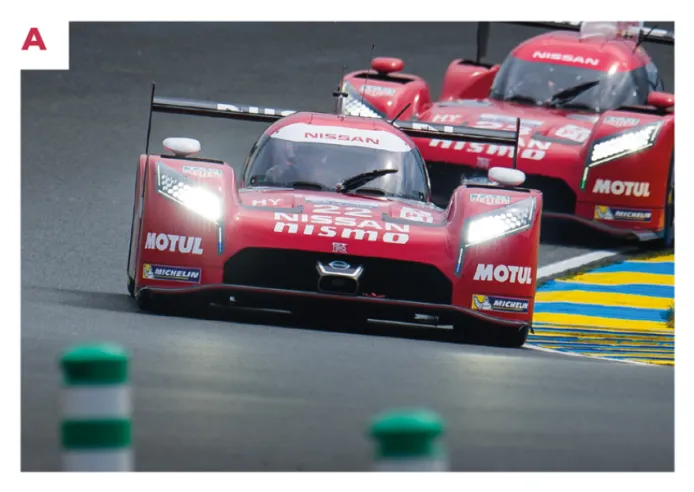
A. Two of the GT-R LM Nismo cars in practice. During the official tests at Le Mans at the end of May, the three Nissans proved to be slower than the other LMP1 cars.© IXO Collections SAS - Tous droits réservés.
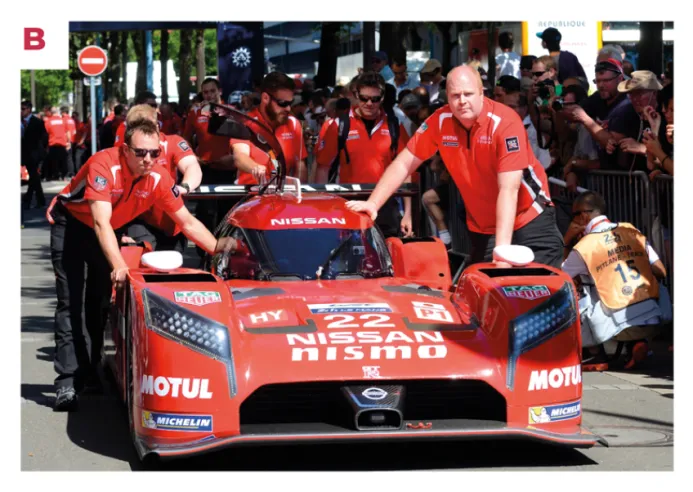
B. Although it finished the race, car #22 completed only 242 laps, less than 70% of the distance covered by the winning car (395 laps), and was therefore not officially classified.© IXO Collections SAS - Tous droits réservés.
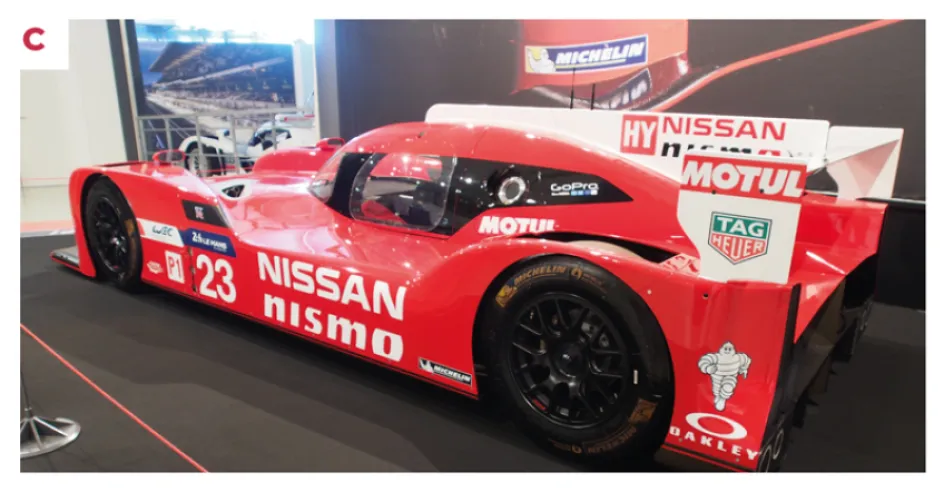
C. Despite its disappointing results, the GT-R LM Nismo was nevertheless worthy of being displayed in the 24 Hours of Le Mans museum.© IXO Collections SAS - Tous droits réservés.
Recent articles