 English
 français
 Deutsch
 español
 italiano
 português













18/12/2025
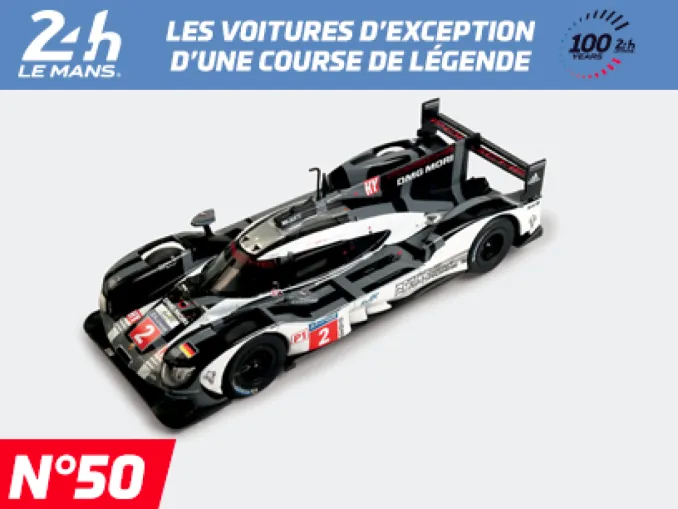
Porsche 919 Hybrid - 2016
Porsche 919 Hybrid
Taking advantage of a change in regulations in 2014, Porsche re-entered the top category of endurance racing, which was then dominated by hybrid prototypes. In the years that followed, the 919 became the car to beat.
The decision to revise the regulations came when the ACO, the club that organises the 24 Hours of Le Mans, agreed with the FIA to review the restrictions applicable to LMP 1 cars. The objective was to force manufacturers to improve efficiency and reduce the risk of accidents (such as the one that claimed the life of Danish driver Allan Simonsen in 2013) by reducing corner speeds. New aerodynamic and fuel consumption standards were being introduced in order to develop the electrical components incorporated within the hybrid systems. The latter were introduced in 2011, after the ACO imposed restrictions on power, engine capacity and number of cylinders, while permitting energy recovery systems. From 2014 onwards, hybrid engines (mandatory for official teams) were further improved, although more freedom was allowed in terms of engine capacity and number of cylinders. In response to these specifications, Porsche developed a system combining a turbocharged V4 engine with an energy recovery device on the engine itself and a motor generator on the front axle.
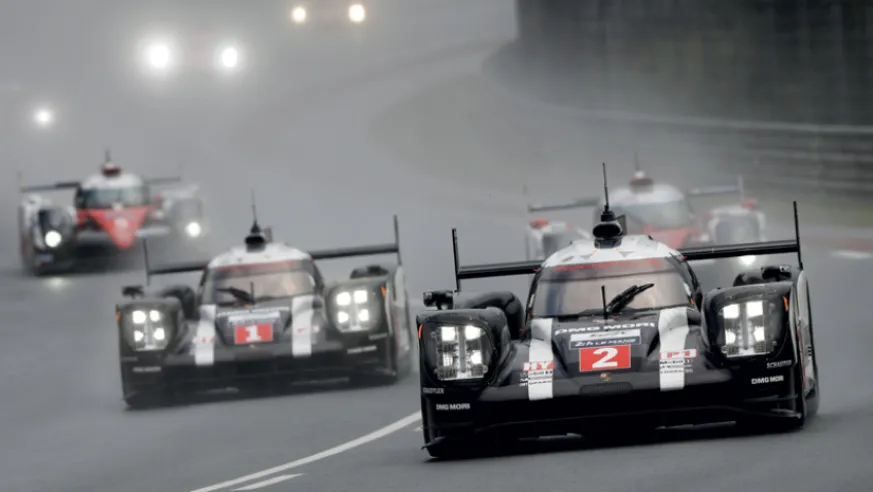
The 919 Hybrid No. 2 that won the 2016 Le Mans 24 Hours gave Porsche the second of its three consecutive victories, all of which were wins in the WEC, the World Endurance Championship.© IXO Collections SAS - Tous droits réservés.
The 919 Hybrid, despite its potential, was unable to compete with the hybrids from Audi and Toyota, except at the Interlagos event at the end of the season. The car's reliability issues eliminated any chance of success at Le Mans, where both Porsches were fighting for victory before suffering mechanical problems. The car was revised in 2015, made lighter and more aerodynamically efficient. From then on, positive results followed: at Le Castellet in the preliminary race of the season, the 919 Hybrids proved to be the fastest. During the following months, they took their first podium places at the 6 Hours of Silverstone (2nd place) and at Spa, where Porsche entered three cars that finished 2nd, 3rd and 6th. At the 24 Hours of Le Mans, the domination of the German brand was confirmed during practice at the end of May (1st, 2nd and 4th fastest times) and in the race itself. The 919 Hybrids claimed the leading positions, with Neel Jani setting a new lap record and keeping Audi and Toyota at bay. They finished 1st, 2nd and 5th. The third crew, consisting of Nico Hülkenberg, Earl Bamber and Nick Tandy, became the winners. From that point on, there was no stopping them from taking the leading positions on the podium and, at the end of the season, Porsche was crowned WEC champion with Timo Bernhard, Mark Webber and Brendon Hartley leading the drivers' standings.
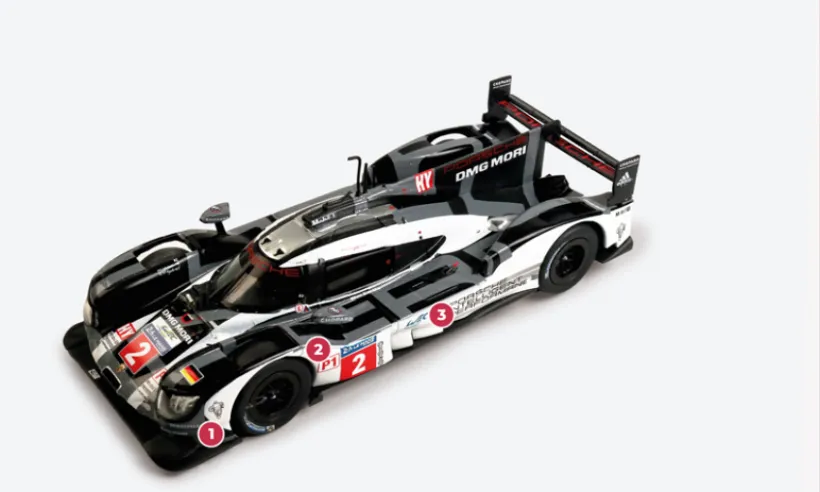
1. The styling innovations introduced on the 919 Hybrid in 2015 include the lateral uprights and the profile in the centre of the rear wing, which has been lengthened at the bottom. The cockpit has also been redesigned.
2. Also for 2015, the weight of the 919 Hybrid was reduced from 900 to 870 kg ( the regulatory minimum) after modifications were made to numerous components, including the gearbox.
3. The single-turbo V4 engine with over 500 hp, which is secured to the chassis, has a load-bearing function.© IXO Collections SAS - Tous droits réservés.
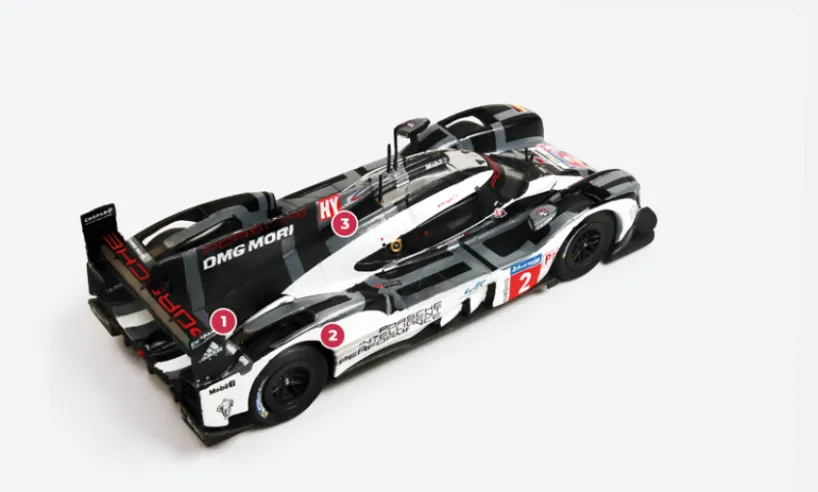
1. As is usually the case for Le Mans, a specific aerodynamic configuration is adopted, offering less support in favour of maximum speed on the straights.
2. The front and rear wheels are the same size, as it is the front wheels that carry the brunt of the electric motor's power, which can reach 400 hp. Michelin has developed new tyres for 2016.
3. The overall design remains unchanged between 2014 and 2015, but the side pontoons and aerodynamic ducts have been redesigned to improve airflow.© IXO Collections SAS - Tous droits réservés.
That was the start of a three-year period of almost total domination. In 2016, Romain Dumas, Neel Jani and Marc Lieb took pole position and first place at Le Mans ahead of Toyota and Audi, and triumphed at the end of the season with only two victories (the first at Silverstone) but several good placings, while Bernhard, Webber and Hartley, despite four victories, finished fourth. A similar scenario unfolded the following year when the 24 Hours of Le Mans went to Bernhard, Hartley and Bamber, replacing Webber, resisting the attacks of the surprising Oreca LMP2 from the Jackie Chan team.
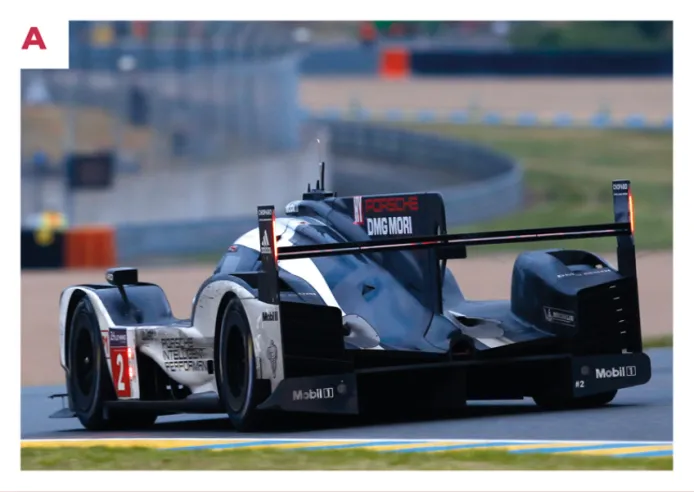
A. The 2016 season regulations, restricting the amount of fuel that can be used per lap, are forcing the Porsche team into further development of its own strategy focusing on electric power and energy recovery.© IXO Collections SAS - Tous droits réservés.
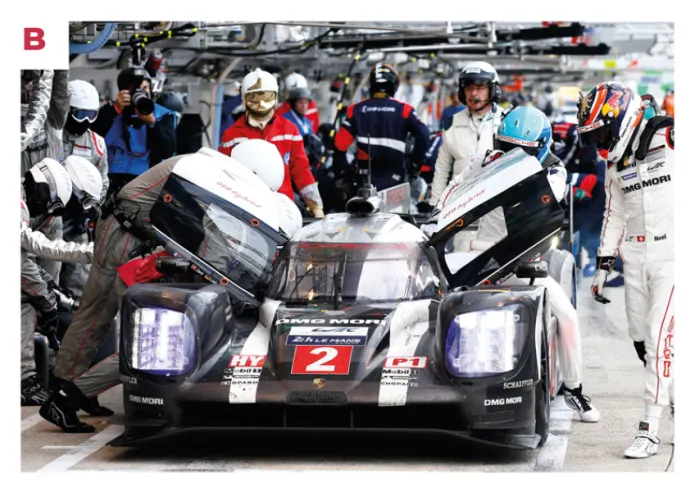
B. Pictured here is the winning car of 2016 during a pit stop.© IXO Collections SAS - Tous droits réservés.
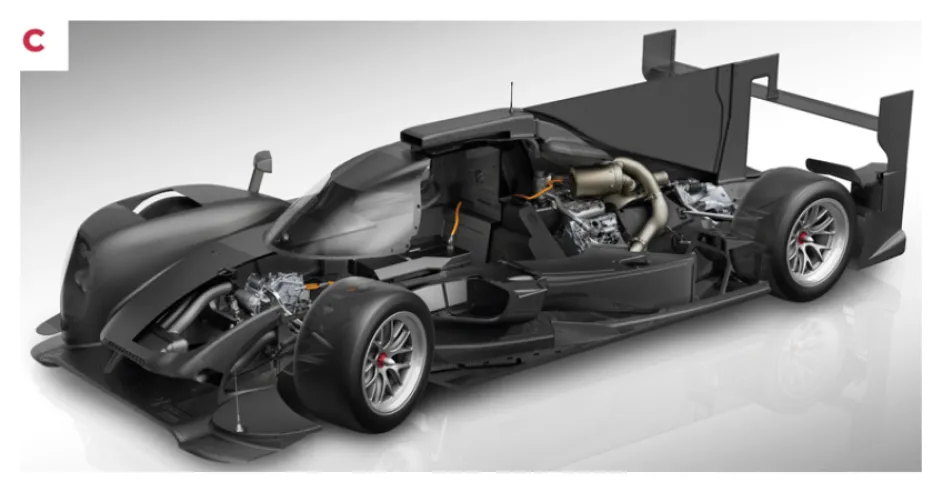
C. This image shows the chassis and body structure made of fibreglass, Kevlar and aluminium, as well as the position of the electric motor on the front axle.© IXO Collections SAS - Tous droits réservés.
Recent articles